HomeMCPWorkbenchSkills
HomeWorkbenchNotificationsMe
llms.txt · MCP GuidePrivacy Policy · Terms of Service · Supportv1.8.3
  1. Home
  2. /Reaction

Cesium carbonate → (1-Aminoimidazo[1,5-a]pyridin-3-yl)(3-methoxy-4-nitrophenyl)methanone

HRID 1677577
Print

Reaction equation

HRID 1677577 reaction equation
C(=O)([O-])[O-].[Cs+].[Cs+].C(=[NH:20])(C1C=CC=CC=1)C1C=CC=CC=1.Br[C:22]1[N:23]=[C:24]([C:31]([C:33]2[CH:38]=[CH:37][C:36]([N+:39]([O-:41])=[O:40])=[C:35]([O:42][CH3:43])[CH:34]=2)=[O:32])[N:25]2[CH:30]=[CH:29][CH:28]=[CH:27][C:26]=12.C1(P(C2C=CC=CC=2)C2C=CC3C(=CC=CC=3)C=2C2C3C(=CC=CC=3)C=CC=2P(C2C=CC=CC=2)C2C=CC=CC=2)C=CC=CC=1>CN(C)C=O.CC(C)=O.C1C=CC(/C=C/C(/C=C/C2C=CC=CC=2)=O)=CC=1.C1C=CC(/C=C/C(/C=C/C2C=CC=CC=2)=O)=CC=1.C1C=CC(/C=C/C(/C=C/C2C=CC=CC=2)=O)=CC=1.[Pd].[Pd]>[NH2:20][C:22]1[N:23]=[C:24]([C:31]([C:33]2[CH:38]=[CH:37][C:36]([N+:39]([O-:41])=[O:40])=[C:35]([O:42][CH3:43])[CH:34]=2)=[O:32])[N:25]2[CH:30]=[CH:29][CH:28]=[CH:27][C:26]=12
ParticipantsProcedureWorkupSources & evidenceReaction notes

Participants

8

Reactant 4

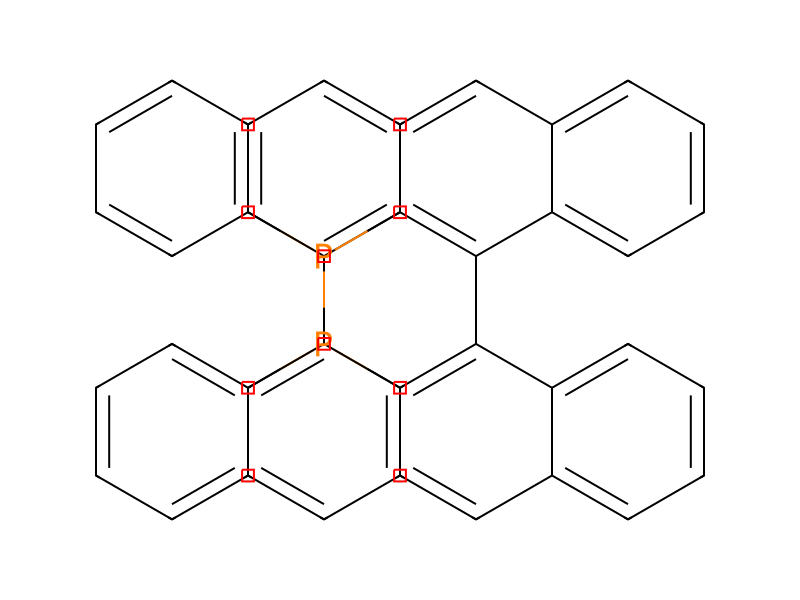
HCID 10796Cesium carbonateHCID 136809Benzophenone imineHCID 634876Binap, (A+-)-HCID 67215796HCID 67215796, compound

Product 1

HCID 67215846(1-Aminoimidazo[1,5-a]pyridin-3-yl)(3-methoxy-4-nitrophenyl)methanone

Reagents, catalysts & solvents 3

HCID 9811564
Bis(dibenzylideneacetone)palladium
Catalyst
HCID 180AcetoneSolvent
HCID 6228DimethylformamideSolvent

Procedure

8.67 g (26.61 mmol) of cesium carbonate and then 4.5 ml (26.82 mmol) of benzophenone imine are added, under a nitrogen atmosphere, to 5 g (13.29 mmol) of (1-bromoimidazo[1,5-a]pyridin-3-yl)(3-methoxy-4-nitrophenyl)methanone obtained in example 20 in 66 ml of N,N-dimethylformamide. After stirring for 30 minutes, 1.66 g (2.67 mmol) of 2,2′-bis(diphenylphosphino)-1,1′-binaphthalene and then 1.22 g (1.33 mmol) of tris(dibenzylideneacetone)dipalladium(0) are added. The reaction medium is heated for 3 hours and then concentrated under reduced pressure. The residue is taken up in a mixture of dichloromethane and water. The organic phase is separated by settling, dried over sodium sulfate and concentrated under reduced pressure. The residue is taken up in 250 ml of tetrahydrofuran and 135 ml of a 2N aqueous hydrochloric acid solution are added. After stirring at ambient temperature for one hour, the reaction medium is concentrated under reduced pressure. The solid residue obtained is taken up in acetone, filtered off, washed with acetone and then with ethyl ether and dried. 3.43 g of a brown solid are collected. Melting point: 214° C.; 1H NMR (d6-DMSO): 4.02 (3H, s), 7.29-7.36 (2H, m), 7.96-8.04 (2H, m), 8.11 (1H, d), 8.16 (1H, s), 9.78 (1H, d)

Workup

  1. temperatureThe reaction medium is heated for 3 hours
  2. concentrationconcentrated under reduced pressure
  3. additionThe residue is taken up in a mixture of dichloromethane and water
  4. customThe organic phase is separated
  5. dry with materialdried over sodium sulfate
  6. concentrationconcentrated under reduced pressure
  7. addition135 ml of a 2N aqueous hydrochloric acid solution are added
  8. stirringAfter stirring at ambient temperature for one hour
  9. concentrationthe reaction medium is concentrated under reduced pressure
  10. customThe solid residue obtained
  11. filtrationfiltered off
  12. washwashed with acetone
  13. dry with materialwith ethyl ether and dried
  14. custom3.43 g of a brown solid are collected

Sources & evidence

ORD record
ord-309ec602e8044d779d0ad5e7ffd072d1
Source dataset
uspto-grants-2011_08
DOI
10.6084/m9.figshare.5104873.v1
Patent number
US08008321B2

Reaction notes

On this pageParticipantsProcedureWorkupSources & evidenceReaction notes