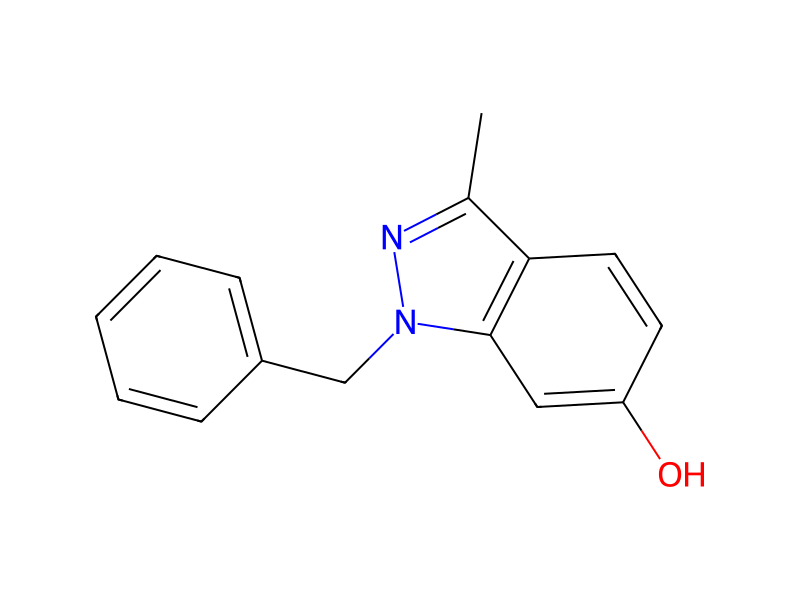
1-Benzyl-3-methylindazol-6-ol (16.7410 g) and 10% palladium-carbon-PE-type-50% wet with water (5.1164 g; manufactured by N.E. Chemcat Corp.) were suspended in ethanol (166 mL), and then concentrated hydrochloric acid (5.83 mL; manufactured by Kanto Chemical Co., Inc.) was added thereto. The reaction system was purged with hydrogen, and under a hydrogen atmosphere, the reaction solution was stirred for 10 hours at 60° C. The reaction solution was cooled to room temperature, and then the reaction system was purged with nitrogen. 10% Palladium on carbon-PE-type-50% wet with water (1.5059 g; manufactured by N.E. Chemcat Corp.) was added to the reaction solution, and the reaction system was purged with hydrogen. Under a hydrogen atmosphere, the reaction solution was stirred for 5 hours at 60° C. The reaction solution was cooled to room temperature, and the reaction system was purged with nitrogen. Subsequently, the reaction solution was filtered, and the solvent was evaporated under reduced pressure from the filtrate. Ethyl acetate was added to the resulting residue, and the mixture was washed once with a saturated aqueous solution of sodium hydrogen carbonate. The organic layer was washed once with a saturated sodium hydrogen carbonate solution, and then was dried over sodium sulfate. The solvent was evaporated under reduced pressure from the organic layer, and thus the title compound was obtained as a crude product (10.816 g).