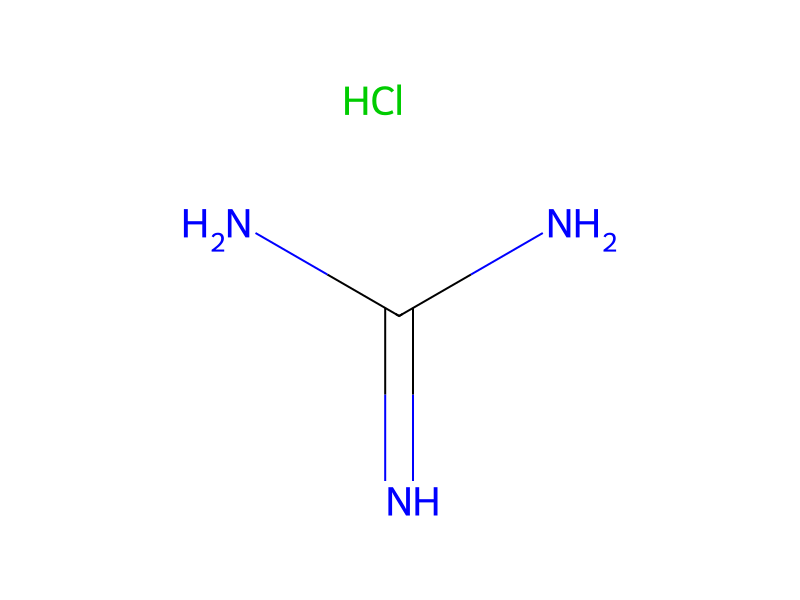
C[O-].[Na+].Cl.[NH2:5][C:6]([NH2:8])=[NH:7].N[C:10]1[C:15]([C:16]#[N:17])=[N:14][C:13]([C:18]2[C:26]3[O:25][C:24]([CH3:28])([CH3:27])[CH:23]([OH:29])[C:22]=3[CH:21]=[CH:20][CH:19]=2)=[CH:12][N:11]=1>CO>[NH2:7][C:6]1[N:8]=[C:16]([NH2:17])[C:15]2[C:10](=[N:11][CH:12]=[C:13]([C:18]3[C:26]4[O:25][C:24]([CH3:27])([CH3:28])[CH:23]([OH:29])[C:22]=4[CH:21]=[CH:20][CH:19]=3)[N:14]=2)[N:5]=1A solution of 2.8 grams (0.052 mole) of sodium methoxide in 100 mL of methanol is stirred, and 1.9 grams (0.019 mole) of guanidine hydrochloride is added. Upon completion of addition, the reaction mixture is stirred for about 5 minutes and then is filtered to remove sodium chloride. The filtrate is then added to 4.5 grams (0.016 mole) of 2-amino-3-cyano-5-(2,3-dihydro-3-hydroxy-2,2-dimethylbenzofuran-7-yl)pyrazine. The stirring reaction mixture is then heated to reflux where it is stirred for about 18 hours. After this time the reaction mixture is cooled and filtered. The filter cake is washed with water and dried, yielding 2,4-diamino-6-(2,3-dihydro-3-hydroxy-2,2-dimethylbenzofuran-7-yl)pteridine.