Potassium Carbonate → HCID 57570851, compound
Reaction equation

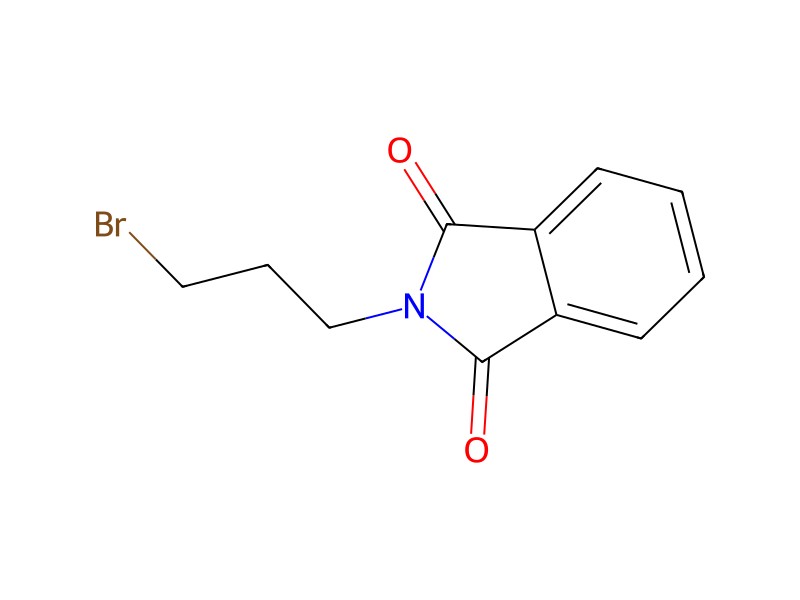
[OH:1][CH2:2][C:3]1[CH:4]=[C:5]([OH:11])[CH:6]=[C:7]([CH2:9][OH:10])[CH:8]=1.Br[CH2:13][CH2:14][CH2:15][N:16]1[C:20](=[O:21])[C:19]2=[CH:22][CH:23]=[CH:24][CH:25]=[C:18]2[C:17]1=[O:26].C(=O)([O-])[O-].[K+].[K+]>C(#N)C>[C:17]1(=[O:26])[N:16]([CH2:15][CH2:14][CH2:13][O:11][C:5]2[CH:4]=[C:3]([CH2:2][OH:1])[CH:8]=[C:7]([CH2:9][OH:10])[CH:6]=2)[C:20](=[O:21])[C:19]2=[CH:22][CH:23]=[CH:24][CH:25]=[C:18]12Participants
5
Reactant 3


Product 1

Reagents, catalysts & solvents 1

Procedure
3,5-Bis-hydroxymethylphenol (Felder, D.; Gutierrez Nava, M.; del Pilar Carreon, M.; Eckert, J. F.; Luccisano, M.; Schall, C.; Masson, P.; Gallani, J. L.; Heinrich, B.; Guillon, D.; Nierengarten, J. F. Helv. Chimica Acta 2002, 85, 288) (2.35 g), N-(3-bromo-propyl)-phthalimide (4.49 g) and potassium carbonate (10.53 g) were mixed in acetonitrile (25 mL) and refluxed for 12 h. The reaction mixture was cooled to room temperature and the solvent removed under reduced pressure. The residue was redissolved in dichloromethane and the insoluble residue filtered off. The filtrate was washed with water, dried over magnesium sulfate, and concentrated in vacuo to a residue. The residue was purified by silica gel chromatography (Merck SuperVarioPrep 90 g column, Si60 15-40 μm), eluted with methanol/dichloromethane, 4:96 to give 5-(3-phthalimido-propyloxy)-1,3-bis-(hydroxymethyl)benzene (1.45 g):