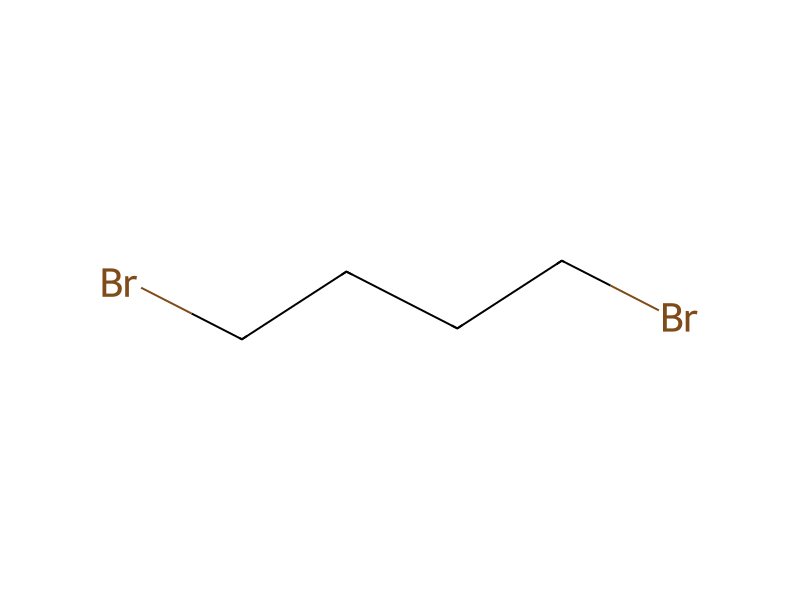
1,4-Dibromobutane → 1-(4-Bromo-2-tert-butylphenyl)pyrrolidine
HRID 1698403
Reaction equation

[Br:1][C:2]1[CH:7]=[CH:6][C:5]([NH2:8])=[C:4]([C:9]([CH3:12])([CH3:11])[CH3:10])[CH:3]=1.[H-].[Na+].Br[CH2:16][CH2:17][CH2:18][CH2:19]Br>>[Br:1][C:2]1[CH:7]=[CH:6][C:5]([N:8]2[CH2:19][CH2:18][CH2:17][CH2:16]2)=[C:4]([C:9]([CH3:12])([CH3:11])[CH3:10])[CH:3]=1Participants
4



Procedure
In a manner analogous to example 1 b, the process is carried out by a reaction of 10 g (44 mmol) of 4-bromo-2-tert-butylphenylamine with 3.8 g (96 mmol) of 60% sodium hydride and with 3.4 ml (96 mmol) of 1,4-dibromobutane. 7.6 g of 1-(4-bromo-2-tert-butylphenyl)-pyrrolidine are obtained in the form of an oil (yield=61%).