HomeMCPWorkbenchSkills
HomeWorkbenchNotificationsMe
llms.txt · MCP GuidePrivacy Policy · Terms of Service · Supportv1.8.0
  1. Home
  2. /Reaction

2-Nitrotoluene → 1-(Dibromomethyl)-2-nitrobenzene

HRID 1701086
Notes
Print preview

Reaction equation

HRID 1701086 reaction equation
[N+:1]([C:4]1[CH:9]=[CH:8][CH:7]=[CH:6][C:5]=1[CH3:10])([O-:3])=[O:2].[Br-:11].[Na+].[Na].ClCl.[OH-].[Na+].[Br:18]Br>C(Cl)(Cl)(Cl)Cl.P([O-])([O-])(O)=O.[Na+].[Na+].O>[N+:1]([C:4]1[CH:9]=[CH:8][CH:7]=[CH:6][C:5]=1[CH:10]([Br:18])[Br:11])([O-:3])=[O:2]
ParticipantsProcedureWorkupSources & evidenceReaction notes

Participants

10

Reactant 6

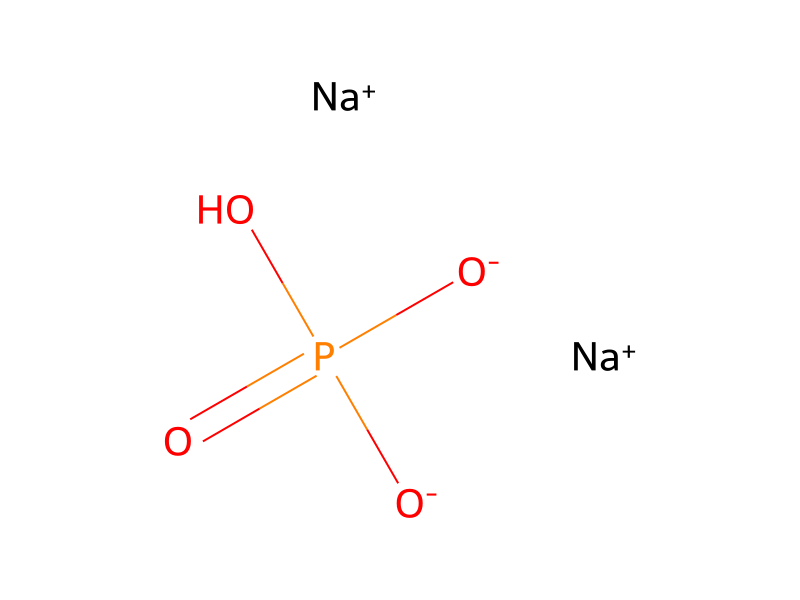
HCID 69442-NitrotolueneHCID 14798Sodium HydroxideHCID 24408BromineHCID 24526Chlorine2×HCID 253881Sodium BromideHCID 5360545Sodium

Product 1

HCID 11066341
1-(Dibromomethyl)-2-nitrobenzene
Yield 99%

Reagents, catalysts & solvents 3

HCID 24203Sodium Phosphate, DibasicCatalystHCID 962WaterSolventHCID 5943Carbon TetrachlorideSolvent

Procedure

A forced circulation apparatus is charged with a solution of 274 g (2 moles) of o-nitrotoluene in 3000 g (about 2 liters) of carbon tetrachloride and also with an aqueous solution containing 500 ml of water, 453 g (4.4 moles) of sodium bromide and 10 g of disodium hydrogen phosphate (0.08 mole). The mixture is circulated around a 150 watt sodium high-pressure lamp and heated to reflux. Under reflux and irradiation, 340 g (4.8 moles) of chlorine gas are introduced and simultaneously the pH value is kept constantly at 6 to 6.5 by the dropwise addition of aqueous sodium hydroxide solution. The chlorine gas must be introduced at such a rate that the bromine set free is always just consumed. In the course of about 6 hours the addition of chlorine is complete and virtually the entire amount has been reacted to o-nitrotoluene. After cooling, the phases are separated and the carbon tetrachloride phase is concentrated, affording 570 g of o-nitrobenzal bromide (content 99%).

Workup

  1. temperatureheated to reflux
  2. temperatureUnder reflux
  3. additionare introduced
  4. customset free is always just consumed
  5. additionIn the course of about 6 hours the addition of chlorine
  6. customvirtually the entire amount has been reacted to o-nitrotoluene
  7. temperatureAfter cooling
  8. customthe phases are separated
  9. concentrationthe carbon tetrachloride phase is concentrated

Sources & evidence

ORD record
ord-7e803216a6ea42bca76c3cf7dfaa0344
Source dataset
uspto-grants-1980_03
DOI
10.6084/m9.figshare.5104873.v1
Patent number
US04191621

Reaction notes

Loading…

On this pageParticipantsProcedureWorkupSources & evidenceReaction notes