Reaction equation

Cl.[NH:2]=[C:3]=[O:4].[CH3:5][C:6]([C:8]1[CH:13]=[CH:12][CH:11]=[CH:10][CH:9]=1)=[CH2:7].C(Cl)(=O)N.C(Cl)(C1C=CC=CC=1)(C)C>C1(C)C=CC=CC=1.C(C(CC(C)C)=O)C(C)C.[Cl-].[Zn+2].[Cl-]>[C:6]([N:2]=[C:3]=[O:4])([C:8]1[CH:13]=[CH:12][CH:11]=[CH:10][CH:9]=1)([CH3:7])[CH3:5]Participants
9
Reactant 5



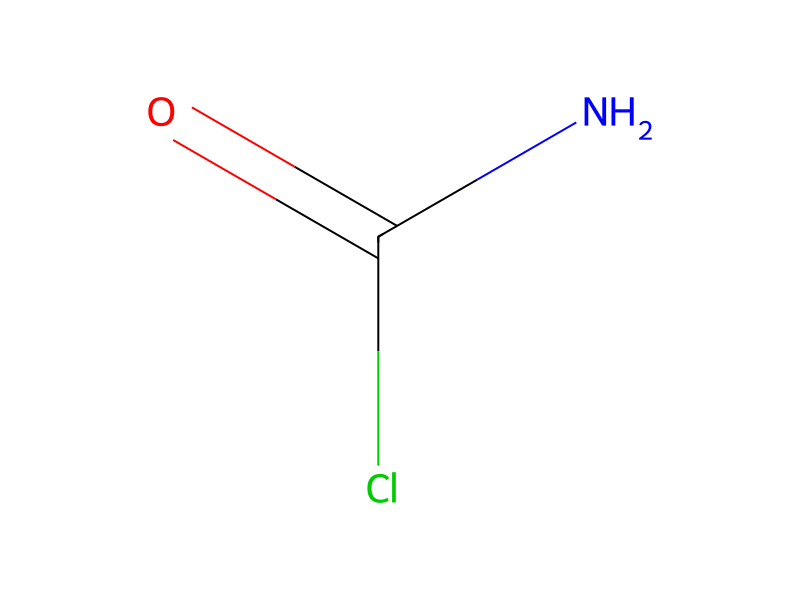

Product 1

Reagents, catalysts & solvents 3



Conditions
- Temperature
- 0 °C
Procedure
0.365 grams of dry hydrogen chloride (0.010 mole) was introduced into a solution of 0.43 grams of isocyanic acid (0.010 mole) in 3.44 grams of toluene at 0° under a nitrogen atmosphere. 1.18 gram of α-methylstyrene (0.010 mole) was added to the resultant carbamoyl chloride solution over a period of ten minutes while maintaining the temperature at 0° C. After fifteen minutes, cumyl chloride was present in 75% yield. 11.5 ml of 20.4% isocyanic acid in toluene (0.050 mole) was then added at 0° C. followed by addition of 0.50 ml of 1 M zinc chloride (0.00050 mole) in diisobutyl ketone over a period of 2 minutes at 0° C. After 5 minutes, cumyl isocyanate (b.p 50° C./1 mm was formed in 75% yield based α-methylstyrene.
Workup
- waitAfter fifteen minutes
Sources & evidence
- ORD record
- ord-4d39183e60f24986824c113eb057ed32
- Source dataset
- uspto-grants-1983_04
- Patent number
- US04379767
Linked notes
Loading…