HomeMCPWorkbenchSkills
HomeWorkbenchNotificationsMe
llms.txt · MCP GuidePrivacy Policy · Terms of Service · Supportv1.8.3
  1. Home
  2. /Reaction

Cyclohexyl isocyanate → Cyclohexylformamide

HRID 1703981
Print

Reaction equation

HRID 1703981 reaction equation
[CH:1]1([N:7]=[C:8]=[O:9])[CH2:6][CH2:5][CH2:4][CH2:3][CH2:2]1.[H][H].[N-]=C=O>O1CCOCC1.C(N(CC)CC)C>[CH:1]1([NH:7][CH:8]=[O:9])[CH2:6][CH2:5][CH2:4][CH2:3][CH2:2]1
ParticipantsConditionsProcedureWorkupSources & evidenceReaction notes

Participants

6

Reactant 3

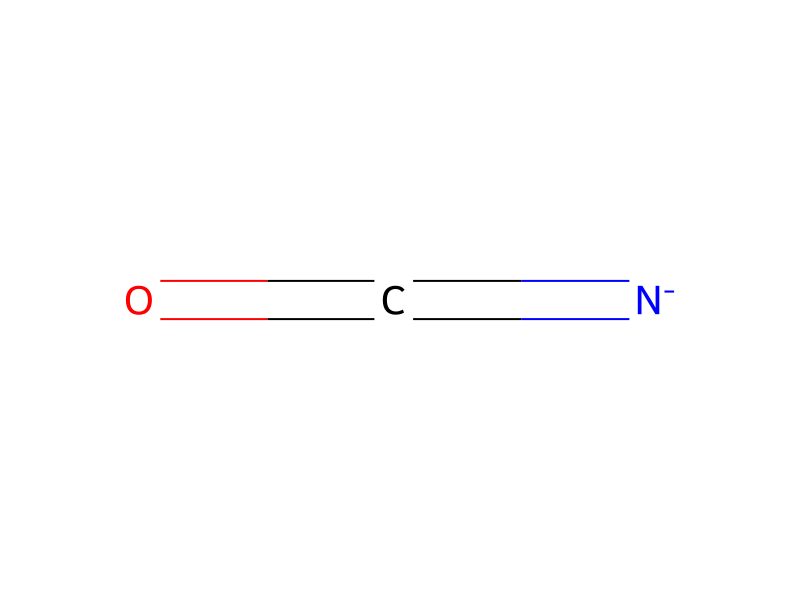
HCID 18502Cyclohexyl isocyanateHCID 105034IsocyanateHCID 178418361HCID 178418361, compound2×

Product 1

HCID 13017CyclohexylformamideYield 83.5%

Reagents, catalysts & solvents 2

HCID 312751,4-DioxaneCatalyst
HCID 8471
Triethylamine
Solvent

Conditions

Temperature
-15 °C

Procedure

A solution of cyclohexyl isocyanate (1.25 g.; 0.01 mole) in 100 ml. anhydrous 1,4-dioxane containing two drops of anhydrous triethylamine was mixed with 0.5 gram 10% Pd-on-carbon and shaken at a pressure of 50 p.s.i. of hydrogen on a Parr low pressure hydrogenator. The uptake of hydrogen was complete in two hours. Work up, as in Example 1, gave 1.15 g. of colorless oil containing a trace of isocyanate. The product was purified by slurrying the oil with Skellysolve B, chilling at -15° C. and decanting the supernatant from the crystalline formamide. After drying under high vacuum, the weight of title product was 1.06 g. (83.5% yield). The ir, nmr and glc were identical to an authentic sample.

Workup

  1. customWork up, as in Example 1, gave 1.15 g
  2. customThe product was purified
  3. customdecanting the supernatant from the crystalline formamide
  4. customAfter drying under high vacuum

Sources & evidence

ORD record
ord-3525f5417a87431d84a4f5bdb0f30d16
Source dataset
uspto-grants-1978_11
DOI
10.6084/m9.figshare.5104873.v1
Patent number
US04125724

Reaction notes

On this pageParticipantsConditionsProcedureWorkupSources & evidenceReaction notes