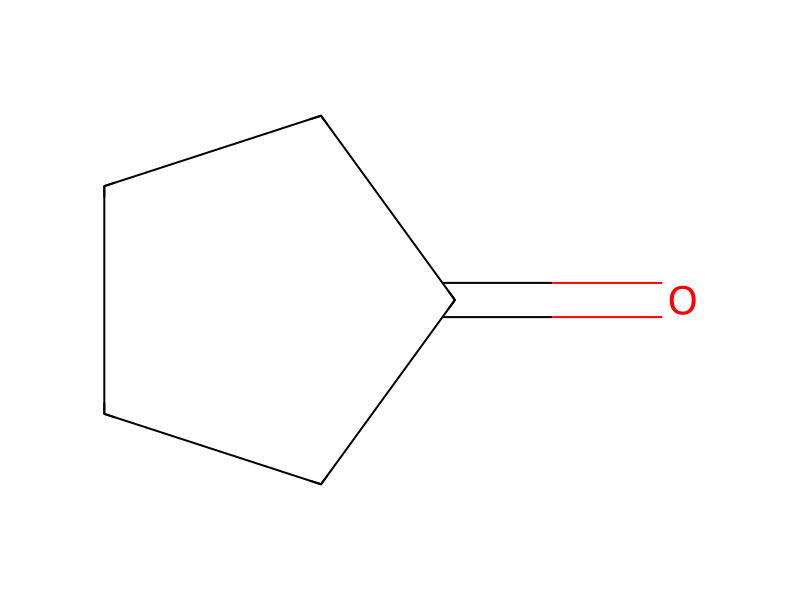
To a stirred suspension of zinc powder (0.71 g, 10.9 mmoL) in anhydrous THF (15 mL) was slowly added, via syringe, TiCl4 (0.58 mL, 1.0 g, 5.3 mmoL) at RT under a nitrogen atmosphere. The stirred reaction mixture was heated at reflux under a nitrogen atmosphere for 2.5 h. To the refluxing reaction mixture was added a solution of (4-bromophenyl)(4-hydroxyphenyl)methanone (2) (0.408 g, 1.47 mmol) and cyclopentanone (0.38 mL, 0.36 g, 4.3 mmol) in THF (15 mL) and heating continued an additional 2 h. The reaction mixture was allowed to cool to room temperature and water (10 mL) slowly added. The reaction mixture was then filtered through a pad of Celite and the Celite pad washed with EtOAc. The filtrate was transferred to a separatory funnel and the organic layer was separated. The organic phase was washed with brine, dried (MgSO4), filtered, and the filtrate concentrated in vacuo to give the crude product. The crude product was purified by flash chromatography on silica gel with hexanes:EtOAc (100:0 to 60:40) to give 0.391 g (81%) of compound 3 as a pale yellow solid. 1H NMR (400 MHz, DMSO-d6): δ 1.59 (m, 4H), 2.27 (m, 4H), 6.66 (d, J=8.5 Hz, 2H), 6.89 (d, J=8.4 Hz, 2H), 7.04 (d, J=8.4 Hz, 2H), 7.45 (d, J=8.4 Hz, 2H), 9.32 (s, 1H). HRMS (EI) Calcd for C18H17BrO: 328.0463 (M+). Found: 328.0469.