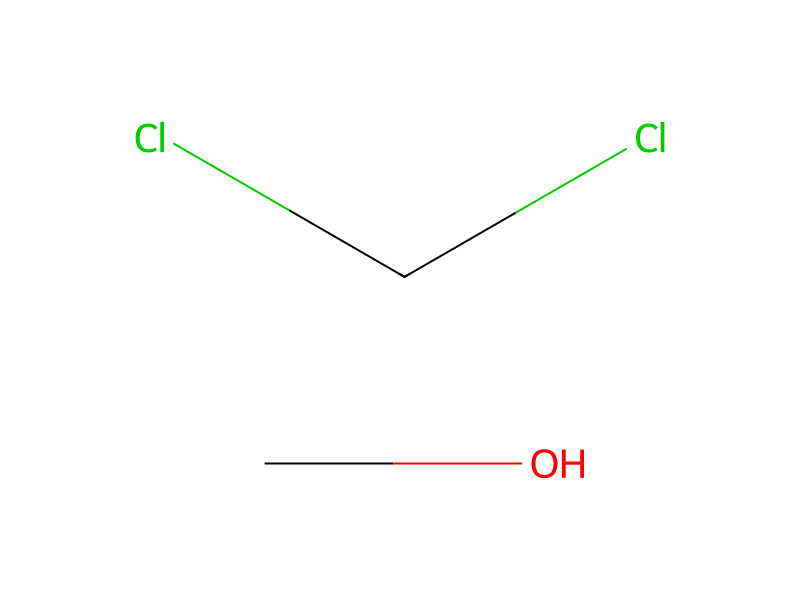
[CH2:1]([CH:5]1[CH2:10][CH2:9][N:8]([CH2:11][CH2:12][CH2:13][C:14]([C:16]2[CH:21]=[CH:20][CH:19]=[CH:18][C:17]=2[O:22]CC2C=CC=CC=2)=[O:15])[CH2:7][CH2:6]1)[CH2:2][CH2:3][CH3:4].Cl.[OH-].[Na+].C(Cl)Cl.CO>CCO.[Pd]>[CH2:1]([CH:5]1[CH2:6][CH2:7][N:8]([CH2:11][CH2:12][CH2:13][C:14]([C:16]2[CH:21]=[CH:20][CH:19]=[CH:18][C:17]=2[OH:22])=[O:15])[CH2:9][CH2:10]1)[CH2:2][CH2:3][CH3:4]4-n-Butyl-1-[4-(2-hydroxyphenyl)-4-oxol-butyl]piperidine (27)-3 To a 25 mL reaction flask was added a solution of 4-n-Butyl-1-[4-(2-benzyloxyphenyl)-4-oxo-1-butyl]piperidine (26) (49 mg, 1.2 mmol) dissolved in dry EtOH (10 mL) and conc. HCl (0.1 mL) followed by addition of palladium on charcoal (40 mg). The reaction flask was then charged with H2 by the use of balloon technique and left stirring at rt over-night under H2 atmosphere. The reaction mixture was basified by addition of NaOH (2 mL, 2.0 M) and filtered through celite. The aqueous phase was extracted with ethyl acetate (3×50 mL) and the combined organic phases were washed with brine (10 mL) and NaOH (10 mL, 2 M), dried (MgSO4) and evaporated to dryness to produce 0.42 g of crude 27. The crude product was subjected to CC [eluent: : CH2Cl2: MeOH (99:1)] to give pure 27 (0.21 g, 58%); LC-MS [M+H]+ 303 (cald. 303.2).