Dihydroxyacetone → Thionyl Chloride
Reaction equation

[NH2:1][C:2]1[N:11]=[C:10]([NH2:12])[C:9]2[C:4](=[N:5][CH:6]=[C:7]([CH2:13][OH:14])[N:8]=2)[N:3]=1.[ClH:15].[ClH:16].NC1N(N)C(N)=C(N)C=N1.[S:27](=[O:30])(O)[O-].OCC(CO)=O.[Se](=O)=O>N[C@H](C(O)=O)CS>[NH2:1][C:2]1[N:11]=[C:10]([NH2:12])[C:9]2[C:4](=[N:5][CH:6]=[C:7]([CH2:13][OH:14])[N:8]=2)[N:3]=1.[S:27]([Cl:16])([Cl:15])=[O:30]Participants
Reactant 5


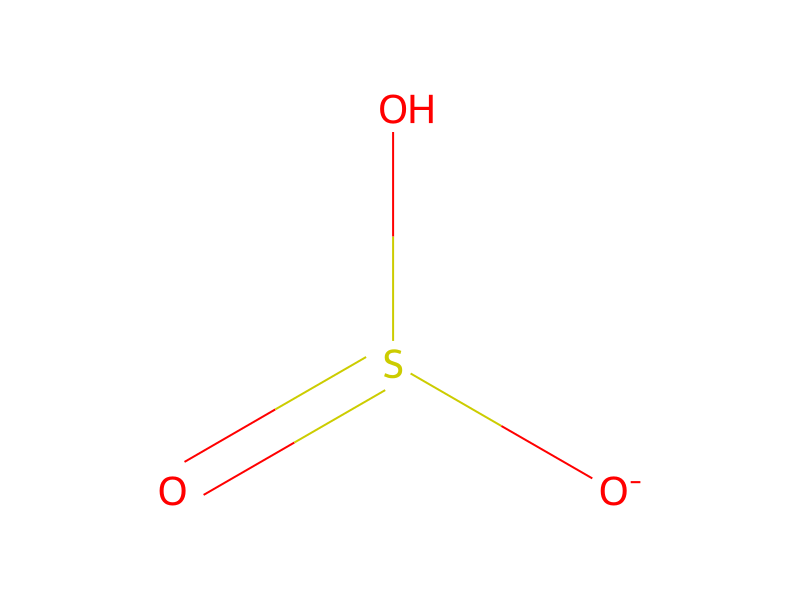

Product 2

Reagents, catalysts & solvents 1

Procedure
A three-step process is provided for preparing the L,D and DL isomers of N[p-{[(2,4-diamino-6-pteridyl)-methyl]N10 -methylamino}-benzoyl]-glutamic acid. The first step produces: 2,4-diamino-6-hydroxymethyl pteridine by condensation in a buffered aqueous media of 2,3,4,5-tetraminopyrimidine dihydrochloride with the bisulphite addition product of 1,3-dihydroxyacetone in the presence of cysteine as catalyst and using selenium dioxide and a continuous air bubbling as oxidation agents. In the next step, 2,4-diamino-6-halomethylpteridine is obtained by halogenation of the previously obtained 2,4-diamino-6-hydroxymethylpteridine in an inert media with a halogenation agent such as thionyl chloride, in the presence of a basic catalyst such as pyridine or triethylamine. In the third step, N[p-{[(2,4-diamino-6-pteridyl)-methyl]-N10 -methylamino}-benzoyl-]-glutamic acid is produced by condensation of the 2,4-diamino-6-halomethylpteridine with N[p-(N-methylamino)-benzoyl]-glutamic acid at pH 3-4 in an aqueous buffered solution.
Workup
- customThe first step produces
- customa continuous air bubbling as oxidation agents
Sources & evidence
- ORD record
- ord-eb880251ebee4ec5bf8d7c217eef93f7
- Source dataset
- uspto-grants-1976_11
- Patent number
- US03989703
Reaction notes
Loading…