HomeMCPSkillsWorkbenchOpenChem
HomeWorkbenchNotificationsMe
llms.txt · skill.md · MCP GuidePrivacy Policy · Terms of Service · Supportv1.8.6
  1. Home
  2. /Reaction

Diisopropylamine → 2-(4-Bromobutyl)benzofuran-6-carboxylic acid

HRID 1732573
Print

Reaction equation

C([Li])CCC.C(NC(C)C)(C)C.[O:13]1[C:17]2[CH:18]=[C:19]([C:22]([OH:24])=[O:23])[CH:20]=[CH:21][C:16]=2[CH:15]=[CH:14]1.[Br:25][CH2:26][CH2:27][CH2:28][CH2:29]Br>O1CCCC1.CN(C)P(N(C)C)(N(C)C)=O>[Br:25][CH2:26][CH2:27][CH2:28][CH2:29][C:14]1[O:13][C:17]2[CH:18]=[C:19]([C:22]([OH:24])=[O:23])[CH:20]=[CH:21][C:16]=2[CH:15]=1
ParticipantsConditionsProcedureWorkupSources & evidenceReaction notes

Participants

7

Reactant 4

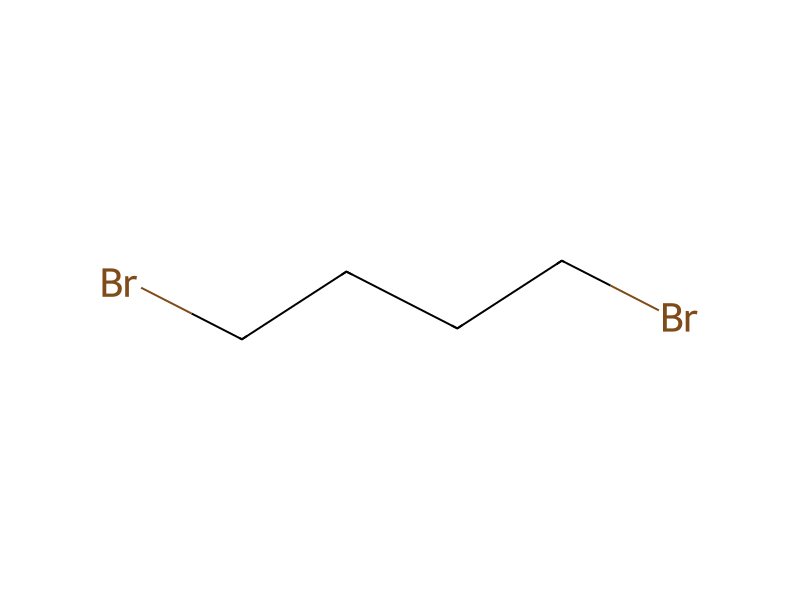
HCID 7912DiisopropylamineHCID 80561,4-DibromobutaneHCID 178672341-Benzofuran-6-carboxylic acidHCID 178418339Butyllithium

Product 1

HCID 203039332-(4-Bromobutyl)benzofuran-6-carboxylic acid

Reagents, catalysts & solvents 2

HCID 8028
Tetrahydrofuran
Solvent
HCID 12679HexamethylphosphoramideSolvent

Conditions

Temperature
0 °C

Procedure

n-Butyllithium solution (2.29 M in hexane, 44 ml., 0.1 mole) is added to a solution of diisopropylamine (10.1 g., 0.1 mole) in tetrahydrofuran (150 ml.) and hexamethylphosphoramide (15 ml.). The resulting solution is treated with benzofuran-6-carboxylic acid (8.1 g., 0.05 mole) and then with 1,4-dibromobutane (10.8 g., 0.05 mole) at 0° C. The mixture is stirred at 0° C. for 6 hours. It is then quenched with water, acidified with hydrochloric acid and extracted with ethyl acetate. Evaporation of the solvent gives 2-(4-bromobutyl)benzofuran-6-carboxylic acid.

Workup

  1. customat 0° C
  2. customIt is then quenched with water
  3. extractionextracted with ethyl acetate
  4. customEvaporation of the solvent

Sources & evidence

ORD record
ord-e49bd146feb14b11aa58c4caa0a2f17d
Source dataset
uspto-grants-1980_12
DOI
10.6084/m9.figshare.5104873.v1
Patent number
US04238487

Reaction notes

On this pageParticipantsConditionsProcedureWorkupSources & evidenceReaction notes