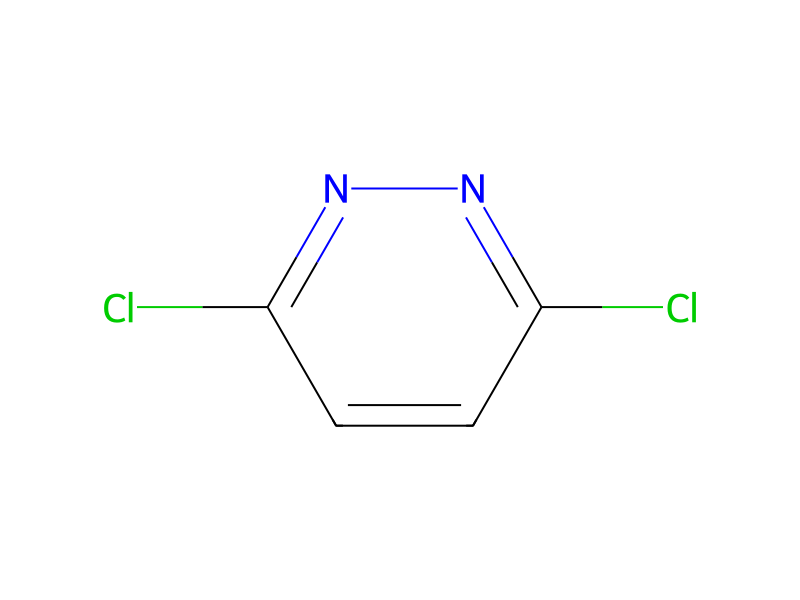
To a solution of 8.2 g (0.07 mole) of phenylacetonitrile in 50 ml of dry tetrahydrofuran was added 1.61 g (0.07 mole) of pulverized lithium amide. The mixture was refluxed for 5 hours. To the reaction mixture thereafter cooled were added 8.2 g (0.055 mole) of 3,6-dichloropyridazine and 10 ml of tetrahydrofuran on a water-ice bath. The mixture was then allowed to stand overnight at room temperature. The resulting mixture was neutralized and then distilled to remove the tetrahydrofuran. The residue was chromatographed over silica gel, followed by recrystallization from a mixture of ethanol and isopropyl ether, giving 5.4 g (42.9% yield) of 2-phenyl-2-(6-chloro-3-pyridazinyl)acetonitrile in the form of pale red needles, m.p. 131° C.