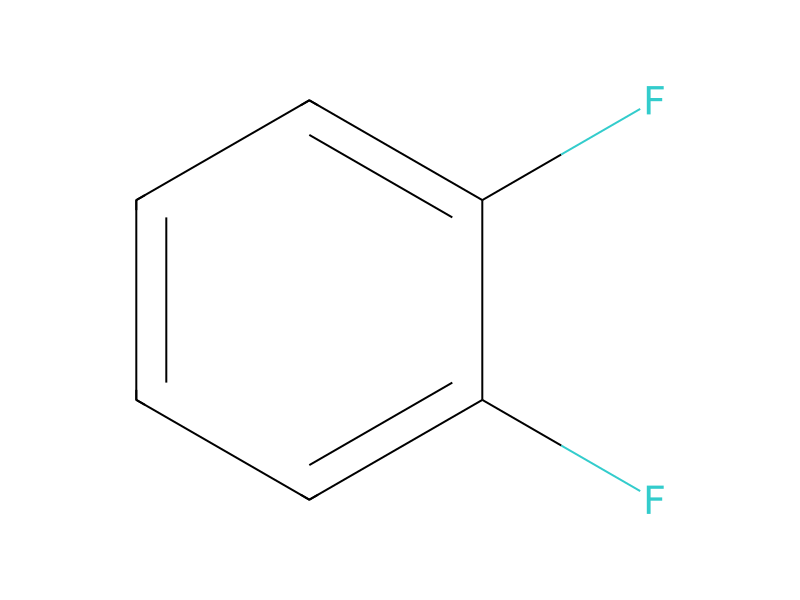
[F:1][C:2]1[CH:7]=[CH:6][CH:5]=[CH:4][C:3]=1[F:8].[F:9][C:10]([F:22])([F:21])[C:11]([NH:13][C@@H:14]1[C:19](=[O:20])[O:18][C:16](=[O:17])[CH2:15]1)=[O:12].[Cl-].[Cl-].[Cl-].[Al+3]>ClCCl>[F:9][C:10]([F:21])([F:22])[C:11]([NH:13][C@@H:14]([CH2:15][C:16](=[O:17])[C:5]1[CH:6]=[CH:7][C:2]([F:1])=[C:3]([F:8])[CH:4]=1)[C:19]([OH:20])=[O:18])=[O:12]To an ice-cooled solution of 1,2-difluorobenzene (25 ml; 0.256 mol) in dry dichloromethane (170 ml), (S)-N-trifluoroacetylaspartic anhydride (12 g.; 0.054 mol) was added in one portion. To the resulting solution, anhydrous aluminium trichloride (21.5 g; 0.16 mol.) was slowly added portionwise, under vigorous stirring and dry nitrogen atmosphere, maintaining the temperature below 10° C. The so obtained deep-yellow suspension was stirred at room temperature for 3 hrs. and then at 50° C. for 5 hrs. The resulting reaction mixture was then poured into ice (400 g), and extracted with dichlorometane (3×100 ml), the collected organic extracts were washed with brine (2×50 ml ), dried (Na2SO4), and evaporated in vacuum to afford the crude product (7.3 g) as an oily material. Recrystallisation from hexane/ethyl ether afforded the pure titled compound as colourless prisms (8 g; 47%), m.p. 136°-137° C.