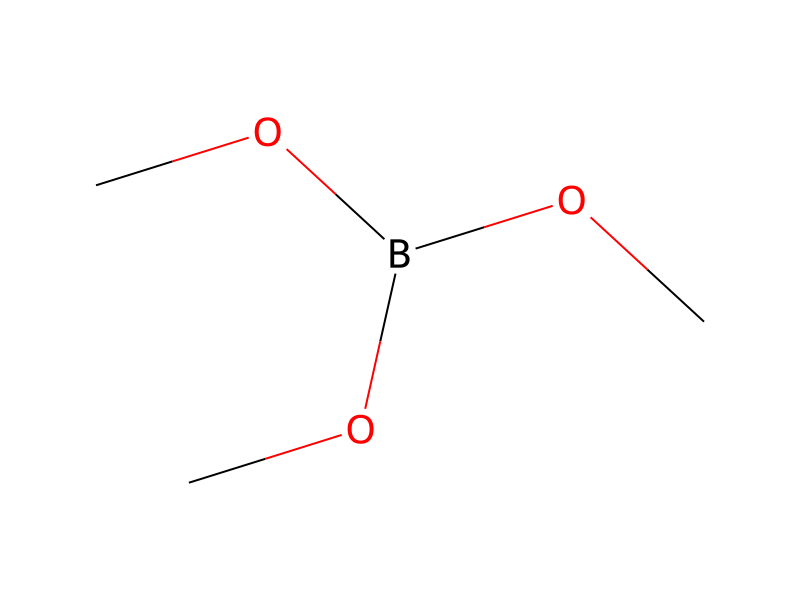
C([Li])CCC.[Br:6][C:7]1[CH:12]=[C:11]([C:13]2[CH:18]=[CH:17][CH:16]=[CH:15][CH:14]=2)[C:10](Br)=[CH:9][C:8]=1[C:20]1[CH:25]=[CH:24][CH:23]=[CH:22][CH:21]=1.C[O:27][B:28](OC)[O:29]C.Cl>CCCCCC.C(OCC)C>[Br:6][C:7]1[C:8]([C:20]2[CH:25]=[CH:24][CH:23]=[CH:22][CH:21]=2)=[CH:9][C:10]([B:28]([OH:29])[OH:27])=[C:11]([C:13]2[CH:18]=[CH:17][CH:16]=[CH:15][CH:14]=2)[CH:12]=14-Bromo-2,5-diphenylbenzeneboronic acid is prepared as follows: A solution of n-butyllithium (1.6 M, 15 ml) in hexane is added slowly to a cooled (-40° C.) solution of 1,4-di-bromo-2,5-diphenylbenzene (25 mmol) in diethylether (100 ml). This mixture is allowed to warm to room temperature and is stirred for 2 hours. This solution is transferred into a dropping funnel and added to a cooled (-60° C.) solution of trimethylborate (74 mmol) in ether (200 ml). It is then stirred for 8 hours at room temperature. After hydrolysis with aqueous HCl (2M, 150 ml), the layers are separated and the aqueous layer is extracted with ether (100 ml). The solvent is then removed from the combined organic layers and water (5 ml) and petroleum ether (100) are added. The precipitate is recovered by filtration, and recrystallized from toluene.