p-Toluenesulfonic acid → 8-Bromo2-dipropylamino-3,4-dihydronaphthalene
HRID 1742675
Reaction equation

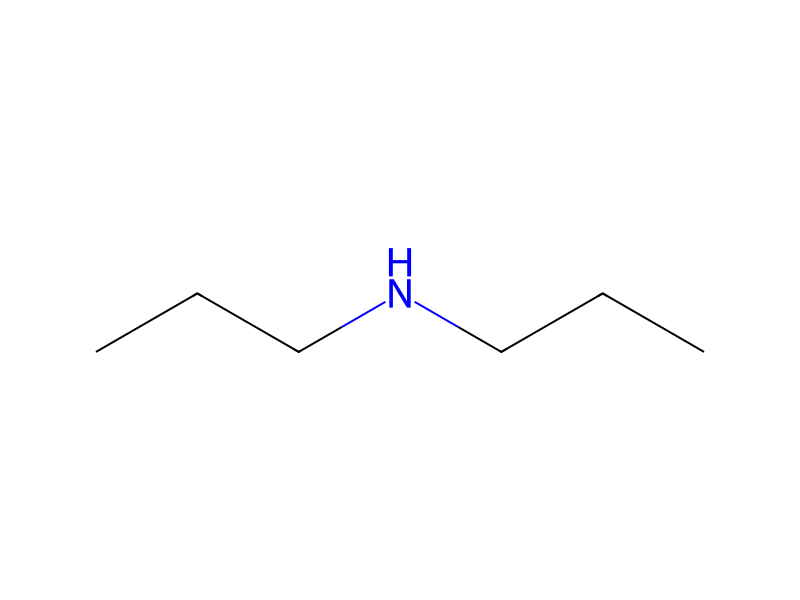
[Br:1][C:2]1[CH:3]=[CH:4][CH:5]=[C:6]2[C:11]=1[CH2:10][C:9](=O)[CH2:8][CH2:7]2.[CH2:13]([NH:16][CH2:17][CH2:18][CH3:19])[CH2:14][CH3:15].C1(C)C=CC(S(O)(=O)=O)=CC=1>C1(C)C=CC=CC=1>[Br:1][C:2]1[CH:3]=[CH:4][CH:5]=[C:6]2[C:11]=1[CH:10]=[C:9]([N:16]([CH2:17][CH2:18][CH3:19])[CH2:13][CH2:14][CH3:15])[CH2:8][CH2:7]2Participants
5
Reactant 3


Product 1

Reagents, catalysts & solvents 1

Procedure
To a solution of 8-bromo-2-tetralone (3.0 gm, 13.3 mMol) in toluene (25 mL) were added di-n-propylamine (3.5 mL, 26 mMol) and p-toluenesulfonic acid (100 mg, 0.52 mMol). The reaction was heated to reflux, water being collected in a Dean-Stark trap. After four hours the reaction was concentrated in vacuo to give 8-bromo-2-dipropylamino-3,4-dihydronaphthalene as a dark liquid which was immediately dissolved in methanol (50 mL) and acetic acid (5 mL). To this solution was then added sodium borohydride (2.0 gm, 52.9 mMol), and the mixture was stirred 18 hours at room temperature.