HomeMCPWorkbenchSkills
HomeWorkbenchNotificationsMe
llms.txt · MCP GuidePrivacy Policy · Terms of Service · Supportv1.8.0
  1. Home
  2. /Reaction

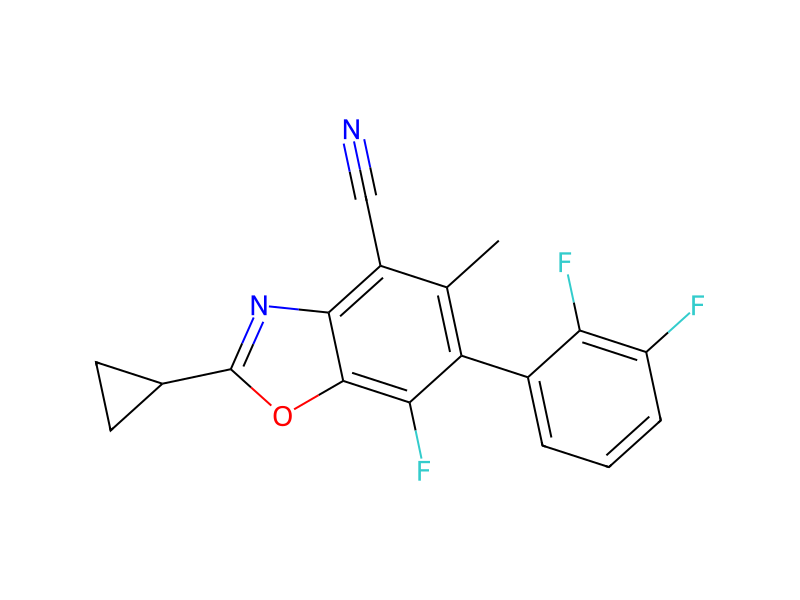
Ammonium Chloride → 2-Cyclopropyl-6-(2,3-difluorophenyl)-7-fluoro-5-methyl-1,3-benzoxazole-4-carbonitrile

HRID 17453
Notes
Print preview

Reaction equation

HRID 17453 reaction equation
Br[C:2]1[C:3]([F:17])=[C:4]2[O:8][C:7]([CH:9]3[CH2:11][CH2:10]3)=[N:6][C:5]2=[C:12]([C:15]#[N:16])[C:13]=1[CH3:14].[F:18][C:19]1[C:24]([F:25])=[CH:23][CH:22]=[CH:21][C:20]=1B(O)O.P([O-])([O-])([O-])=O.[K+].[K+].[K+].[Cl-].[NH4+]>O1CCOCC1.C1C=CC([P]([Pd]([P](C2C=CC=CC=2)(C2C=CC=CC=2)C2C=CC=CC=2)([P](C2C=CC=CC=2)(C2C=CC=CC=2)C2C=CC=CC=2)[P](C2C=CC=CC=2)(C2C=CC=CC=2)C2C=CC=CC=2)(C2C=CC=CC=2)C2C=CC=CC=2)=CC=1.C(OCC)(=O)C>[CH:9]1([C:7]2[O:8][C:4]3[C:5](=[C:12]([C:15]#[N:16])[C:13]([CH3:14])=[C:2]([C:23]4[CH:22]=[CH:21][CH:20]=[C:19]([F:18])[C:24]=4[F:25])[C:3]=3[F:17])[N:6]=2)[CH2:11][CH2:10]1
ParticipantsConditionsProcedureWorkupSources & evidenceReaction notes

Participants

8

Reactant 4

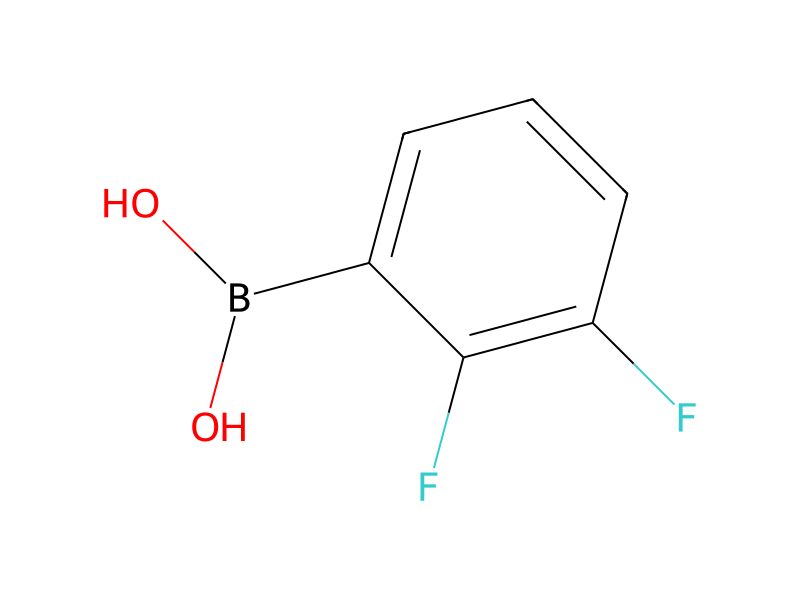
HCID 25517Ammonium ChlorideHCID 62657Potassium Phosphate, TribasicHCID 2734333(2,3-Difluorophenyl)boronic acidHCID 510414276-Bromo-2-cyclopropyl-7-fluoro-5-methylbenzoxazole-4-carbonitrile

Product 1

HCID 685869922-Cyclopropyl-6-(2,3-difluorophenyl)-7-fluoro-5-methyl-1,3-benzoxazole-4-carbonitrileYield 53%

Reagents, catalysts & solvents 3

HCID 178418397HCID 178418397, compoundCatalystHCID 8857Ethyl AcetateSolventHCID 312751,4-DioxaneSolvent

Conditions

Temperature
95 °C

Procedure

6-Bromo-2-cyclopropyl-7-fluoro-5-methyl-1,3-benzoxazole-4-carbonitrile (I-77) (190 mg, 0.64 mmol), 2,3-difluorophenylboronic acid (407 mg, 2.58 mmol) and tripotassium phosphate (274 mg, 1.29 mmol) were dissolved in 1,4-dioxane (6 ml), then at room temperature, tetrakis(triphenylphosphine)palladium(0) (149 mg, 0.13 mmol) was added. The suspension was stirred under nitrogen atmosphere at 95° C. for 86 hours. After cooling to room temperature, the solution was fractionated with ethyl acetate and aqueous saturated ammonium chloride solution. The aqueous layer was extracted twice with ethyl acetate. The organic layers were combined, washed with saturated brine, and dried over anhydrous sodium sulfate. The solvent was evaporated away, and the resulting residue was purified by middle-pressure liquid chromatography (eluent, hexane:ethyl acetate=9:1) to obtain the entitled compound (111 mg, 53%) as a white solid.

Workup

  1. temperatureAfter cooling to room temperature
  2. extractionThe aqueous layer was extracted twice with ethyl acetate
  3. washwashed with saturated brine
  4. dry with materialdried over anhydrous sodium sulfate
  5. customThe solvent was evaporated away
  6. customthe resulting residue was purified by middle-pressure liquid chromatography (eluent, hexane:ethyl acetate=9:1)

Sources & evidence

ORD record
ord-0103d49164824ac4adb363d831c820eb
Source dataset
uspto-grants-2010_06
DOI
10.6084/m9.figshare.5104873.v1
Patent number
US07737166B2

Reaction notes

Loading…

On this pageParticipantsConditionsProcedureWorkupSources & evidenceReaction notes