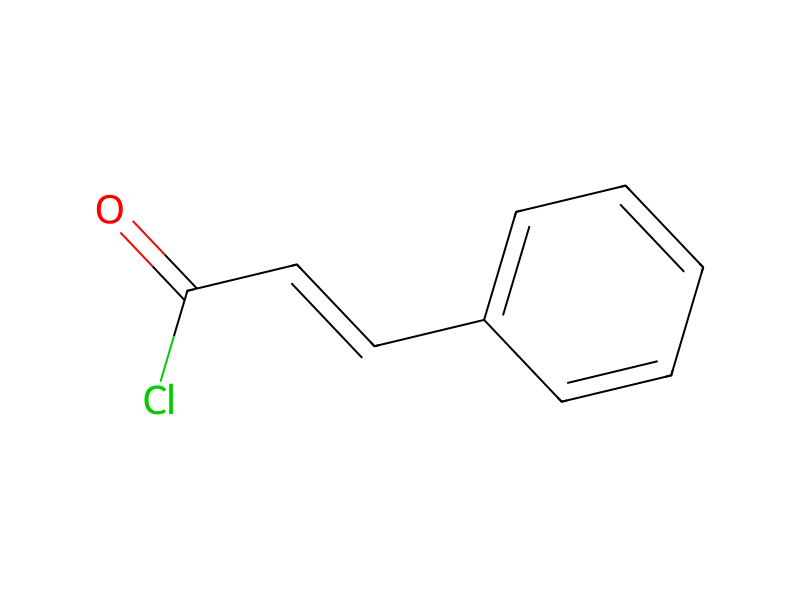
35.3 g (0.212 mol) of cinnamic acid chloride and 100 mL of methyl ethyl ketone were placed in a reaction vessel and stirred at room temperature under a nitrogen atmosphere. Then 28.2 g (0.225 mol) of 2-bromoethanol and 21 g of pylidine were dissolved in 100 mL of methyl ethyl ketone. The resulting solution was added dropwise in the aforementioned reaction vessel at room temperature, and then refluxed with stirring for 2 hours. After cooling the solution, pyridine hydrochloride was precipitated and then separated from the solution by filtration. The filtrate was concentrated and then dissolved in methylene chloride. The solution of methylene chloride was poured into a separating funnel and washed with water. Then the solution was dried with sodium sulfuric anhydride and concentrated. Thus 47 g (86.9% yield) of 2-bromoethyl cinnamate was obtained.