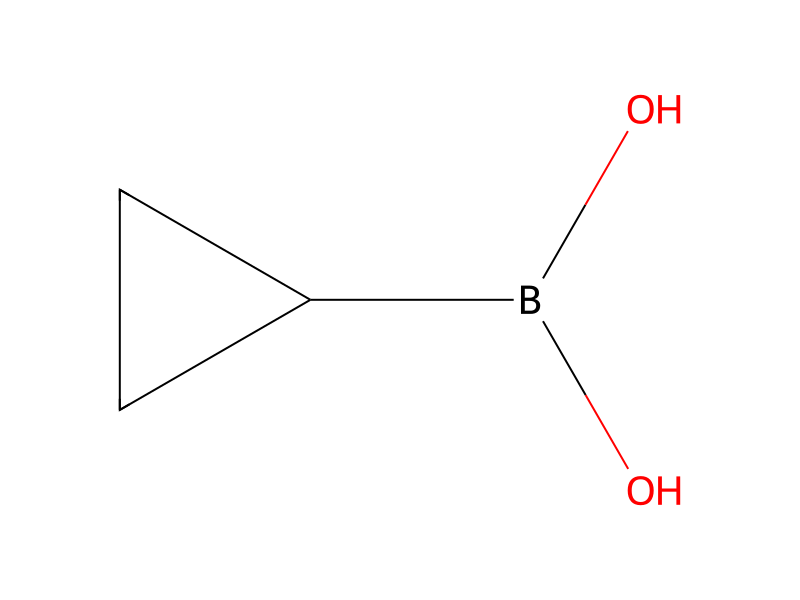
[CH2:1]([O:3][C:4]([C:6]1[CH:7]=[N:8][N:9]([C:12]2[CH:17]=[CH:16][C:15](Br)=[CH:14][N:13]=2)[C:10]=1[CH3:11])=[O:5])[CH3:2].[CH:19]1(B(O)O)[CH2:21][CH2:20]1.P([O-])([O-])([O-])=O.[K+].[K+].[K+].C(Cl)(Cl)Cl>O1CCOCC1.C1CCC(P(C2CCCCC2)C2CCCCC2)CC1.C1CCC(P(C2CCCCC2)C2CCCCC2)CC1.Cl[Pd]Cl>[CH2:1]([O:3][C:4]([C:6]1[CH:7]=[N:8][N:9]([C:12]2[CH:17]=[CH:16][C:15]([CH:19]3[CH2:21][CH2:20]3)=[CH:14][N:13]=2)[C:10]=1[CH3:11])=[O:5])[CH3:2]A suspension of 1-(5-bromopyridin-2-yl)-5-methyl-1H-pyrazole-4-carboxylic acid ethyl ester (18 g) described in Reference Example 24 (2), cyclopropylboronic acid (9.96 g), dichlorobis(tricyclohexylphosphine)palladium (II) (2.14 g) and tripotassium phosphate (49.2 g) in 1,4-dioxane (120 ml) was stirred at 110° C. for 3 hours. After completion of the reaction, the mixture was allowed to cool, chloroform was added thereto, filtered through Celite, then, to the filtrate was added a saturated aqueous solution of ammonium chloride, and the mixture was extracted with chloroform. The organic layer was dried over anhydrous sodium sulfate, and the solvent was evaporated in vacuo. The obtained residue was purified with silica gel chromatography (n-hexane/ethyl acetate) to give 1-(5-cyclopropylpyridin-2-yl)-5-methyl-1H-pyrazole-4-carboxylic acid ethyl ester (14 g) as a yellow solid. MS (ESI) m/z: 272 (M+H)+.