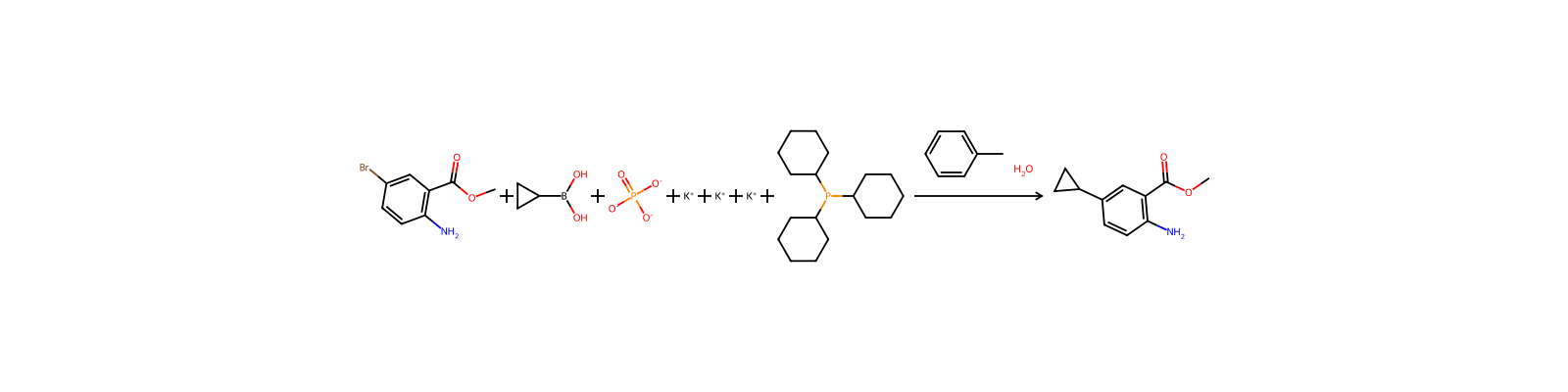
HRID 12296As reactant
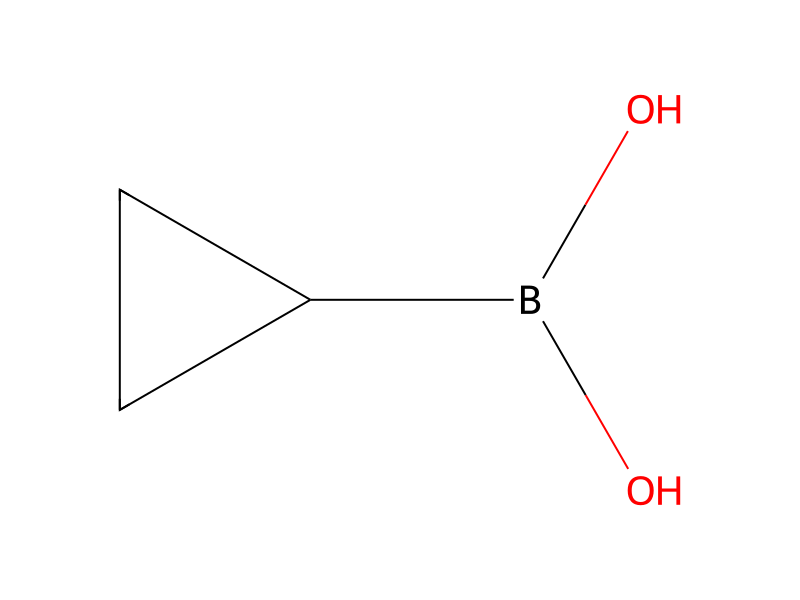
411235-57-9OB(O)C1CC1WLVKDFJTYKELLQ-UHFFFAOYSA-N411235-57-9DTXSID00375402Safety information is for reference only and does not replace the supplier’s Safety Data Sheet (SDS), applicable regulations, or professional assessment.
This chemical does not meet GHS hazard criteria for 6.7% (1 of 15) of reports.
Danger
H242 (20%): Heating may cause a fire [Danger Self-reactive substances and mixtures; Organic peroxides]
P203, P210, P234, P235, P240, P261, P264, P264+P265, P270, P271, P280, P301+P317, P302+P352, P304+P340, P305+P351+P338, P305+P354+P338, P317, P318, P319, P321, P330, P332+P317, P337+P317, P362+P364, P370+P378, P403, P403+P233, P405, P410, P411, P420, and P501 (click each P-code to see the statement)
Aggregated GHS information provided per 15 reports by companies from 11 notifications to the ECHA C&L Inventory. Each notification may be associated with multiple companies.
UsesCyclopropylboronic Acid is an organoboronic acid commonly used in highly efficient Suzuki coupling reactions.
UsesReagent used for• ;Microwave-assisted copper(II)-catalyzed N-cyclopropylation1• ;Nickel- and copper-catalyzed Suzuki-Miyaura coupling reaction of arenes2• ;Palladacycle-catalyzed Suzuki-cross coupling of aryl halides with cyclopropylboronic acid3• ;Palladium(0)-catalyzed cyclopropane C-H bond functionalization4• ;Palladium-catalyzed decarboxylative coupling5• ;Palladium-catalyzed ligand-directed oxidative functionalization of cyclopropanes6• ;Palladium-catalyzed Suzuki coupling reaction7Reagent used in Preparation of• ;Diaryl ketones by arylation
Usessuzuki reaction