HomeMCPWorkbenchSkills
HomeWorkbenchNotificationsMe
llms.txt · MCP GuidePrivacy Policy · Terms of Service · Supportv1.8.0
  1. Home
  2. /Reaction

2,6-Difluoroaniline → 4-bromo-N-(2,6-difluorophenyl)-3-methylthiophene-2-carboxamide

HRID 1754349
Notes
Print preview

Reaction equation

HRID 1754349 reaction equation
[F:1][C:2]1[CH:8]=[CH:7][CH:6]=[C:5]([F:9])[C:3]=1[NH2:4].C[Al](C)C.C[O:15][C:16]([C:18]1[S:19][CH:20]=[C:21]([Br:24])[C:22]=1[CH3:23])=O>C(Cl)Cl>[Br:24][C:21]1[C:22]([CH3:23])=[C:18]([C:16]([NH:4][C:3]2[C:2]([F:1])=[CH:8][CH:7]=[CH:6][C:5]=2[F:9])=[O:15])[S:19][CH:20]=1
ParticipantsProcedureWorkupSources & evidenceReaction notes

Participants

5

Reactant 3

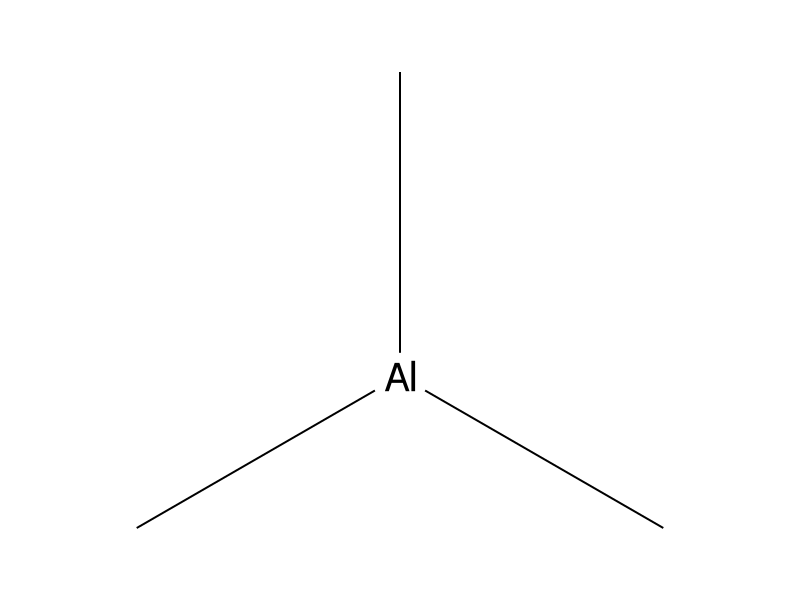
HCID 796472,6-DifluoroanilineHCID 16682925TrimethylaluminumHCID 59212115Methyl 4-bromo-3-methylthiophene-2-carboxylate

Product 1

HCID 675150274-bromo-N-(2,6-difluorophenyl)-3-methylthiophene-2-carboxamideYield 35.1%

Reagents, catalysts & solvents 1

HCID 6344DichloromethaneSolvent

Procedure

To a 0° C. solution of 2,6-difluoroaniline (1.10 g, 8.58 mmol, 1.0 eq) in DCM (20 mL) was added drop wise trimethyl aluminium (2 M in toluene, 4.3 mL, 1.0 eq) followed by a solution of methyl-4-bromo-3-methylthiophene-2-carboxylate (2.0 g, 8.58 mmol, 1.0 eq). The reaction was allowed to come to room temperature and then stirred for 2 h at the same temperature. The reaction was quenched with water (10 mL) followed by the addition of DCM (20 mL). The layers were separated, and the organic layer was washed with brine (15 mL), dried (Na2SO4) and filtered. The filtrate was rotary evaporated and the residue was purified by flash column chromatography (silica gel, 30% ethyl acetate in hexane) to afford 1.0 g (35%) of the desired product as a brown solid. 1HNMR (400 MHz, CDCl3) δ 7.42 (s, 1H), 7.28-7.21 (m, 1H), 7.15 (s, 1H, D2O exchangeable), 7.03-6.94 (m, 2H), 2.56 (s, 3H); ESI-MS (m/z) 332, 334 [(MH)+, Br79,81].

Workup

  1. customto come to room temperature
  2. customThe reaction was quenched with water (10 mL)
  3. additionfollowed by the addition of DCM (20 mL)
  4. customThe layers were separated
  5. washthe organic layer was washed with brine (15 mL)
  6. dry with materialdried (Na2SO4)
  7. filtrationfiltered
  8. customThe filtrate was rotary evaporated
  9. customthe residue was purified by flash column chromatography (silica gel, 30% ethyl acetate in hexane)

Sources & evidence

ORD record
ord-639221bbc3dc4b1ea9000998b5f34a5e
Source dataset
uspto-grants-2015_10
DOI
10.6084/m9.figshare.5104873.v1
Patent number
US09169242B2

Reaction notes

Loading…

On this pageParticipantsProcedureWorkupSources & evidenceReaction notes