Reaction equation

O(C1C=C(C=CC=1)CO)C1C=CC=CC=1.[CH3:16][C:17]1([CH3:32])[CH:19]([CH:20]=[CH:21][C:22]([O:24][CH2:25][CH:26]2[CH2:28][CH2:27]2)=[O:23])[CH:18]1[C:29]([OH:31])=[O:30]>C(Cl)(Cl)Cl>[CH3:16][C:17]1([CH3:32])[CH:19]([CH:20]=[CH:21][C:22]([O:24][CH2:25][CH:26]2[CH2:28][CH2:27]2)=[O:23])[CH:18]1[C:29]([OH:31])=[O:30].[CH3:16][C:17]1([CH3:32])[CH:19]([CH:20]=[CH:21][C:22]([O:24][CH2:25][CH:26]2[CH2:28][CH2:27]2)=[O:23])[CH:18]1[C:29]([O-:31])=[O:30]Participants
5
Reactant 2
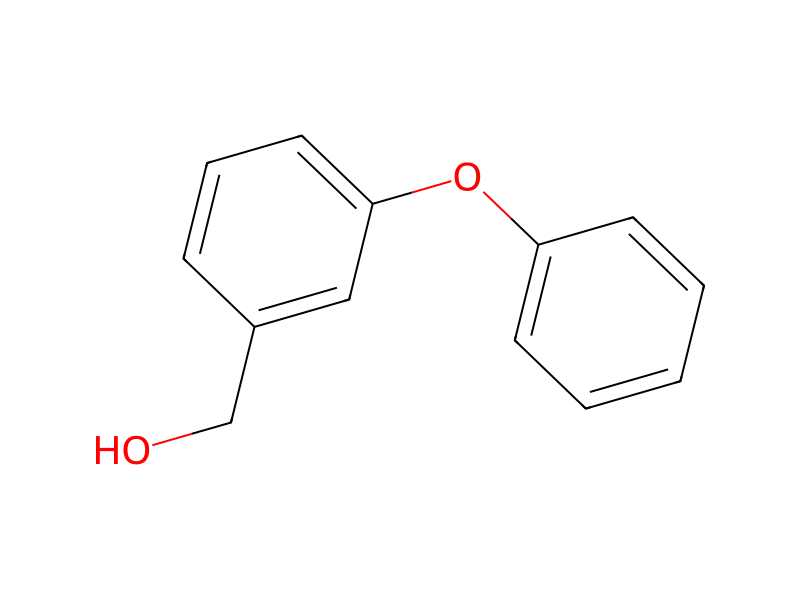

Product 2

Reagents, catalysts & solvents 1

Procedure
Using the procedure of Example 9, m-phenoxy-benzyl alcohol and (1R, cis, ΔZ) 2,2-dimethyl-3-(3-cyclopropylmethoxy-3-oxo-1-propenyl)-cyclopropane-carboxylic acid were reacted to obtain m-phenoxy-benzyl (1R, cis, ΔZ) 2,2-dimethyl-3-(3-cyclopropylmethoxy-3-oxo-1-propenyl)-cyclopropane-carboxylate with a specific rotation of [α]D20 =+46.5°±2° (c=0.6% in chloroform).
Workup
- customwere reacted
Sources & evidence
- ORD record
- ord-f080ea205f164ce587c47687d5a85cb4
- Source dataset
- uspto-grants-1989_05
- Patent number
- US04833163
Linked notes
Loading…