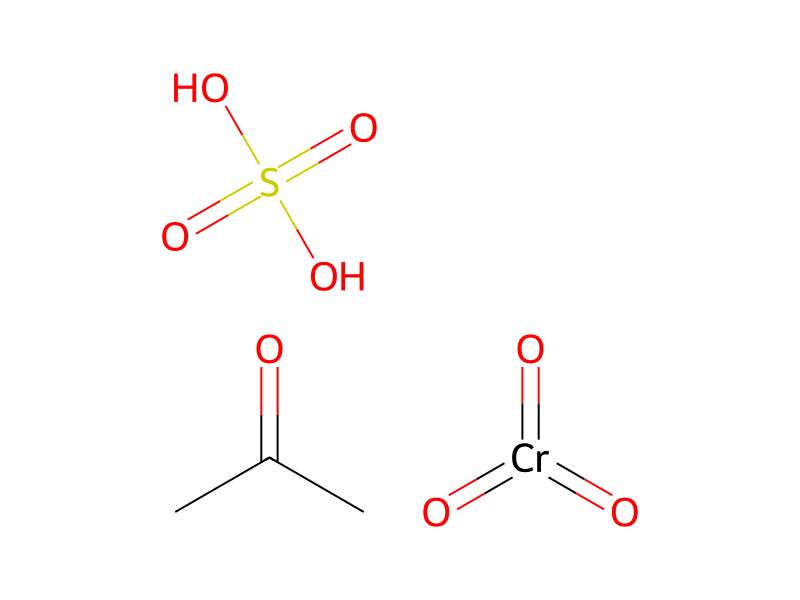
[P:1]([O:11][CH2:12][C:13]1[C:18]([CH3:19])=[CH:17][CH:16]=[CH:15][C:14]=1[CH2:20][OH:21])([O:7][CH2:8][CH:9]=[CH2:10])([O:3][CH2:4][CH:5]=[CH2:6])=[O:2].CC(C)=[O:24].OS(O)(=O)=O.O=[Cr](=O)=O.S(=O)(=O)(O)O.CC(O)C>CC(C)=O.O>[CH2:4]([O:3][P:1]([O:11][CH2:12][C:13]1[C:18]([CH3:19])=[CH:17][CH:16]=[CH:15][C:14]=1[C:20]([OH:24])=[O:21])([O:7][CH2:8][CH:9]=[CH2:10])=[O:2])[CH:5]=[CH2:6]A solution of diallyl 2-(hydroxymethyl)-6-methylbenzyl phosphate (1.22 g, 4.02 mmol) obtained from Example 22-(4) in acetone (25 ml) was cooled to 0° C., and Jones reagent (a mixture of chromic anhydride (5.34 g) and concentrated sulfuric acid (4.6 ml) diluted with water to 20 ml total volume; 6 ml, ca. 16 mmol) was added thereto. The reaction mixture was stirred at room temperature for 2 hours, and then 2-propanol (1 ml) was added thereto to stop the reaction. The insoluble material was filtered off, and the filtrate was concentrated under reduced pressure to give an oily residue. The residue was dried using a vaccum pump, and then subjected to chromatography on a silica gel (50 g) column (eluent; ethyl acetate:dichloromethane=1:1) to afford the title compound (905.3 mg, 71% yield) as a colorless oil.