HomeMCPWorkbenchSkills
HomeWorkbenchNotificationsMe
llms.txt · MCP GuidePrivacy Policy · Terms of Service · Supportv1.8.3
  1. Home
  2. /Reaction

Water → HCID 58180888, compound

HRID 1772819
Print

Reaction equation

HRID 1772819 reaction equation
[CH3:1][Si:2]([CH3:30])([CH3:29])[CH2:3][CH2:4][O:5][CH2:6][N:7]1[C:11]2[N:12]=[CH:13][N:14]=[C:15]([C:16]3[CH:17]=[N:18][N:19]([CH:21]([CH2:27][CH3:28])[C:22](OCC)=[O:23])[CH:20]=3)[C:10]=2[CH:9]=[CH:8]1.[H-].C([Al+]CC(C)C)C(C)C.[OH-].[Na+].O>C1(C)C=CC=CC=1.C(OCC)(=O)C>[CH3:1][Si:2]([CH3:29])([CH3:30])[CH2:3][CH2:4][O:5][CH2:6][N:7]1[C:11]2[N:12]=[CH:13][N:14]=[C:15]([C:16]3[CH:17]=[N:18][N:19]([CH:21]([CH2:27][CH3:28])[CH:22]=[O:23])[CH:20]=3)[C:10]=2[CH:9]=[CH:8]1
ParticipantsConditionsProcedureWorkupSources & evidenceReaction notes

Participants

7

Reactant 4

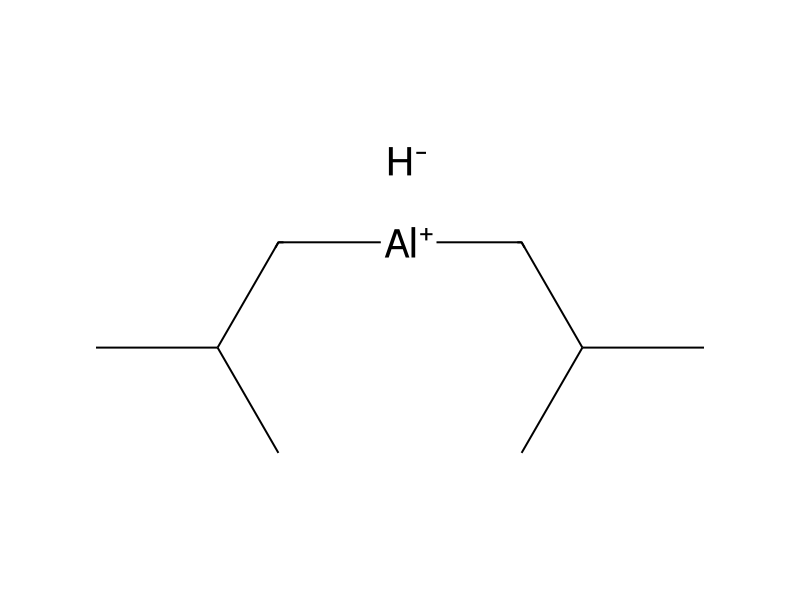
HCID 962WaterHCID 14798Sodium HydroxideHCID 21225700Diisobutylaluminumhydride2×HCID 58180959Ethyl 2-(4-(7-((2-(trimethylsilyl)ethoxy)methyl)-7H-pyrrolo[2,3-d]pyrimidin-4-yl)-1H-pyrazol-1-yl)butanoate

Product 1

HCID 58180888HCID 58180888, compoundYield 90.2%

Reagents, catalysts & solvents

2
HCID 1140TolueneSolvent4×HCID 8857Ethyl AcetateSolvent

Conditions

Temperature
-55 °C

Procedure

A solution of ethyl 2-[4-(7-{[2-(trimethylsilyl)ethoxy]methyl}-7H-pyrrolo[2,3-d]pyrimidin-4-yl)-1H-pyrazol-1-yl]butanoate (1.0 g, 2.3 mmol) in toluene (10 mL, 90 mmol) was cooled at −78° C. 1.0 M of Diisobutylaluminum hydride in toluene (2.8 mL, 2.8 mmol) was added dropwise over 10 minutes. Another 1.0 M of diisobutylaluminum hydride in toluene (3.0 mL, 3.0 mmol) was added. The mixture was warmed to −55° C. After quenching with 2.8 M of sodium hydroxide in water (10 mL, 30 mmol), the mixture formed an emulsion. Ethyl acetate was then added, and the aqueous phase was extracted with ethyl acetate. The combined organic layer was washed with 2.8 M of sodium hydroxide in water, water, saturated NH4Cl, and saturated NaCl. The organic phase was dried and the solvent was evaporated by rotary evaporation at 35° C. to give an orange oil. The orange oil was then twice redissolved in toluene and then the solvent was removed by rotary evaporation to give 0.8 g orange oil (90% yield). LCMS: 386.

Workup

  1. customthe mixture formed an emulsion
  2. extractionthe aqueous phase was extracted with ethyl acetate
  3. washThe combined organic layer was washed with 2.8 M of sodium hydroxide in water, water, saturated NH4Cl, and saturated NaCl
  4. customThe organic phase was dried
  5. customthe solvent was evaporated by rotary evaporation at 35° C.
  6. customto give an orange oil
  7. customthe solvent was removed by rotary evaporation

Sources & evidence

ORD record
ord-c4dca5859f2c4302ac49a1bc95a5f622
Source dataset
uspto-grants-2016_02
DOI
10.6084/m9.figshare.5104873.v1
Patent number
US09249145B2

Reaction notes

On this pageParticipantsConditionsProcedureWorkupSources & evidenceReaction notes