Cyanuric chloride → Acetone, O,Oa(2),Oa(2)a(2)-s-triazine-2,4,6-triyltrioxime
Reaction equation

[CH3:1][C:2](=[N:4][OH:5])[CH3:3].[N:6]1[C:13](Cl)=[N:12][C:10](Cl)=[N:9][C:7]=1Cl>N1C=CC=CC=1>[C:2](=[N:4][O:5][C:7]1[N:9]=[C:10]([O:5][N:4]=[C:2]([CH3:3])[CH3:1])[N:12]=[C:13]([O:5][N:4]=[C:2]([CH3:3])[CH3:1])[N:6]=1)([CH3:3])[CH3:1]Participants
4
Reactant 2
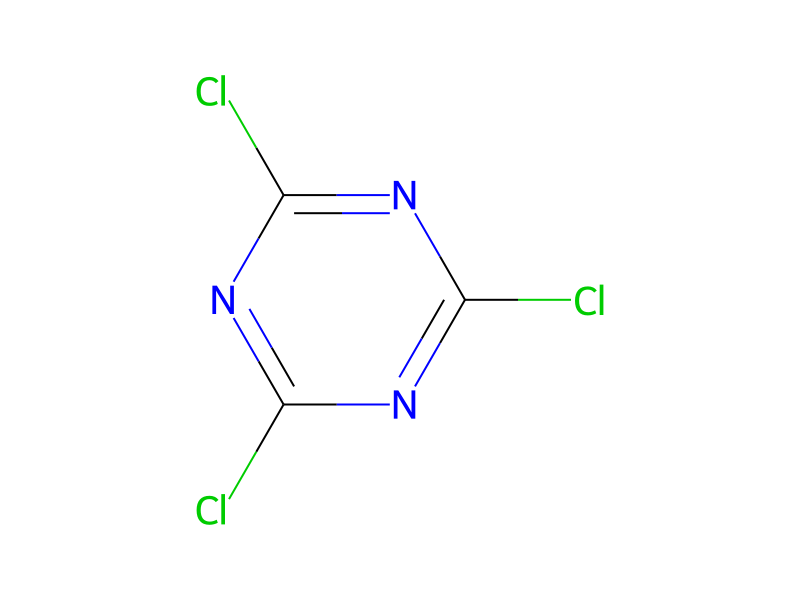
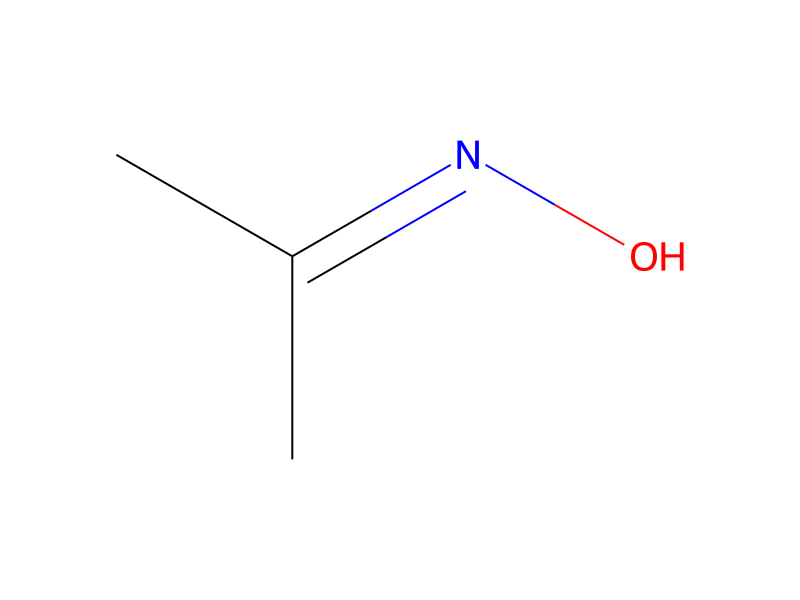
Product 1

Reagents, catalysts & solvents 1

Procedure
To a cold (0° C.) solution of acetone oxime (2.92 g, 0.04 mol) in dry pyridine (15 ml) is added cyanuric chloride (1.84 g, 0.01 mol). An exothermic reaction occurs and the temperature rises to 35° C. The solution is then stirred for 5 h at room temperature and then poured into 100 ml of ice-cold water. The resulting emulsion is extracted with dichloromethane (5×20 ml), the extracts are dried over MgSO4 and the solvent is evaporated. The residue is chromatographed (silica gel, CH2Cl2—C2H5O(CO)CH3 7:3) and the pure fraction is recrystallized from dichloromethane-hexane to afford 2.79 g of the title compound as a white solid, mp. 156-158° C.