HomeMCPSkillsWorkbenchOpenChem
HomeWorkbenchNotificationsMe
llms.txt · skill.md · MCP GuidePrivacy Policy · Terms of Service · Supportv1.8.6
  1. Home
  2. /Reaction

Water → 3-[(3R,4S)-3-Hydroxytetrahydro-2H-pyran-4-yl]-6-(4-morpholin-4-ylbenzyl)benzo[h]quinazolin-4(3H)-one

HRID 1774907
Print

Reaction equation

Cl[C:2]1[CH:30]=[CH:29][C:5]([CH2:6][C:7]2[CH:8]=[C:9]3[C:14](=[C:15]4[CH:20]=[CH:19][CH:18]=[CH:17][C:16]=24)[N:13]=[CH:12][N:11]([C@H:21]2[CH2:26][CH2:25][O:24][CH2:23][C@@H:22]2[OH:27])[C:10]3=[O:28])=[CH:4][CH:3]=1.[NH:31]1[CH2:36][CH2:35][O:34][CH2:33][CH2:32]1.C(=O)([O-])[O-].[Cs+].[Cs+].O>CN(C=O)C.CC(C)([P](C(C)(C)C)([Pd][P](C(C)(C)C)(C(C)(C)C)C(C)(C)C)C(C)(C)C)C>[OH:27][C@@H:22]1[C@@H:21]([N:11]2[C:10](=[O:28])[C:9]3[C:14](=[C:15]4[CH:20]=[CH:19][CH:18]=[CH:17][C:16]4=[C:7]([CH2:6][C:5]4[CH:4]=[CH:3][C:2]([N:31]5[CH2:36][CH2:35][O:34][CH2:33][CH2:32]5)=[CH:30][CH:29]=4)[CH:8]=3)[N:13]=[CH:12]2)[CH2:26][CH2:25][O:24][CH2:23]1
ParticipantsConditionsProcedureWorkupSources & evidenceReaction notes

Participants

7

Reactant 4

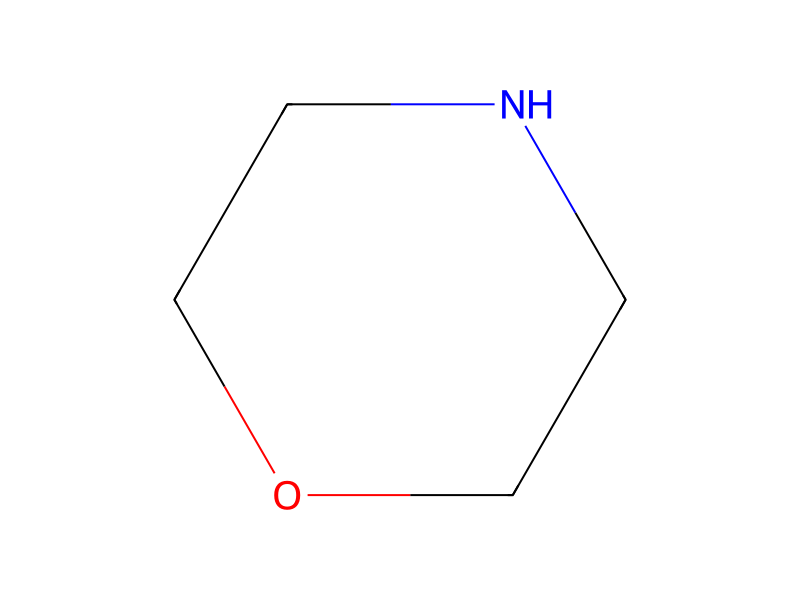
HCID 962WaterHCID 8083MorpholineHCID 10796Cesium carbonateHCID 679704906-(4-Chlorobenzyl)-3-[(3R,4S)-3-hydroxytetrahydro-2H-pyran-4-yl]benzo[h]quinazolin-4(3H)-one

Product 1

HCID 510007823-[(3R,4S)-3-Hydroxytetrahydro-2H-pyran-4-yl]-6-(4-morpholin-4-ylbenzyl)benzo[h]quinazolin-4(3H)-one

Reagents, catalysts & solvents

2
HCID 178418851HCID 178418851, compoundCatalystHCID 6228DimethylformamideSolvent

Conditions

Temperature
65 °C

Procedure

To a solution of 6-(4-chlorobenzyl)-3-[(3R,4S)-3-hydroxytetrahydro-2H-pyran-4-yl]benzo[h]quinazolin-4(3H)-one (0.100 g, 0.238 mmol) in 2 mL of DMF under an atmosphere of nitrogen was added morpholine (0.083 g, 0.95 mmol), bis(tri-tert-butylphosphine)palladium(0) (0.012 g, 0.024 mmol), cesium carbonate (0.232 g, 0.713 mmol), and 0.2 mL of water. The mixture was warmed to 65° C. for 5 min, flushed with nitrogen, and irradiated in a microwave reactor at 130° C. for 25 min. The reaction was cooled to rt and diluted with water and dichloromethane. The aqueous layer was reextracted with dichloromethane and the combined organic fractions were dried over sodium sulfate, filtered, and concentrated in vacuo. The residue was purified via silica gel chromatography, eluting with 0-4% methanol in dichloromethane to provide the title compound that gave proton NMR spectra consistent with theory and a mass ion (ES+) of 471.9 for [M+H]+: 1H NMR (400 MHz, CDCl3) δ 9.01 (s, 1H), 8.30 (s, 1H), 8.01-7.98 (m, 2H), 7.65-7.59 (m, 2H), 7.07 (d, J=8.7 Hz, 2H), 7.77 (d, J=8.7 Hz, 2H), 4.89-4.82 (m, 1H), 4.35 (s, 2H), 4.22-4.18 (m, 1H), 4.13-4.08 (m, 2H), 3.79 (t, J=4.8 Hz, 4H), 3.59-3.52 (m, 1H), 3.34-3.28 (m, 1H), 3.06 (t, J=4.8 Hz, 4H), 2.66 (br s, 1H), 2.32-2.22 (m, 1H), 2.03-1.99 (m, 1H).

Workup

  1. customflushed with nitrogen
  2. customirradiated in a microwave reactor at 130° C. for 25 min
  3. temperatureThe reaction was cooled to rt
  4. additiondiluted with water and dichloromethane
  5. dry with materialthe combined organic fractions were dried over sodium sulfate
  6. filtrationfiltered
  7. concentrationconcentrated in vacuo
  8. customThe residue was purified via silica gel chromatography
  9. washeluting with 0-4% methanol in dichloromethane

Sources & evidence

ORD record
ord-469a9a63a2de446aa54ff294d98e0658
Source dataset
uspto-grants-2016_02
DOI
10.6084/m9.figshare.5104873.v1
Patent number
US09260418B2

Reaction notes

On this pageParticipantsConditionsProcedureWorkupSources & evidenceReaction notes