HomeMCPSkillsWorkbenchOpenChem
HomeWorkbenchNotificationsMe
llms.txt · skill.md · MCP GuidePrivacy Policy · Terms of Service · Supportv1.8.6
  1. Home
  2. /Reaction

Water → [(4-Bromobutoxy)methyl]cyclopropane

HRID 1782759
Print

Reaction equation

[H-].[Na+].[OH:3][CH2:4][CH:5]1[CH2:7][CH2:6]1.[Br:8][CH2:9][CH2:10][CH2:11][CH2:12]Br.O>C1(C)C=CC=CC=1>[Br:8][CH2:9][CH2:10][CH2:11][CH2:12][O:3][CH2:4][CH:5]1[CH2:7][CH2:6]1
ParticipantsConditionsProcedureWorkupSources & evidenceReaction notes

Participants

6

Reactant 4

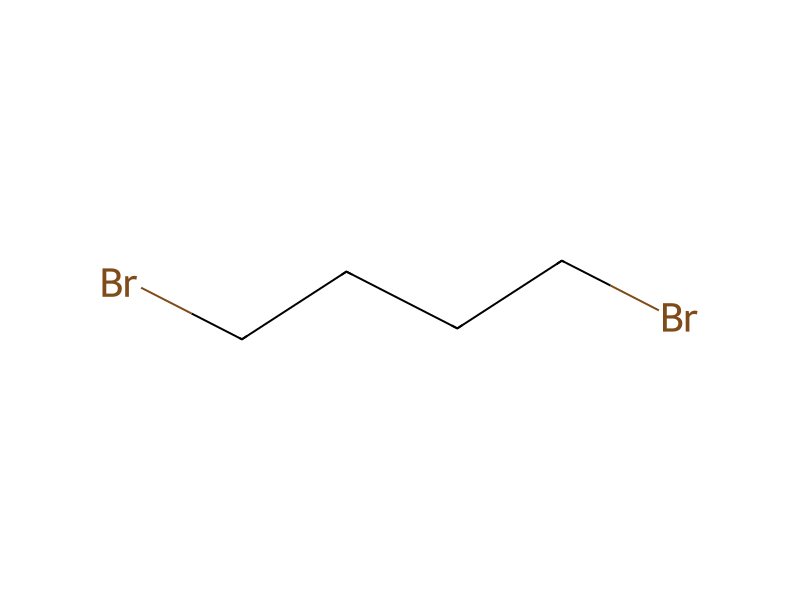
HCID 962WaterHCID 80561,4-DibromobutaneHCID 24758Sodium hydrideHCID 75644Cyclopropanemethanol

Product 1

HCID 43165202[(4-Bromobutoxy)methyl]cyclopropane

Reagents, catalysts & solvents 1

HCID 1140TolueneSolvent2×

Conditions

Temperature
100 °C

Procedure

2.8 g of a 60% suspension of sodium hydride in mineral oil are added in portions to a solution of 5.0 g of hydroxymethylcyclopropane in 25 ml of toluene at room temperature. The mixture is then heated at 100° C. for 2 hours. After this, it is allowed to reach room temperature and a solution of 14.9 g of 1,4-dibromobutane in 15 ml of toluene is added. The mixture is left to stir at 100° C. for a further 15 hours. Then, at room temperature, 10 ml of water are added, the phases are separated, and the toluene is removed in a rotary evaporator. The product is isolated by vacuum distillation.


Workup

  1. customto reach room temperature
  2. waitThe mixture is left
  3. customthe phases are separated
  4. customthe toluene is removed in a rotary evaporator
  5. customThe product is isolated by vacuum distillation

Sources & evidence

ORD record
ord-de5d8c77679b477e87e86417d7ec09d3
Source dataset
uspto-grants-2009_03
DOI
10.6084/m9.figshare.5104873.v1
Patent number
US07498460B2

Reaction notes

On this pageParticipantsConditionsProcedureWorkupSources & evidenceReaction notes