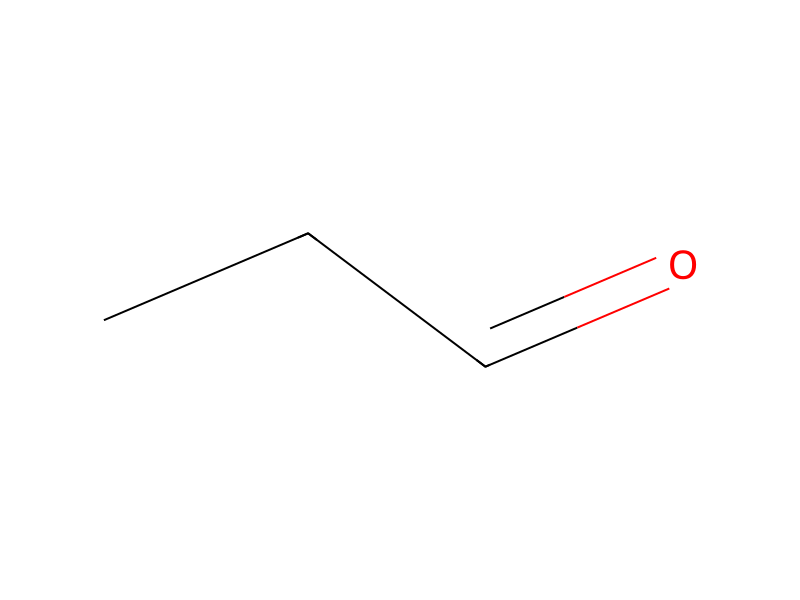
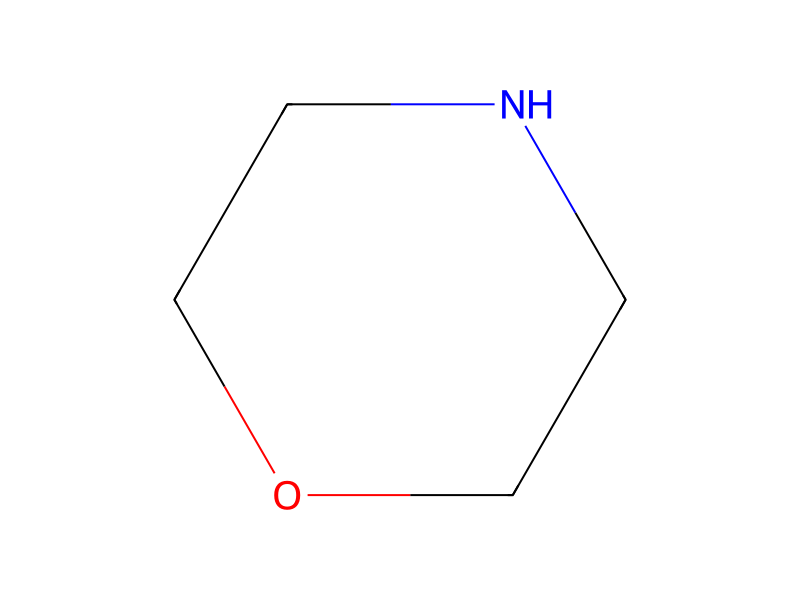
A 500 ml 4-neck flask was equipped with a stirrer, thermometer, addition funnel and condenser. To the flask was charged 191.7 g (2.2 m) of morpholine and 138.2 g (1 m) of potassium carbonate (anhydrous) and the mixture was stirred and cooled to -5° C. with an ice-salt bath. To the flask was added 58 g (1 m) of propionaldehyde over a period of 55 minutes at a pot temperature of -5° C. The temperature was then allowed to rise to 25° to 27° C. and the reaction was continued for 2 hours at 25° C. The product was filtered and the filter cake washed with four 15 ml washes of toluene. The fitrate was heated under vacuum while morpholine was stripped using a 1 foot Vigreux column. This treatment was carried out at an oil bath temperature of 85° to 112° C., a pot temperature of 70° to 90° C., a vapor temperature of 41° to 58° C. and at a pressure of approximately 35 to 40 mm of Hg. The vacuum stripping was carried out until 133.3 g of product was obtained as a residue. GLC and GC/MS established that the predominant product was 4-(2-propenyl)morpholine. 13C NMR in d6 -DMSO (in δ units): 15.2 (CH3); 95.1 (CH3 --CH)=; 140.8 (--CH=CH--); 49.4 (--N(--CH2 --)2); and 66.1 (O(--CH2 --)2).