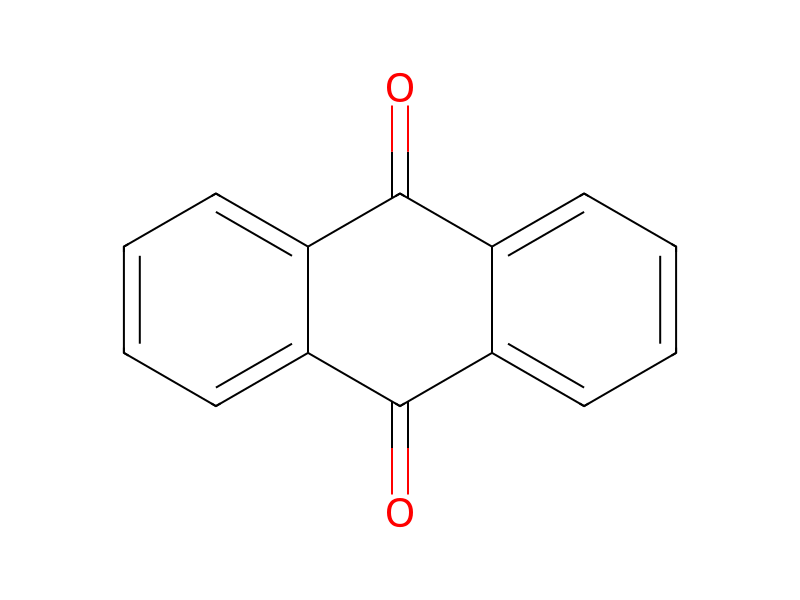
Anthraquinone → 1,5-Diamino-2-bromo-4,8-dihydroxy-6-phenoxyanthracene-9,10-dione
HRID 1789316
Reaction equation

C1[C:14]2[C:13](=[O:15])[C:12]3[C:7](=CC=CC=3)[C:6](=O)[C:5]=2C=CC=1.[NH2:17][C:18]1[C:31]2[C:30](=[O:32])[C:29]3[C:24](=[C:25]([NH2:35])[C:26]([Br:34])=[CH:27][C:28]=3[OH:33])[C:23](=[O:36])[C:22]=2[C:21]([OH:37])=[CH:20][C:19]=1Br>>[NH2:17][C:18]1[C:31]2[C:30](=[O:32])[C:29]3[C:24](=[C:25]([NH2:35])[C:26]([Br:34])=[CH:27][C:28]=3[OH:33])[C:23](=[O:36])[C:22]=2[C:21]([OH:37])=[CH:20][C:19]=1[O:15][C:13]1[CH:14]=[CH:5][CH:6]=[CH:7][CH:12]=1Participants
3


Procedure
When the process according to Example 190a is carried out and, instead of the anthraquinone component mentioned there, 11.7 g of 1,5-diamino-4,8-dihydroxy-2,6-dibromoanthraquinone, compare Example 348a, are used, then 3.8 g, corresponding to 31% of theory, of 1,5-diamino-4,8-dihydroxy-2-phenoxy-6-bromoanthraquinone are obtained.
Sources & evidence
- ORD record
- ord-5d2d9add6bc14a31b538c5d40432cf60
- Source dataset