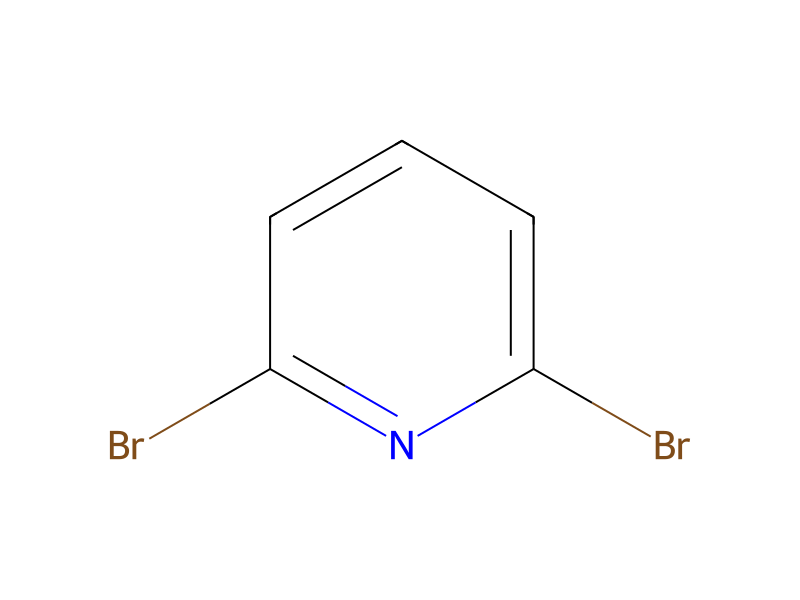
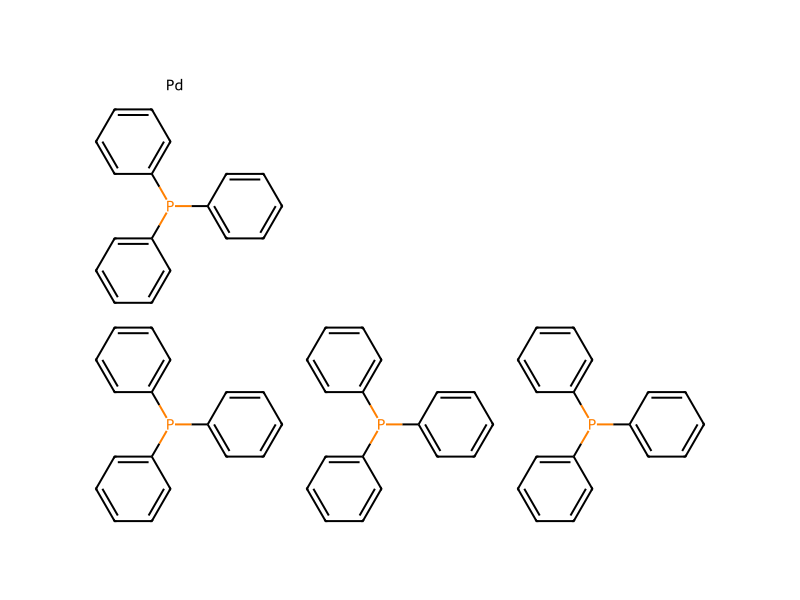
Br[C:2]1[CH:7]=[CH:6][CH:5]=[C:4]([Br:8])[N:3]=1.CC1(C)COB([C:16]2[CH:17]=[N:18][S:19][CH:20]=2)OC1.C(=O)([O-])[O-].[Cs+].[Cs+]>O1CCOCC1.[Pd].C1(P(C2C=CC=CC=2)C2C=CC=CC=2)C=CC=CC=1.C1(P(C2C=CC=CC=2)C2C=CC=CC=2)C=CC=CC=1.C1(P(C2C=CC=CC=2)C2C=CC=CC=2)C=CC=CC=1.C1(P(C2C=CC=CC=2)C2C=CC=CC=2)C=CC=CC=1>[Br:8][C:4]1[CH:5]=[CH:6][CH:7]=[C:2]([C:16]2[CH:17]=[N:18][S:19][CH:20]=2)[N:3]=1A degassed solution of 2,6-dibromopyridine (0.86 g, 3.56 mmol) and 4-(5,5-dimethyl-[1,3,2]dioxaborinan-2-yl)isothiazole (0.35 g, 1.78 mmol) in dry 1,4-dioxane (10 ml) was stirred under an atmosphere of nitrogen, then cesium carbonate (1.20 g, 3.68 mmol) and tetrakis(triphenylphosphine)-palladium(0) (0.10 g, 5 mol %) added. This mixture was heated to reflux for 18 h. After cooling to ambient temperature, solvent was removed in vacuo, the residue dissolved in dichloromethane, washed with water and saturated brine, then dried over magnesium sulfate, filtered and evaporated in vacuo to give a solid. Purification by chromatography on silica gel, eluting with dichloromethane on a gradient of methanol (0-5%), gave 2-bromo-6-(isothiazol-4-yl)pyridine (0.33 g) as a white solid: δH (400 MHz, CDCl3) 7.42 (1H, dd, J 7 and 2), 7.60 (2H, m), 9.01 (1H, s), 9.16 (1H, s); m/z (ES+) 240/242 (M++H).