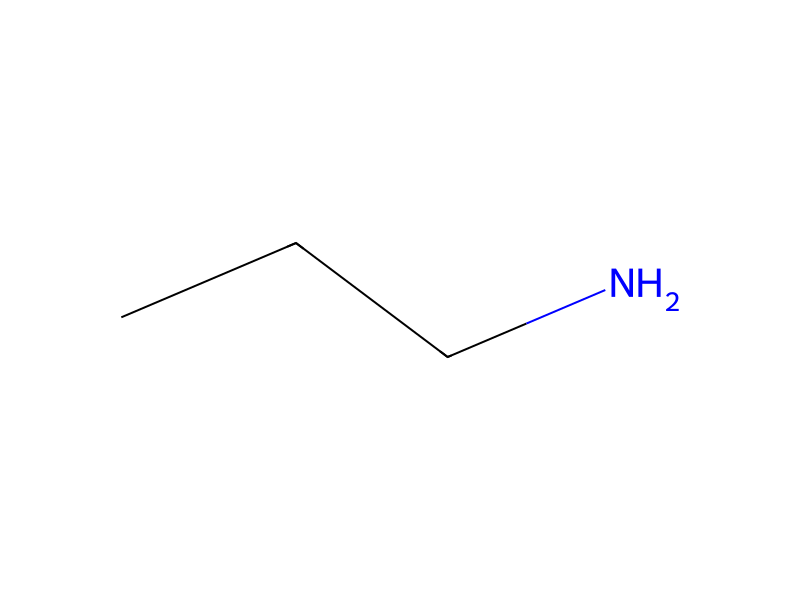
Propylamine → [2-(4-Phenylpiperazin-1-yl)-6,7-dihydrothieno[3,2-d]pyrimidin-4-yl]propylamine
HRID 1805971
Reaction equation

Cl[C:2]1[C:3]2[S:22][CH2:21][CH2:20][C:4]=2[N:5]=[C:6]([N:8]2[CH2:13][CH2:12][N:11]([C:14]3[CH:19]=[CH:18][CH:17]=[CH:16][CH:15]=3)[CH2:10][CH2:9]2)[N:7]=1.[CH2:23]([NH2:26])[CH2:24][CH3:25]>O>[C:14]1([N:11]2[CH2:12][CH2:13][N:8]([C:6]3[N:7]=[C:2]([CH2:25][CH2:24][CH2:23][NH2:26])[C:3]4[S:22][CH2:21][CH2:20][C:4]=4[N:5]=3)[CH2:9][CH2:10]2)[CH:19]=[CH:18][CH:17]=[CH:16][CH:15]=1Participants
4



Procedure
0.83 g (2.5 mmol) of 4-chloro-2-(4-phenylpiperazin-1-yl)-6,7-dihydrothieno[3,2-d]pyrimidine (V) is combined with 8.3 mL of n-propylamine, reacted for 0.2 hours at 130° C. in the microwave. Then the reaction mixture is added to water and extracted with dichloromethane. The organic phase is concentrated by evaporation, the residue is crystallized. The aqueous phase is extracted with ethyl acetate, the organic phase evaporated to dryness. The solids are combined and stirred with methanol. 0.68 g of the product (76%) is obtained as a powder.