Hydrazine → HCID 178478327, compound
Reaction equation

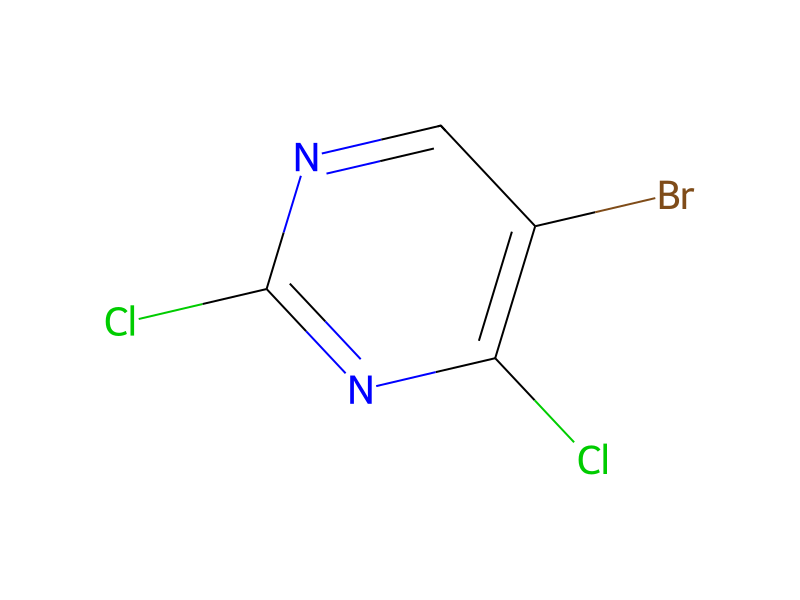
Br[C:2]1[C:3](Cl)=[N:4][C:5]([Cl:8])=[N:6][CH:7]=1.[Br:10][C:11]1[N:16]=[C:15]([CH:17]=O)[CH:14]=[CH:13][CH:12]=1.[NH2:19][NH2:20]>>[Br:10][C:11]1[N:16]=[C:15]([C:17]2[C:2]3[C:3](=[N:4][C:5]([Cl:8])=[N:6][CH:7]=3)[NH:20][N:19]=2)[CH:14]=[CH:13][CH:12]=1Participants
4



Procedure
Alternatively, for compounds of formula Ia where X is N and Y is CH, in accordance to Scheme 2 below, 5-bromo-2,4-dichloro-pyrimidine (1) is reacted with 6-bromo-pyridine-2-carbaldehyde (3) by a Grignard reaction and the corresponding coupled alcohol is oxidized to the ketone. The ketone is reacted with hydrazine to give 3-(6-bromo-pyridin-2-yl)-6-chloro-1H-pyrazolo[3,4-d]pyrimidine. The remaining chloro group can then be replaced by reacting with the appropriate amine and the bromide can be displacement with the required amine under Buckwald conditions to give compounds Ia of this invention.