Reaction equation

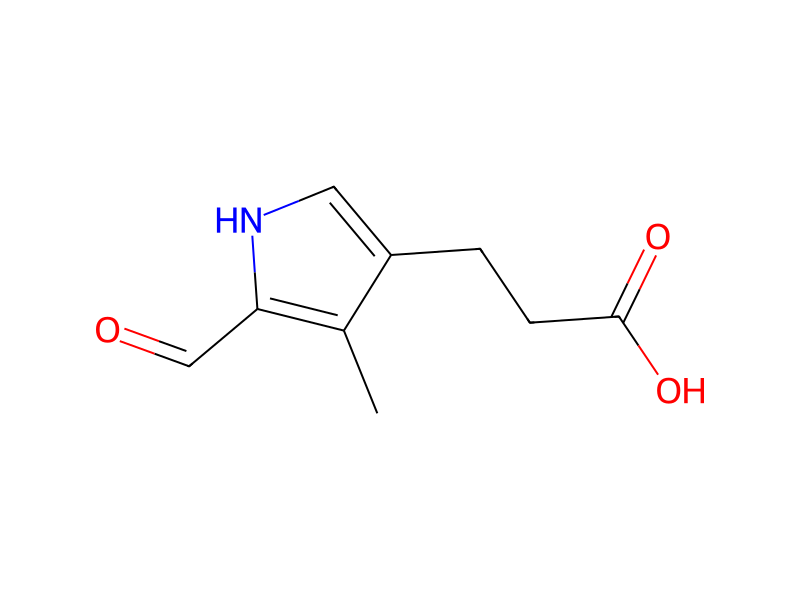
[C:1]([CH2:4][CH2:5][C:6]1[C:7]([CH3:13])=[C:8]([CH:11]=O)[NH:9][CH:10]=1)([OH:3])=[O:2].[Br:14][C:15]1[CH:23]=[C:22]2[C:18]([CH2:19][C:20](=[O:24])[NH:21]2)=[CH:17][CH:16]=1>N1CCCCC1.C(O)C>[Br:14][C:15]1[CH:23]=[C:22]2[C:18]([C:19](=[CH:11][C:8]3[NH:9][CH:10]=[C:6]([CH2:5][CH2:4][C:1]([OH:3])=[O:2])[C:7]=3[CH3:13])[C:20](=[O:24])[NH:21]2)=[CH:17][CH:16]=1Participants
5
Reactant 2

Product 1

Reagents, catalysts & solvents 2


Procedure
4-(2-carboxyethyl)-2-formyl-3-methylpyrrole (90 mg), 106 mg 6-bromo-2-oxindole, and 3 drops piperidine in 3 mL of ethanol were heated at 90° C. for 4 hours. The reaction mixture was cooled and concentrated. The residue was suspended in 6 N aqueous hydrochloric acid. The precipitate was filtered, washed with water to pH 6 and dried in a vacuum oven overnight to give 172 mg (92%) of the title compound as a yellow solid.
Workup
- temperatureThe reaction mixture was cooled
- concentrationconcentrated
- filtrationThe precipitate was filtered
- washwashed with water to pH 6
- customdried in a vacuum oven overnight
Sources & evidence
- ORD record
- ord-fd8ceba0770347e0a18c6f972bac21ac
- Source dataset
- uspto-grants-2005_04
- Patent number
- US06878733B1
Linked notes
Loading…