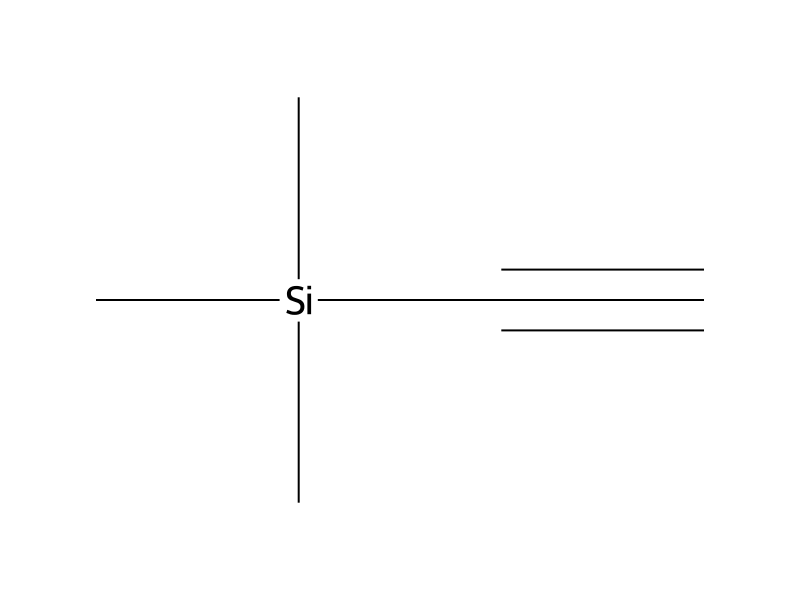
[Cl:1][C:2]1[C:7]([OH:8])=[C:6](I)[CH:5]=[C:4]([CH2:10][OH:11])[N:3]=1.[CH3:12][Si:13]([C:16]#[CH:17])([CH3:15])[CH3:14]>C(Cl)(Cl)Cl.Cl[Pd](Cl)([P](C1C=CC=CC=1)(C1C=CC=CC=1)C1C=CC=CC=1)[P](C1C=CC=CC=1)(C1C=CC=CC=1)C1C=CC=CC=1>[Cl:1][C:2]1[C:7]([OH:8])=[C:6]([C:17]#[C:16][Si:13]([CH3:15])([CH3:14])[CH3:12])[CH:5]=[C:4]([CH2:10][OH:11])[N:3]=1C2 (13.9 g, 48.6 mmol) is combined with trimethylsilylacetylene (9.6 mL, 68 mmol), bis(triphenylphosphine)palladium dichloride (1.02 g, 1.46 mmol) and cuprous iodide (139 mg, 0.73 mmol) in 80 mL CHCl3/40 mL THF under N2. TEA (21 mL, 151 mmol) is added, and the reaction is stirred 3 h at rt and is diluted with 200 mL CHCl3. The mixture is washed with 2×150 mL 5% HCl and the combined aqueous layers are extracted with 2×50 mL CHCl3. The combined organic layer is washed with 100 mL 50% saturated NaCl, is dried over anhydrous MgSO4, and is concentrated in vacuo to an amber oil. The crude material is chromatographed over 350 g silica gel (230–400 mesh), eluting with 35% EtOAc/hexane. The fractions with the desired compound are combined and concentrated to afford 2-chloro-6-(hydroxymethyl)-4-[(trimethylsilyl)ethynyl]-3-pyridinol (C3) as a golden solid (92% yield). MS (EI) for C11H14ClNO2Si, m/z: 255(M)+.