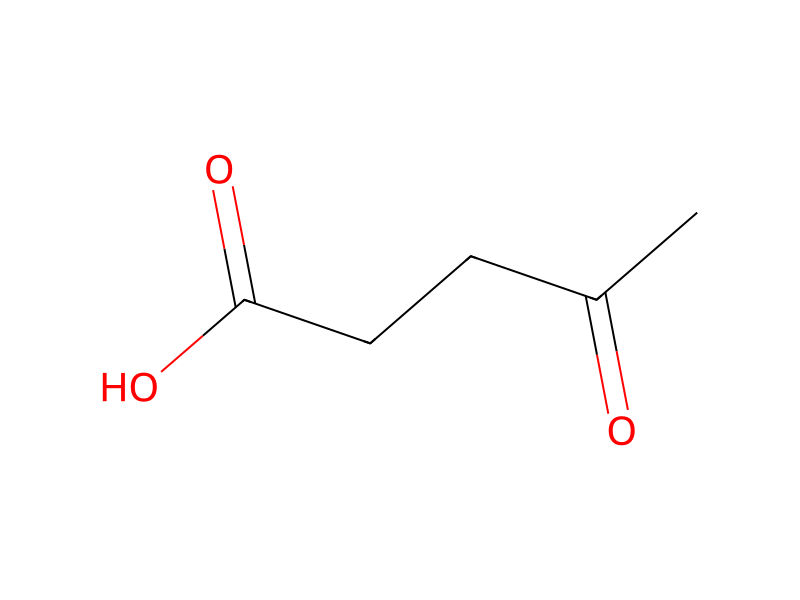
[NH:1]1[C:9]2[C:4](=[CH:5][CH:6]=[CH:7][CH:8]=2)[C:3]([CH2:10][CH2:11]S)=[CH:2]1.C1C=CC2NC=C(CCO)C=2C=1.[C:25]([OH:32])(=[O:31])[CH2:26][CH2:27][C:28]([CH3:30])=[O:29].O=P12OP3(OP(OP(O3)(O1)=O)(=O)O2)=O>C1C=CC=CC=1>[CH3:30][C:28]1([CH2:27][CH2:26][C:25]([OH:32])=[O:31])[C:2]2[NH:1][C:9]3[C:4]([C:3]=2[CH2:10][CH2:11][O:29]1)=[CH:5][CH:6]=[CH:7][CH:8]=3A mixture of the starting material of formula II, tryptophol (500 mg.), levulinic acid (580 mg.), 75 ml. of benzene, 1.7 g. of phosphorus pentoxide and about 0.5 g. of diatomaceous earth (Celite) is stirred magnetically at room temperature for 15 minutes and then at 70° C. for 11/2 hr. The reaction mixture is filtered. The filtrate is washed three times with 5N NaOH; the combined aqueous phase is washed twice with ether and then rendered acidic with cold 50% HCl. The aqueous phase is extracted with chloroform. The chloroform extract is dried (Na2SO4) and evaporated to dryness. The residue is crystallized from ethyl acetate-petroleum ether to afford the title compound, m.p. 104° - 110° C., nmr (CDCl3) δ1.47 (3H), 2.18 (4H), 2.74 (2H), 3.96 (2H), 7.18 (1H), 9.60 (1H).