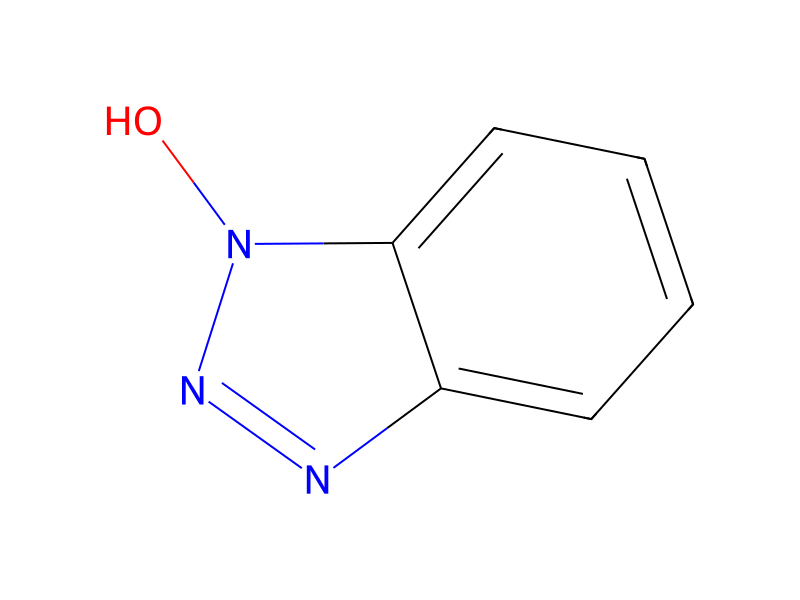
[CH3:1][C:2]1[NH:3][C:4]2[C:9]([C:10]=1[CH3:11])=[CH:8][CH:7]=[CH:6][C:5]=2[C:12]([OH:14])=O.ON1C2C=CC=CC=2N=N1.Cl.C(N=C=NCCCN(C)C)C.[N:37]1[CH:42]=[C:41]([C:43]2[CH:44]=[C:45]([CH:47]=[CH:48][CH:49]=2)[NH2:46])[CH:40]=[N:39][CH:38]=1>ClCCl>[N:37]1[CH:42]=[C:41]([C:43]2[CH:44]=[C:45]([NH:46][C:12]([C:5]3[CH:6]=[CH:7][CH:8]=[C:9]4[C:4]=3[NH:3][C:2]([CH3:1])=[C:10]4[CH3:11])=[O:14])[CH:47]=[CH:48][CH:49]=2)[CH:40]=[N:39][CH:38]=1To a suspension of 2,3-dimethylindole-7-carboxylic acid (95 mg) and 1-hydroxybenzotriazole (81 mg) in dichloromethane (3 ml) was added 1-ethyl-3-(3-dimethylaminopropyl)carbodiimide hydrochloride (144 mg), and the mixture was stirred for 5 minutes. After adding 3-(pyrimidin-5-yl)aniline (94 mg) and 4-dimethylinopyridine (92 mg), the mixture was stirred for 24 hours. The mixture was diluted with dichloromethane and washed with water and brine. The organic layer was dried over magnesium sulfate and evaporated under reduced pressure. The residue was purified by a silica gel column chromatography eluting with 3% methanol in dichloromethane to give N-(3-(pyrimidin-5-yl)-phenyl)-2,3-dimethyl-1H-indole-7-carboxamide (117 mg, 68.4%).