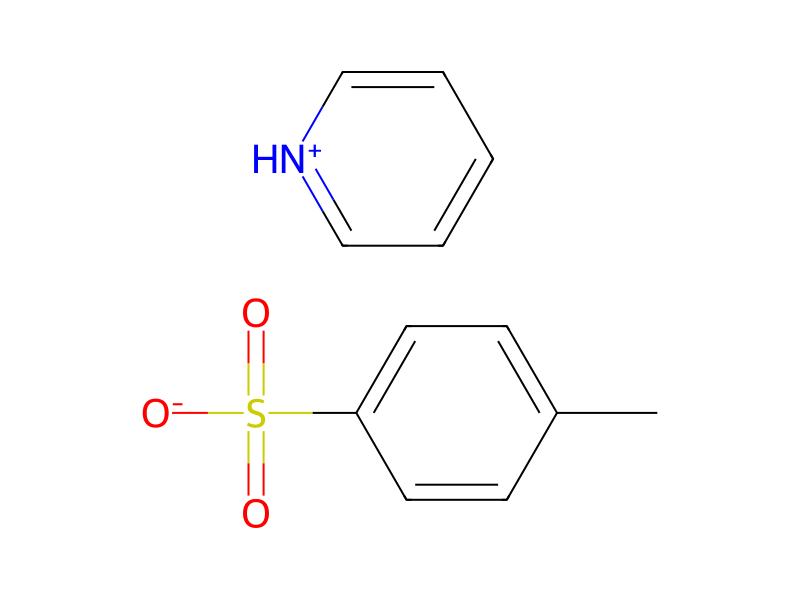
Benzenesulfonic acid, 4-methyl-, compd. with pyridine (1:1) → N-Methyl-N-tert-butoxycarbonyl-2-(3,4-dichlorophenyl)-2-(2-hydroxyethoxy)ethanamine
Reaction equation

C1(C)C=CC(S([O-])(=O)=O)=CC=1.[NH+]1C=CC=CC=1.[CH3:18][N:19]([C:40]([O:42][C:43]([CH3:46])([CH3:45])[CH3:44])=[O:41])[CH2:20][CH:21]([C:32]1[CH:37]=[CH:36][C:35]([Cl:38])=[C:34]([Cl:39])[CH:33]=1)[O:22][CH2:23][CH2:24][O:25]C1CCCCO1>CO>[CH3:18][N:19]([C:40]([O:42][C:43]([CH3:46])([CH3:45])[CH3:44])=[O:41])[CH2:20][CH:21]([C:32]1[CH:37]=[CH:36][C:35]([Cl:38])=[C:34]([Cl:39])[CH:33]=1)[O:22][CH2:23][CH2:24][OH:25]Participants
4