HomeMCPSkillsWorkbenchOpenChem
HomeWorkbenchNotificationsMe
llms.txt · skill.md · MCP GuidePrivacy Policy · Terms of Service · Supportv1.8.5
  1. Home
  2. /Reaction

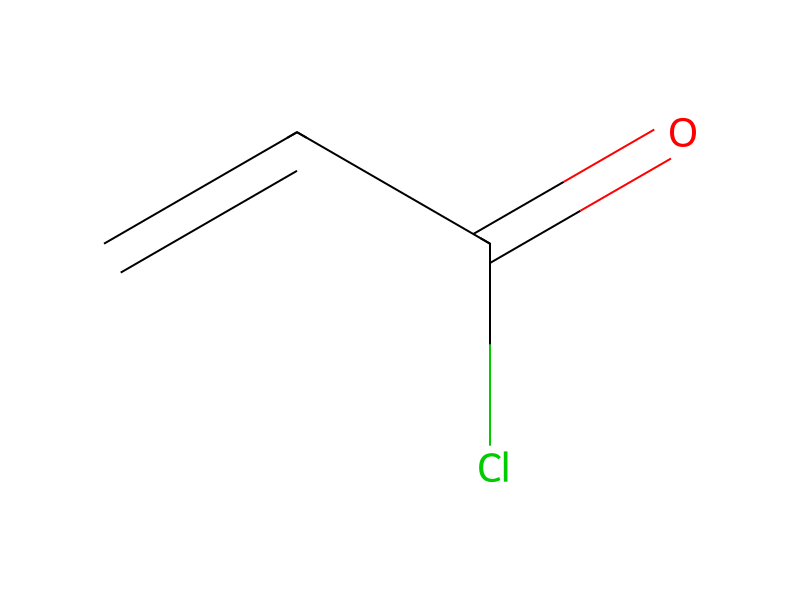
Acryloyl chloride → N-(2-{(3aR,6aR)-5-Methyl-2,3,3a,4,6,6a-hexahydropyrrolo[3,4-b]pyrrol-1-yl}-4-methoxy-5-{[4-(1-methylindol-3-yl)pyrimidin-2-yl]amino}phenyl)prop-2-enamide

HRID 1842649
Print

Reaction equation

[C:1](Cl)(=[O:4])[CH:2]=[CH2:3].[CH3:6][N:7]1[CH2:14][C@@H:13]2[C@@H:9]([N:10]([C:15]3[CH:20]=[C:19]([O:21][CH3:22])[C:18]([NH:23][C:24]4[N:29]=[C:28]([C:30]5[C:38]6[C:33](=[CH:34][CH:35]=[CH:36][CH:37]=6)[N:32]([CH3:39])[CH:31]=5)[CH:27]=[CH:26][N:25]=4)=[CH:17][C:16]=3[NH2:40])[CH2:11][CH2:12]2)[CH2:8]1>C1COCC1.C(Cl)Cl>[CH3:6][N:7]1[CH2:14][C@@H:13]2[C@@H:9]([N:10]([C:15]3[CH:20]=[C:19]([O:21][CH3:22])[C:18]([NH:23][C:24]4[N:29]=[C:28]([C:30]5[C:38]6[C:33](=[CH:34][CH:35]=[CH:36][CH:37]=6)[N:32]([CH3:39])[CH:31]=5)[CH:27]=[CH:26][N:25]=4)=[CH:17][C:16]=3[NH:40][C:1](=[O:4])[CH:2]=[CH2:3])[CH2:11][CH2:12]2)[CH2:8]1
ParticipantsConditionsProcedureWorkupSources & evidenceReaction notes

Participants

5

Reactant 2

HCID 13140Acryloyl chloride2×HCID 866772894-[(3aR,6aR)-5-methyl-2,3,3a,4,6,6a-hexahydropyrrolo[3,4-b]pyrrol-1-yl]-6-methoxy-N-[4-(1-methylindol-3-yl)pyrimidin-2-yl]benzene-1,3-diamine2×

Product 1

HCID 86677288N-(2-{(3aR,6aR)-5-Methyl-2,3,3a,4,6,6a-hexahydropyrrolo[3,4-b]pyrrol-1-yl}-4-methoxy-5-{[4-(1-methylindol-3-yl)pyrimidin-2-yl]amino}phenyl)prop-2-enamideYield 53%

Reagents, catalysts & solvents 2

HCID 6344
Dichloromethane
Solvent
2×
HCID 8028TetrahydrofuranSolvent2×

Conditions

Temperature
-15 °C

Procedure

Acryloyl chloride (41.3 mg, 0.46 mmol) in THF (1 mL) was added dropwise to a stirred solution of 4-[(3aR,6aR)-5-methyl-2,3,3a,4,6,6a-hexahydropyrrolo[3,4-b]pyrrol-1-yl]-6-methoxy-N-[4-(1-methylindol-3-yl)pyrimidin-2-yl]benzene-1,3-diamine (Intermediate 123, 195 mg, 0.42 mmol) in THF (3 mL), cooled in an ice/methanol bath to approximately −15° C. Upon slow addition of the acryloyl chloride a precipitate immediately formed. The mixture was stirred for 1 h while being gradually warmed to 0° C. The mixture was then diluted with CH2Cl2 (50 mL) and washed with sat. NaHCO3 (50 mL). The resulting aqueous solution was extracted with CH2Cl2 (2×25 mL). The combined organic solutions were dried (MgSO4) and concentrated onto silica. Purification by FCC, eluting with 0-5% 7N methanolic ammonia in CH2Cl2 gave crude solid product after concentration of appropriate fractions in vacuo. This solid was dissolved in the minimum amount of hot CH2Cl2 and triturated with diethyl ether to give the title compound (115 mg, 53%) as a white solid; 1H NMR (CDCl3) 1.77-1.96 (2H, m), 2.15-2.26 (1H, m), 2.29 (3H, s), 2.26-2.37 (1H, m), 2.73 (1H, d), 2.80 (1H, d), 2.83-2.90 (1H, m), 2.95 (1H, td), 3.21 (1H, t), 3.57-3.68 (1H, m), 3.88 (3H, s), 4.00 (3H, s), 5.68-5.74 (1H, m), 6.45 (2H, d), 6.81 (1H, s), 7.20 (1H, d), 7.23-7.31 (2H, m) partially obscured under CDCl3 signal, 7.37-7.43 (1H, m), 7.71 (1H, s), 8.02-8.10 (1H, m), 8.38 (1H, d), 9.09 (1H, s), 9.46 (1H, s), 9.85 (1H, s); m/z: ES+ MH+ 524.25.

Workup

  1. customimmediately formed
  2. temperaturewhile being gradually warmed to 0° C
  3. washwashed with sat. NaHCO3 (50 mL)
  4. extractionThe resulting aqueous solution was extracted with CH2Cl2 (2×25 mL)
  5. dry with materialThe combined organic solutions were dried (MgSO4)
  6. concentrationconcentrated onto silica
  7. customPurification by FCC
  8. washeluting with 0-5% 7N methanolic ammonia in CH2Cl2
  9. customgave crude solid product after concentration of appropriate fractions in vacuo
  10. customtriturated with diethyl ether

Sources & evidence

ORD record
ord-257b4076928c4c869f2d107bdc1d1ad1
Source dataset
uspto-grants-2015_02
DOI
10.6084/m9.figshare.5104873.v1
Patent number
US08946235B2

Reaction notes

On this pageParticipantsConditionsProcedureWorkupSources & evidenceReaction notes