Triphenylphosphine → tert-Butyl 2-((2'-cyano-5-(methoxycarbonyl)-4'-methylbiphenyl-3-yloxy)methyl)morpholine-4-carboxylate
HRID 1845323
Reaction equation

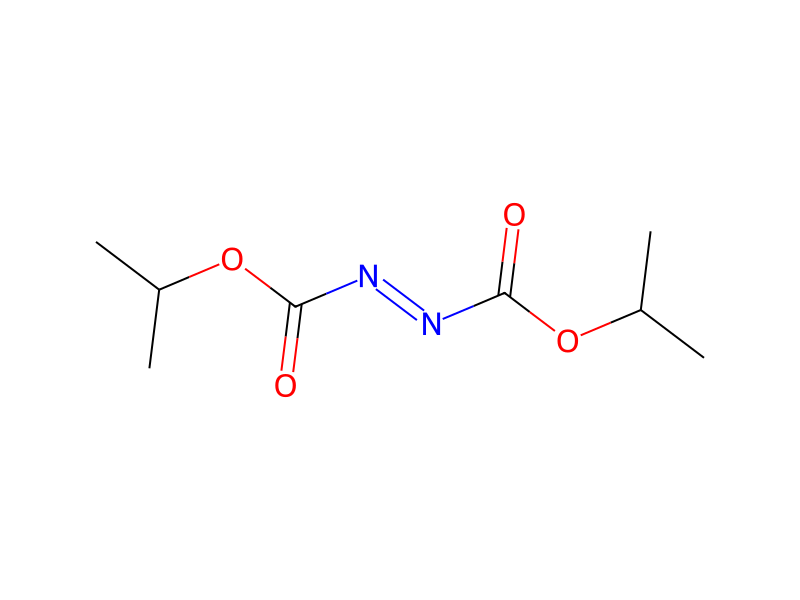
[C:1]([C:3]1[CH:8]=[C:7]([CH3:9])[CH:6]=[CH:5][C:4]=1[C:10]1[CH:15]=[C:14]([OH:16])[CH:13]=[C:12]([C:17]([O:19][CH3:20])=[O:18])[CH:11]=1)#[N:2].C1(P(C2C=CC=CC=2)C2C=CC=CC=2)C=CC=CC=1.O[CH2:41][CH:42]1[O:47][CH2:46][CH2:45][N:44]([C:48]([O:50][C:51]([CH3:54])([CH3:53])[CH3:52])=[O:49])[CH2:43]1.N(C(OC(C)C)=O)=NC(OC(C)C)=O>C(Cl)Cl>[C:1]([C:3]1[CH:8]=[C:7]([CH3:9])[CH:6]=[CH:5][C:4]=1[C:10]1[CH:11]=[C:12]([C:17]([O:19][CH3:20])=[O:18])[CH:13]=[C:14]([O:16][CH2:41][CH:42]2[O:47][CH2:46][CH2:45][N:44]([C:48]([O:50][C:51]([CH3:52])([CH3:54])[CH3:53])=[O:49])[CH2:43]2)[CH:15]=1)#[N:2]Participants
6