
HomeMCPWorkbenchSkills
HomeWorkbenchNotificationsMe
llms.txt · MCP GuidePrivacy Policy · Terms of Service · Supportv1.8.3
  1. Home
  2. /Compound

Triphenylphosphine

HCID 11776
New reaction
Print
Basic informationOverviewNames & identifiersPropertiesSafety & regulationChemistry & industryRelated reactionsCompound notes
Substructure searchFind similar structures

Basic information

CAS
603-35-0
Standard SMILES
c1ccc(P(c2ccccc2)c2ccccc2)cc1
InChIKey
RIOQSEWOXXDEQQ-UHFFFAOYSA-N
Molecular formula
C18H15P
Average molar mass
262.3 g/mol
Monoisotopic mass
262.09113748

Overview

Triphenyl phosphine appears as white crystals. (NTP, 1992)

Names & identifiers

Preferred name
Triphenylphosphine
IUPAC
triphenylphosphane
English name
Triphenylphosphine
Molecular formula
C18H15P
Molecular weight
262.29

Names & synonyms

TRIPHENYLPHOSPHINE603-35-0TriphenylphosphaneTriphenyl phosphineTriphenylphosphorusPhosphine, triphenyl-TriphenylphosphideTrifenylfosfinPP 360DTXSID5026251NSC-1026D26OA393
Show more names
PPh3TriphenylTriphenyphosphineriphenylphosphineTriphenyl phospinetptbp
NSC-215203DTXCID906251CHEBI:183318RefChem:6333210-036-0Triphenylphosphine resintriphenyl-phosphane39319-11-4

Database identifiers

CAS
603-35-0
PubChem CID
11776
DTXSID
DTXSID5026251
ChEMBL
CHEMBL1448331
ChEBI
CHEBI:183318
UNII
26D26OA393
EC Number
210-036-0
Nikkaji
J1.652G

Properties

Computed structural properties

XLogP
4.6
Topological polar surface area
0 Ų
Hydrogen bond donors
0
Hydrogen bond acceptors
0
Rotatable bonds
3
Heavy atoms
19
Formal charge
0
Complexity
202

Experimental & physicochemical properties

Chemical ClassesOther Classes -> Phosphorus Compounds
SpringerMaterials PropertiesSchoenflies notation
LogP · 2 items

5.69

5.69

OdorODORLESS
Density · 4 items

1.194 at 77 °F (NTP, 1992) - Denser than water; will sink

1.075 @ 80 °C/4 °C

1.1 g/cm³

1.194 @25 °C

Color/Form · 2 items

MONOCLINIC PLATELETS OR PRISMS FROM ETHER

WHITE CRYSTALLINE SOLID

Solubility · 4 items

Insoluble (NTP, 1992)

FREELY SOL IN ETHER; SOL IN BENZENE, CHLOROFORM, GLACIAL ACETIC ACID; LESS SOL IN ALCOHOL; PRACTICALLY INSOL IN WATER

SOL IN CARBON TETRACHLORIDE

Solubility in water, mg/l at 25 °C: 0.09 (very poor)

Flash Point · 3 items

356 °F (NTP, 1992)

180 °C OC.

182 °C c.c.

Endocrine DisruptorsPotential endocrine disrupting compound
Boiling Point · 3 items

greater than 680 °F at 760 mmHg (NTP, 1992)

MORE THAN 360 °C

377 °C

Melting Point · 4 items

176 °F (NTP, 1992)

80.5 °C

80 °C

79 °C

Vapor PressureVapor pressure, Pa at 50 °C: 0.017

Physicochemical properties

Melting point
79 · 79-81 °C(lit.)
Boiling point
377 °C · 377 °C(lit.)
Density
1.132 · 1.132
bulk density
500 · 500-600kg/m3
vapor density
9 · 9 (vs air)
vapor pressure
5 mm · 5 mm Hg ( 20 °C)
refractive index
1.6358 · 1.6358
Flash point
181 °C · 181 °C
storage temp.
30 °C · Store below +30°C.
solubility
0.00017 g/L · water: soluble0.00017 g/L at 22°C
form
Crystals, Crystalline Powder or Flakes
Specific Gravity
1.132 · 1.132
color
White
Odor
odorless
Water Solubility
Insoluble
Specific Heat Capacity
1.19 J/ · Cp(crystal): 1.19 J/(g·K), at 25℃
Hydrolytic Sensitivity
8 · 8: reacts rapidly with moisture, water, protic solvents
Merck
14 · 14,9743
BRN
610776 · 610776
Henry's Law Constant
4.3 · 4.3×102 mol/(m3Pa) at 25℃, Zhang et al. (2010)
Stability
Stable. Incompatible with oxidizing agents, acids.
Cosmetics Ingredients Functions
NAIL CONDITIONING
InChI
1S/C18H15P/c1-4-10-16(11-5-1)19(17-12-6-2-7-13-17)18-14-8-3-9-15-18/h1-15H
InChIKey
RIOQSEWOXXDEQQ-UHFFFAOYSA-N
SMILES
c1ccc(cc1)P(c2ccccc2)c3ccccc3
CAS DataBase Reference
603 · 603-35-0(CAS DataBase Reference)
FDA UNII
26 D26OA393 · 26D26OA393
NIST Chemistry Reference
Phosphine, triphenyl-(603-35-0)
EPA Substance Registry System
Triphenylphosphine (603-35-0)
UNSPSC Code
12352128 · 12352128
NACRES
22 · NA.22
Symbol(GHS)
7 · GHS07,GHS08
Signal word
Danger
Hazard statements
302 · H302-H315-H319-H372-H317-H335-H413
Precautionary statements
501 · P501-P273-P272-P260-P270-P271-P264-P280-P302+P352-P314-P337+P313-P305+P351+P338-P362+P364-P333+P313-P301+P312+P330-P304+P340+P312-P403+P233-P405
target organs
Central nervous system,Peripheral nervous system
PPE
95 · dust mask type N95 (US), Eyeshields, Faceshields, Gloves
Hazard Codes
Xn,N
Risk Statements
22 · 22-43-53-50/53-48/20/22
Safety Statements
36 · 36/37-60-61-36/37/39-26
RIDADR
3077 · 3077
WGK Germany
2 · 2
RTECS
3500000 · SZ3500000
F
9 · 9
Autoignition Temperature
425 °C · 425 °C
TSCA
TSCA listed
HS Code
2931900090 · 2931900090
Storage Class
6.1 C · 6.1C - Combustible acute toxic Cat.3toxic compounds or compounds which causing chronic effects
Hazard Classifications
4 OralEye · Acute Tox. 4 OralEye Dam. 1Skin Sens. 1BSTOT RE 1 Inhalation
Hazardous Substances Data
603 · 603-35-0(Hazardous Substances Data)
Toxicity
50 orally · LD50 orally in Rabbit: 700 mg/kg LD50 dermal Rabbit > 4000 mg/kg
REACH Registrations
Active

Safety & regulation

Safety information is for reference only and does not replace the supplier’s Safety Data Sheet (SDS), applicable regulations, or professional assessment.

GHS classification

GHS Classification · 6 items

This chemical does not meet GHS hazard criteria for 0.5% (6 of 1290) of reports.

Danger

H302 (97.1%): Harmful if swallowed [Warning Acute toxicity, oral]

P260, P261, P264, P264+P265, P270, P272, P273, P280, P301+P317, P302+P352, P305+P354+P338, P317, P319, P321, P330, P333+P317, P362+P364, and P501 (click each P-code to see the statement)

Aggregated GHS information provided per 1290 reports by companies from 56 notifications to the ECHA C&L Inventory. Each notification may be associated with multiple companies.

Danger

Hazard information

Regulatory Information · 4 items

Chemical: Phosphine, triphenyl-

Phosphine, triphenyl- is listed on the EPA's Chemical Data Reporting (CDR) system. Manufacturers and importers of Phosphine, triphenyl- are required to report information about their production and use of this chemical to the EPA under the Toxic Substances Control Act (TSCA). (40 eCFR Part 711)

REACH registered substance: Triphenylphosphine (EC: 210-036-0)

Triphenylphosphine: Does not have an individual approval but may be used under an appropriate group standard

Other Safety InformationIMAP assessments - Phosphine, triphenyl-: Human health tier II assessment
DOT LabelClass 9
Fire Hazards · 2 items

This compound is combustible. (NTP, 1992)

Combustible. Gives off irritating or toxic fumes (or gases) in a fire. Finely dispersed particles form explosive mixtures in air.

Health HazardsACUTE/CHRONIC HAZARDS: Toxic; when heated to decomposition, emits highly toxic fumes of phosphine and POx. (NTP, 1992)
Hazards Summary · 1 item

Decomposed by heating forming phosphine and phosphorous oxides; A skin, eye, and respiratory tract irritant; [ICSC] Causes convulsions at lethal doses in animal experiments; [RTECS] A strong reducing agent; [CAMEO] Harmful if ingested; May cause skin sensitization; [Aldrich MSDS] See Phosphine.

Reactive GroupAmines, Phosphines, and Pyridines
Reactivity AlertsHighly Flammable
Reactivity ProfileTRIPHENYL PHOSPHINE reacts vigorously with oxidizing materials. (NTP, 1992).
Chemical DangersDecomposes on heating. This produces highly toxic fumes of phosphorus oxides and phosphine. Reacts with strong acids and strong oxidants.
Physical DangersDust explosion possible if in powder or granular form, mixed with air.
Air and Water ReactionsTriphenylphosphine is a flammable solid which slowly oxidizes in air to form triphenylphosphine oxide. It is insoluble in water.

Safety & protection

Fire Fighting · 2 items

Fires involving this chemical can be controlled with dry chemical, carbon dioxide, or Halon extinguisher. (NTP, 1992)

Use water spray, foam, powder, carbon dioxide.

First Aid Measures · 4 items

Fresh air, rest. Refer for medical attention.

Wear protective gloves when administering first aid. Remove contaminated clothes. Rinse and then wash skin with water and soap. Refer for medical attention .

Rinse with plenty of water for several minutes (remove contact lenses if easily possible). Refer for medical attention.

Rinse mouth. Refer for medical attention .

First Aid · 1 item

EYES: First check the victim for contact lenses and remove if present. Flush victim's eyes with water or normal saline solution for 20 to 30 minutes while simultaneously calling a hospital or poison control center. Do not put any ointments, oils, or medication in the victim's eyes without specific instructions from a physician. IMMEDIATELY transport the victim after flushing eyes to a hospital even if no symptoms (such as redness or irritation) develop.

Safe StorageSeparated from oxidants and acids. Keep in a well-ventilated room.
Exposure Control and Personal Protection2.0 [mg/m3], inhalable fraction[German Research Foundation (DFG)]
Fire Fighting ProceduresFOAM MAY CAUSE FROTHING.
Cleanup MethodsALKALINE WASTEWATER (PH 11.7) CONTAINING 10 PPM PH3 FROM MFR OF TRIPHENYLPHOSPHINE TREATED WITH 30 PPM OF 0.15% H2O2 SOLN @ 25 °C. ODOR WAS REMOVED IN 4 HR VS 8 @ PH 8.5.
Nonfire Spill ResponseExcerpt from ERG Guide 171 [Substances (Low to Moderate Hazard)]:
Spillage Disposal · 1 item

Personal protection: particulate filter respirator adapted to the airborne concentration of the substance. Sweep spilled substance into sealable containers. If appropriate, moisten first to prevent dusting. Carefully collect remainder. Then store and dispose of according to local regulations.

Isolation and EvacuationExcerpt from ERG Guide 171 [Substances (Low to Moderate Hazard)]:
Eye PreventionWear safety goggles or face shield.
Fire PreventionNO open flames. Closed system, dust explosion-proof electrical equipment and lighting. Prevent deposition of dust.

Toxicology

Adverse EffectsNeurotoxin - Other CNS neurotoxin
Exposure RoutesThe substance can be absorbed into the body by inhalation of its aerosol and by ingestion.
Signs and Symptoms · 4 items

Cough. Sore throat.

Redness.

Redness. Pain.

Cough.

ICSC Environmental DataBioaccumulation of this chemical may occur in the environment.
Non-Human Toxicity Excerpts · 3 items

CNS EFFECTS: WEAKNESS & ATAXIA ONLY SYMPTOMS. IRRITANT EFFECTS: SLIGHT SKIN IRRITANT IN GUINEA PIG. /FROM TABLE/

DURING INHALATION EXPOSURE MALE CHR-CD RATS SHOWED MILD RESP IRRITATION; SEVERE WT LOSS OCCURRED IMMEDIATELY AFTER EXPOSURE, FOLLOWED BY NORMAL RATE OF WT GAIN. MILD WT LOSS OCCURRED DURING 10-DAY EXPOSURE PERIOD, FOLLOWED BY NORMAL WT GAIN.

Triphenylphosphine (TPP) was tested for mutagenicity in the Salmonella/microsome preincubation assay using a protocol approved by the National Toxicology Program. TPP was tested over a wide range of doses (0, 89, 285, 854, 2733 and 8200 ug/plate) in four Salmonella typhimurium strains (TA98, TA100, TA1535, and TA1537) in the presence and absence of Aroclor-induced rat or hamster liver S9. TPP was negative in these tests and the highest ineffective dose level tested (not causing formation of a precipitate) in any Salmonella tester strain was 89 ug/plate.

Toxicity DataLC50 (rat) = 1,135 ppm/4h

Safety data

F
9
PPE
dust mask type N95 (US), Eyeshields, Faceshields, Gloves
wgk
2
tsca
TSCA listed
rtecs
SZ3500000
ridadr
3077
hs_code
2931900090
Toxicity
LD50 orally in Rabbit: 700 mg/kg LD50 dermal Rabbit > 4000 mg/kg
risk_code
22-43-53-50/53-48/20/22
Signal word
Danger
Symbol(GHS)
GHS07,GHS08
hazard_code
Xn,N
safety_code
36/37-60-61-36/37/39-26
Storage Class
6.1C - Combustible acute toxic Cat.3toxic compounds or compounds which causing chronic effects
target organs
Central nervous system,Peripheral nervous system
Hazard statements
H302-H315-H319-H372-H317-H335-H413
REACH Registrations
Active
Hazard Classifications
Acute Tox. 4 OralEye Dam. 1Skin Sens. 1BSTOT RE 1 Inhalation
Autoignition Temperature
425 °C
Precautionary statements
P501-P273-P272-P260-P270-P271-P264-P280-P302+P352-P314-P337+P313-P305+P351+P338-P362+P364-P333+P313-P301+P312+P330-P304+P340+P312-P403+P233-P405
Hazardous Substances Data
603-35-0(Hazardous Substances Data)

Chemistry & industry

Uses & manufacturing

Uses · 4 items

Used as a polymerization initiator and an intermediate to make pharmaceuticals, phosphonium salts, and other phosphorus compounds; [HSDB]

ORGANIC SYNTHESIS; POLYMERIZATION INITIATOR

SYNTHESIS OF PHOSPHONIUM SALTS, OTHER PHOSPHORUS COMPOUNDS

CHEMICAL INTERMEDIATE, EG, FOR PHARMACEUTICALS

U.S. Exports · 2 items

(1977) No Data

(1979) No Data

U.S. Imports · 2 items

(1977) 2.72X10+7 G (PRINCPL CUSTMS DISTS)

(1979) 7.58X10+7 G (PRINCPL CUSTMS DISTS)

U.S. Production · 3 items

2023: 1,000,000 - <2,500,000 lb

(1977) No Data

(1979) No Data

Consumer UsesCatalyst
Industry UsesCatalyst
Methods of Manufacturing · 3 items

REACTION OF PHENYLMAGNESIUM BROMIDE AND PHOSPHORUS TRICHLORIDE

FROM PHENYLMAGNESIUM BROMIDE & PHOSPHORUS TRICHLORIDE: PFEIFFER, PIETSCH, BER 37, 4621 (1904); SAUVAGE COMPT REND 139, 675 (1904); DODONON, MEDOX, BER 61, 910 (1928); DENNEY ET AL, J AM CHEM SOC 83, 1729 (1961).

BY A MODIFIED GRIGNARD SYNTHESIS.

General Manufacturing Information · 2 items

Synthetic Rubber Manufacturing

Phosphine, triphenyl-: ACTIVE

Applications · 3 items

UsesTriphenylphosphine is first sulfonated with oleum to form the trisulfonic acid.Triphenylphosphine can be used in Wittig synthesis. It is a standard ligand in homogeneous catalysis.Triphenylphosphine is used in the synthesis of an organophosphorus intermediate, trimethyl phosphite in ester exchange method. And then a series of organophosphorus pesticides such as dichlorvos, monocrotophos and phosphamidon can be further obtained.In addition, it can be used as stabilizers in the synthesis of rubber and resins, antioxidants in polyvinyl chloride, and raw material in the synthesis of alkyd resins and polyester resins.

DescriptionTriphenylphosphine: a member of tertiary phosphines Triphenylphosphine (TPP) is a member of tertiary phosphines, which is phosphane, in which the three hydrogens are replaced by phenyl groups. It has a role as a reducing agent and an NMR chemical shift reference compound. It is a crucial ligand utilized in the Wittig reaction for alkene synthesis. This reaction involves the formation of alkyliden-etriphenylphosphoranes from the action of butyllithium or another base on the quarternary halide. Triphenylphosphine is used to synthesise organic compounds due to its nucleophilicity and reducing character.

UsesTriphenylphosphine is a versatile and efficient compound with a wide range of applications. It serves as a crucial ligand in homogeneous catalysts for petrochemical and fine chemical production, and as a co-catalyst in the production of isobutanol and n-butanol. It is also the basic raw material for rhodium phosphine complex catalysts, such as Wilkinson's catalyst (RhCl(PPh3)3) for alkene hydrogenation and tetrakis(triphenylphosphine)palladium(0) for C-C coupling reactions in organic synthesis. In the dye industry, it is utilized as a sensitizer, heat stabilizer, light stabilizer, antioxidant, flame retardant, antistatic agent, rubber antiozonant, and analytical reagent. The rhodium and triphenylphosphine catalyst system is employed in the hydroformylation of vegetable oils and their methyl esters, and polymer-supported triphenylphosphine catalyzes the γ-addition of pronucleophiles to alkynoates. It also participates in the Heck reaction of 4-bromoanisole and ethyl acrylate in ionic liquids. Triphenylphosphine can be sulfonated to form trisulfonic acid and is used in Wittig synthesis as a standard ligand in homogeneous catalysis. It is involved in the synthesis of trimethyl phosphite, leading to the production of organophosphorus pesticides like dichlorvos, monocrotophos, and phosphamidon. Furthermore, it is used as a stabilizer in rubber and resin synthesis, an antioxidant in polyvinyl chloride, and a raw material in the synthesis of alkyd resins and polyester resins. Triphenylphosphine is also used in the synthesis of Chlorambucil, a cytotoxic agent for breast and pancreatic cancers, and in the preparation of α-Tocopherol analogues for monitoring antioxidant status.


Upstream & downstream products

Upstream raw materials

SodiumTriphenyl phosphiteBromobenzenePhosphorus trichlorideHydrochloric acid

Downstream products

2-Diphenylphosphino-6-methylpyridineIvermectinMethyltriphenylphosphonium bromide2-Bromo-1,1-binaphthylZidovudine2-[2-(Diphenylphosphino)ethyl]pyridineTriphenylphosphine dibromide5-Aminomethyl-pyrrolidin-2-one5-Phenyl-2-thiophenecarbaldehydePentyltriphenylphosphonium bromide2-(Diphenylphosphino)ethylamineTris(triphenylphosphine)ruthenium(II) chloride(Methoxymethyl)triphenylphosphonium chlorideCefixime3-Bromoisonicotinic acid6-(Boc-amino)-hexyl bromideS-2-Benzothiazolyl 2-amino-alpha-(methoxyimino)-4-thiazolethiolacetate5,5'-Dimethyl-2,2'-dipyridylDOXEPIN(9Z)-9-Tetradecene-14-olDesacetylvinblastineamideLacidipine[1,2-Bis(diphenylphosphino)ethane]dichloropalladium(II)1-Methyl-prop-2-ynylamineIsotretinoinN10-(Trifluoroacetyl)pteroic acidtrans-2-Octen-1-ol3-Bromopyridine-2-carboxylic acid5-Phenylthiophene-2-carboxylic acid6-Amino-chromen-2-oneAcrivastine3-Phenyl-1H-pyrazoleAminoprofen2,2'-Dibromo-1,1'-binaphthylBis(triphenylphosphine)nickel(II)chloride2,7-Dibromocarbazole5-[(1,3-Dioxo-1,3-dihydro-2H-isoindol-2-yl)methyl]-2-furaldehydeEthyltriphenylphosphonium acetate4-((1-Methylpiperidin-3-yl)methoxy)-3,5-dichlorobenzenamineBut-3-yn-1-amine

Related reactions

31,358 records
New reaction record
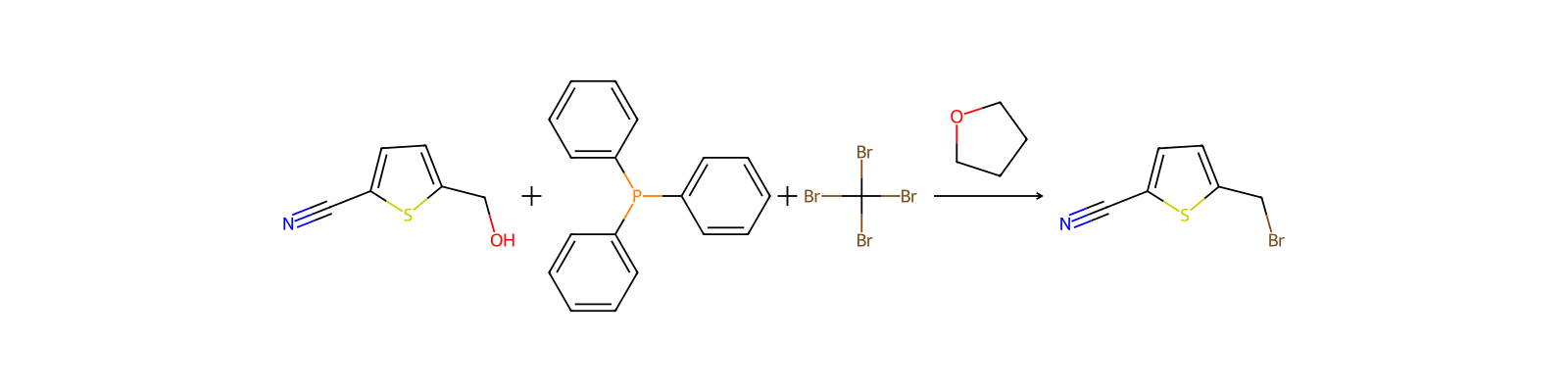
HRID 17 reaction equation
HRID 17As catalyst
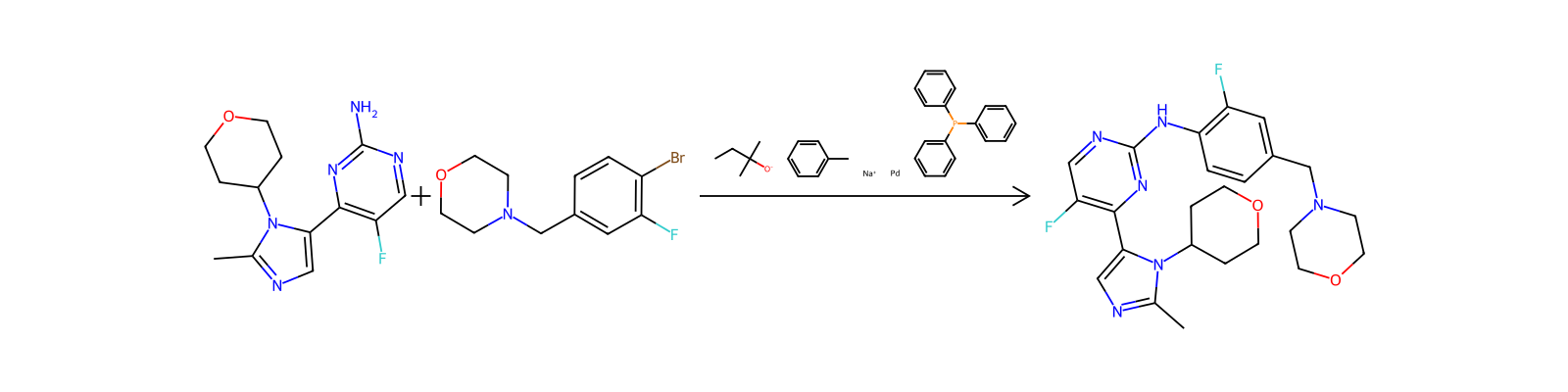
HRID 302 reaction equation
HRID 302As catalyst
HRID 854 reaction equation
HRID 854As reactant
HRID 857 reaction equation
HRID 857As reactant
HRID 1041 reaction equation
HRID 1041As reactant
HRID 1042 reaction equation
HRID 1042As reactant
HRID 1077 reaction equation
HRID 1077As reactant
HRID 1597 reaction equation
HRID 1597As reactant
PreviousPage 1 of 3920

Compound notes

On this pageBasic informationOverviewNames & identifiersPropertiesSafety & regulationChemistry & industryRelated reactionsCompound notes