HomeMCPWorkbenchSkills
HomeWorkbenchNotificationsMe
llms.txt · MCP GuidePrivacy Policy · Terms of Service · Supportv1.8.3
  1. Home
  2. /Reaction

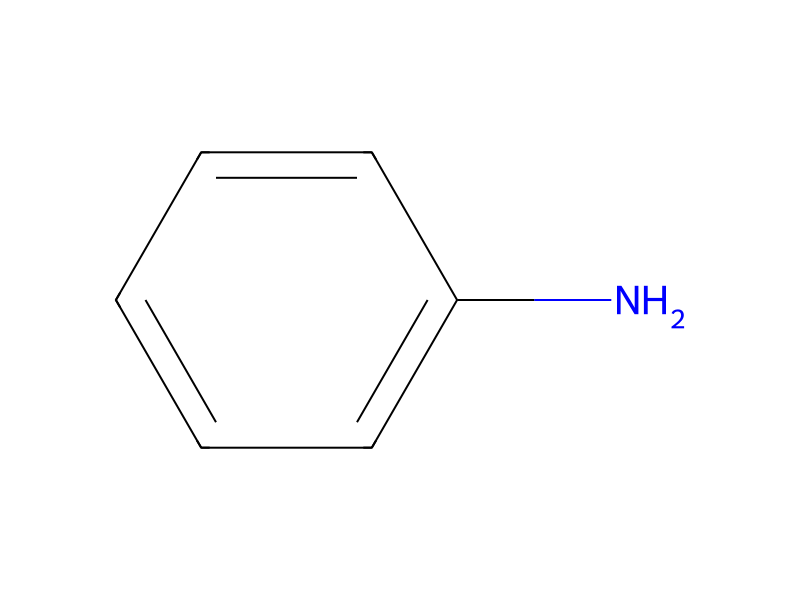
Aniline → 4-Chloro-1-((2R,3S)-4,4,4-trifluoro-3-hydroxy-3-methylbutan-2-yl)-1H-indole-5-carbonitrile

HRID 1851144
Print

Reaction equation

HRID 1851144 reaction equation
[Cl:1][C:2]1[C:9]([C:10]#[C:11][Si](C)(C)C)=[C:8](F)[CH:7]=[CH:6][C:3]=1[C:4]#[N:5].[NH2:17][C@H:18]([CH3:26])[C@:19]([CH3:25])([OH:24])[C:20]([F:23])([F:22])[F:21].CCN(C(C)C)C(C)C.NC1C=CC=CC=1>CS(C)=O.O>[Cl:1][C:2]1[C:3]([C:4]#[N:5])=[CH:6][CH:7]=[C:8]2[C:9]=1[CH:10]=[CH:11][N:17]2[C@@H:18]([C@@:19]([OH:24])([CH3:25])[C:20]([F:23])([F:22])[F:21])[CH3:26]
ParticipantsConditionsProcedureWorkupSources & evidenceReaction notes

Participants

7

Reactant 4

HCID 6115AnilineHCID 81531DiisopropylethylamineHCID 867091772-Chloro-4-fluoro-3-((trimethylsilyl)ethynyl)benzonitrileHCID 86709202(2S,3R)-3-Amino-1,1,1-trifluoro-2-methylbutan-2-ol

Product 1

HCID 867092034-Chloro-1-((2R,3S)-4,4,4-trifluoro-3-hydroxy-3-methylbutan-2-yl)-1H-indole-5-carbonitrileYield 78%

Reagents, catalysts & solvents 2

HCID 679Dimethyl SulfoxideSolventHCID 962WaterSolvent

Conditions

Temperature
100 °C

Procedure

2-Chloro-4-fluoro-3-((trimethylsilyl)ethynyl)benzonitrile (Example 32B) (0.08 g, 0.318 mmol), (2S,3R)-3-amino-1,1,1-trifluoro-2-methylbutan-2-ol (Example 52C) (0.079 mg, 0.503 mmol), and Hunig's base (0.094 mL, 0.540 mmol) were combined in DMSO (1.0 mL) in a sealed tube and then heated to 100° C. Formation of the aniline intermediate was monitored by LCMS. Excellent conversion to this intermediate was realized after ca. 3 h of heating. The mixture was diluted with water and extracted with EtOAc. The combined organic portions were dried over Na2SO4 and concentrated to a brown oil. Further traces of DMSO were removed by high vac. The brown residue was diluted with NMP (ca. 1.0 mL) and then treated with KOtBu (0.095 mL, 1.0 M in THF). The resulting solution was then heated to 60° C. for 45 min at which time LCMS indicated formation of a very slightly less polar product. The UV trace of this product was far different from that of the aniline intermediate. The crude mixture was diluted with water and extracted with EtOAc. The combined organic portions were washed with water and brine and then dried over Na2SO4. Concentration afforded a thick brown oil that was purified by ISCO (24 g silica, hex/EtOAc up to 70%, detection at 254 and 230 nm) to afford the desired product as a pale yellow solid (0.078 g, 78%) in excellent purity: 1H NMR (400 MHz, DMSO-d6) δ 7.79 (d, J=3.5 Hz, 1H), 7.71 (d, J=8.6 Hz, 1H), 7.57 (d, J=8.8 Hz, 1H), 6.68 (d, J=3.3 Hz, 1H), 6.50 (s, 1H), 5.03 (q, J=7.0 Hz, 1H), 1.51 (d, J=6.9 Hz, 3H), 1.37 (s, 3H); MS (ESI): m/z 317 (M+H).

Workup

  1. temperatureof heating
  2. extractionextracted with EtOAc
  3. dry with materialThe combined organic portions were dried over Na2SO4
  4. concentrationconcentrated to a brown oil
  5. customwere removed by high vac
  6. additionThe brown residue was diluted with NMP (ca. 1.0 mL)
  7. additiontreated with KOtBu (0.095 mL, 1.0 M in THF)
  8. temperatureThe resulting solution was then heated to 60° C. for 45 min at which time LCMS
  9. additionThe crude mixture was diluted with water
  10. extractionextracted with EtOAc
  11. washThe combined organic portions were washed with water and brine
  12. dry with materialdried over Na2SO4
  13. concentrationConcentration
  14. customafforded a thick brown oil that
  15. customwas purified by ISCO (24 g silica, hex/EtOAc up to 70%, detection at 254 and 230 nm)

Sources & evidence

ORD record
ord-3d43d027c8b94ac0ada11280036975da
Source dataset
uspto-grants-2015_02
DOI
10.6084/m9.figshare.5104873.v1
Patent number
US08957104B2

Reaction notes

On this pageParticipantsConditionsProcedureWorkupSources & evidenceReaction notes


