HomeMCPWorkbenchSkills
HomeWorkbenchNotificationsMe
llms.txt · MCP GuidePrivacy Policy · Terms of Service · Supportv1.8.0
  1. Home
  2. /Reaction

Tetrahydrofuran → HCID 10713524, compound

HRID 1851737
Notes
Print preview

Reaction equation

HRID 1851737 reaction equation
Br[C:2]1[CH:7]=[C:6]([O:8][CH3:9])[C:5]([O:10][CH3:11])=[CH:4][C:3]=1[CH:12]1[O:16][CH2:15][CH2:14][O:13]1.O1CCCC1.C([Li])CCC.[CH:27]1[C:32]([CH:33]=[O:34])=[CH:31][C:30]2[O:35][CH2:36][O:37][C:29]=2[CH:28]=1>C(=O)=O.CC(C)=O>[O:13]1[CH2:14][CH2:15][O:16][CH:12]1[C:3]1[CH:4]=[C:5]([O:10][CH3:11])[C:6]([O:8][CH3:9])=[CH:7][C:2]=1[CH:33]([C:32]1[CH:27]=[CH:28][C:29]2[O:37][CH2:36][O:35][C:30]=2[CH:31]=1)[OH:34]
ParticipantsConditionsProcedureWorkupSources & evidenceReaction notes

Participants

6

Reactant 4

HCID 8028Tetrahydrofuran2×HCID 8438Piperonal2×HCID 137356922-(2-Bromo-4,5-dimethoxyphenyl)-1,3-dioxolane2×HCID 178418339Butyllithium

Product 1

HCID 10713524HCID 10713524, compoundYield 30%

Reagents, catalysts & solvents 1

HCID 18522661
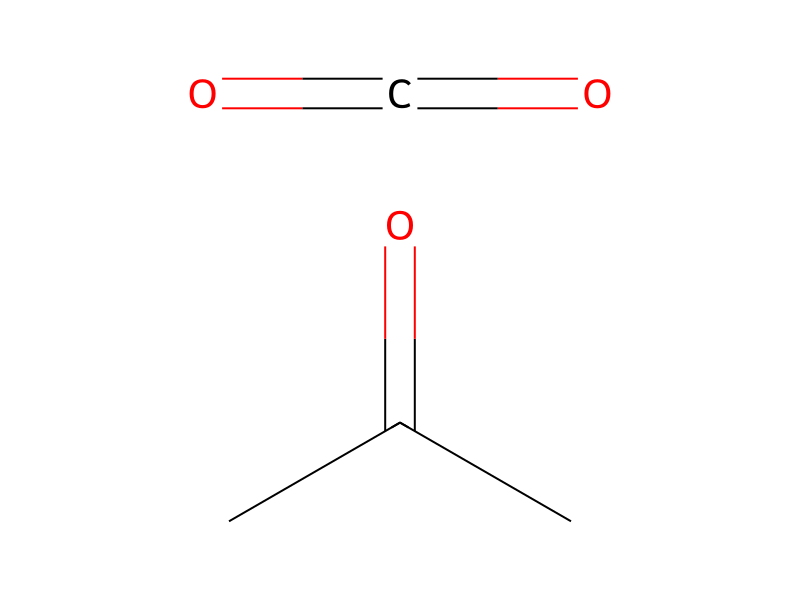
Acetone cardice
Solvent

Conditions

Temperature
-78 °C

Procedure

To a flame dried four necked round bottom flask (100 mL) were added 2-(2-bromo-4,5-dimethoxyphenyl)-1,3-dioxolane (formula VII; 1.0 g, 0.9934 mole) and anhydrous tetrahydrofuran (25 ml) under nitrogen atmosphere. The flask was cooled to −78° C. in dry ice-acetone bath; n-Butyllithium (5.3 ml, 0.005 mole) was added drop wise with stirring at −78° C. and stirred for 15 minutes. A separate flame dried flask was charged with Piperonal (0.517 g, 1.0034 mole) and dry tetrahydrofuran (6 ml). The Piperonal solution was cannulated to the reaction mixture during 30 minutes and after the addition, reaction mixture was slowly warmed to room temperature and further stirred for 2.5 hours. After the consumption of all bromine compound, as confirmed by TLC (50:50, EtOAc:Hexane), reaction mixture was quenched by the addition of saturated ammonium chloride solution and extracted with ethyl acetate (3×20 ml). All the organic layers were combined, dried over anhydrous sodium sulfate, filtered and concentrated to yield 80% of crude product. The crude product was purified by column chromatography using column of 2 meter length, diameter 2.5 cm and filled with silica gel 60-120 (column chromatographic grade). Finally column eluted with EtOAC:Hexane (50:50), to get pure product (2-(1,3-Dioxolane-2-yl)-4,5-dimethoxy phenyl) (benzo(d)(1,3)dioxol-5-yl)-methanol with 30% yield. The total time required was about 7 hours.


Workup

  1. customTo a flame dried four necked round bottom flask (100 mL)
  2. stirringstirred for 15 minutes
  3. temperatureA separate flame
  4. customdried flask
  5. additionafter the addition, reaction mixture
  6. temperaturewas slowly warmed to room temperature
  7. stirringfurther stirred for 2.5 hours
  8. customAfter the consumption of all bromine compound
  9. customas confirmed by TLC (50:50, EtOAc:Hexane), reaction mixture
  10. customwas quenched by the addition of saturated ammonium chloride solution
  11. extractionextracted with ethyl acetate (3×20 ml)
  12. dry with materialdried over anhydrous sodium sulfate
  13. filtrationfiltered
  14. concentrationconcentrated
  15. customto yield 80% of crude product
  16. customThe crude product was purified by column chromatography
  17. additionfilled with silica gel 60-120 (column chromatographic grade)
  18. washFinally column eluted with EtOAC

Sources & evidence

ORD record
ord-8d7cdb7999484f90919180406646f001
Source dataset
uspto-grants-2015_02
DOI
10.6084/m9.figshare.5104873.v1
Patent number
US08957230B2

Reaction notes

Loading…

On this pageParticipantsConditionsProcedureWorkupSources & evidenceReaction notes