Reaction equation

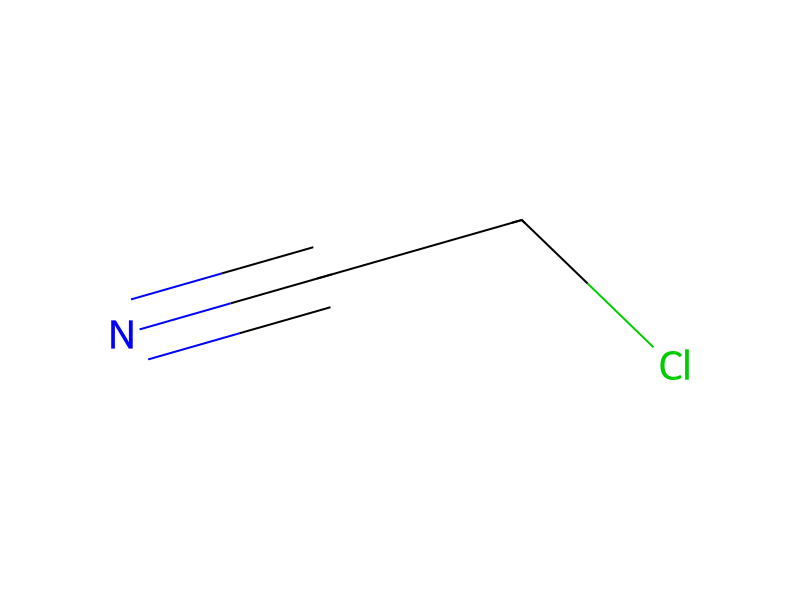
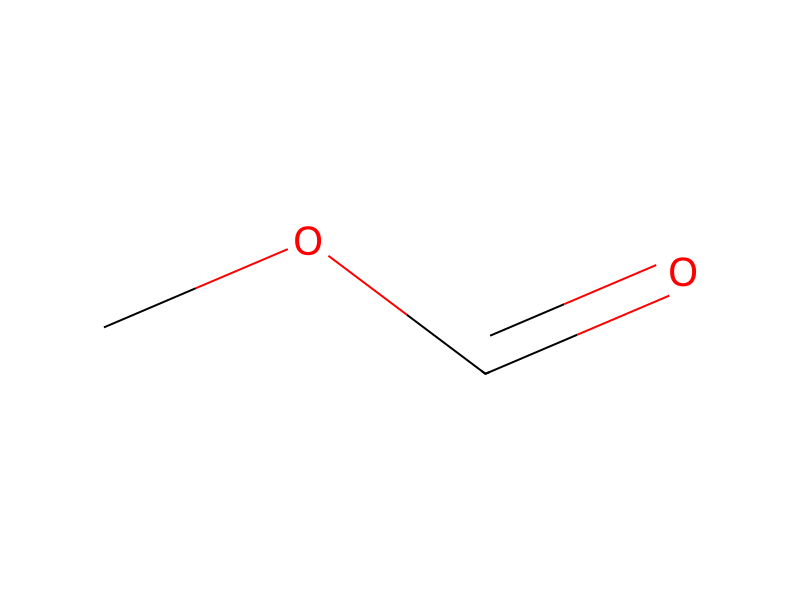
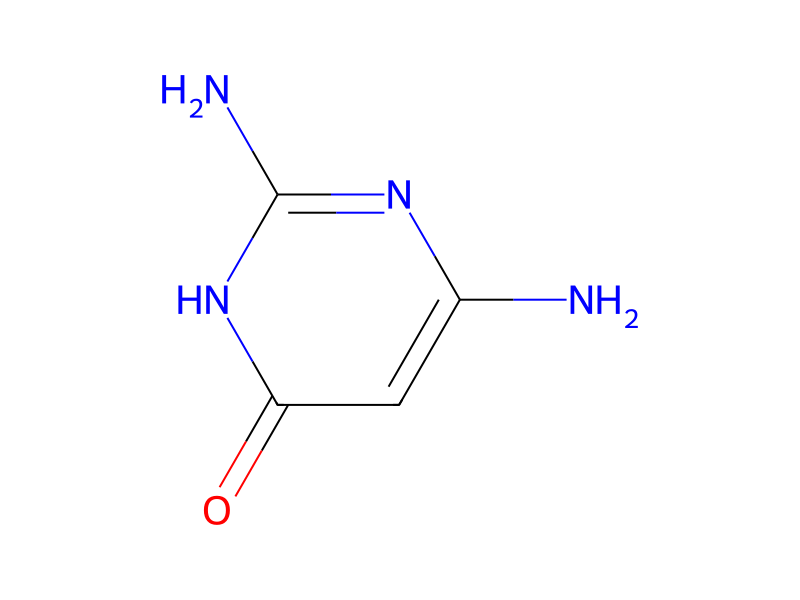
C1[C@H](NCC2[C:12]3[C:13]([N:15]=[C:16]([NH2:18])[NH:17][C:11]=3[N:10]([C@@H]3O[C@H](CO)[C@@H](O)[C@H]3O)C=2)=[O:14])[C@@H](O)[C@@H](O)C=1.ClC(CC#N)=O.ClCC#N.C(OC)=O>>[NH2:18][C:16]1[NH:15][C:13](=[O:14])[CH:12]=[C:11]([NH2:10])[N:17]=1Participants


Procedure
A 2-amino-4-oxo-5-cyanopyrrolo[2,3-d]pyrimidine(III) was prepared according to the method reported by Migawa, et al., “A Two Step Synthesis of the Nucleoside q Precursor 2-amino-5-cyanopyrrolo[2-3-dpyrimidine-4-one” Syn. Comm. 26:3317(1996) which involved the synthesis of chloroformylacetonitrile (110) from chloroacetonitrile (109) and methyl formate as shown in FIG. 19. Cyclocon-densation of compound 10 with 2,6-diamino-4-oxopyrimidine afforded to the key intermediate in 65-70% overall yield. Reductive amination of the 5-nitrile with the appropriate anilines or ethyl-p-aminobenzoyl-L-glutamate in the presence of Raney nickel and hydrogen at 50 psi for 5-6 hours afforded the desired analogues which were purified by column chromatography and were obtained in 20-62% yield. This yielded the product generally represented by compound 112. For the classical analogue, compound 407, which is the compound 112 where R2 is p-benzoyl-L-glutamate, saponification of the chromatographically purified ester afforded the desired product. This method was used to synthesize compounds 407-415, which are generally represented by compound 112 in FIG. 19 with the following substitutions:
Workup
- customA 2-amino-4-oxo-5-cyanopyrrolo[2,3-d]pyrimidine(III) was prepared
Sources & evidence
- ORD record
- ord-b01f6d7d2ce44726a37922d69cca1729
- Source dataset
- uspto-grants-2003_03
- Patent number
- US06537999B2
Linked notes
Loading…