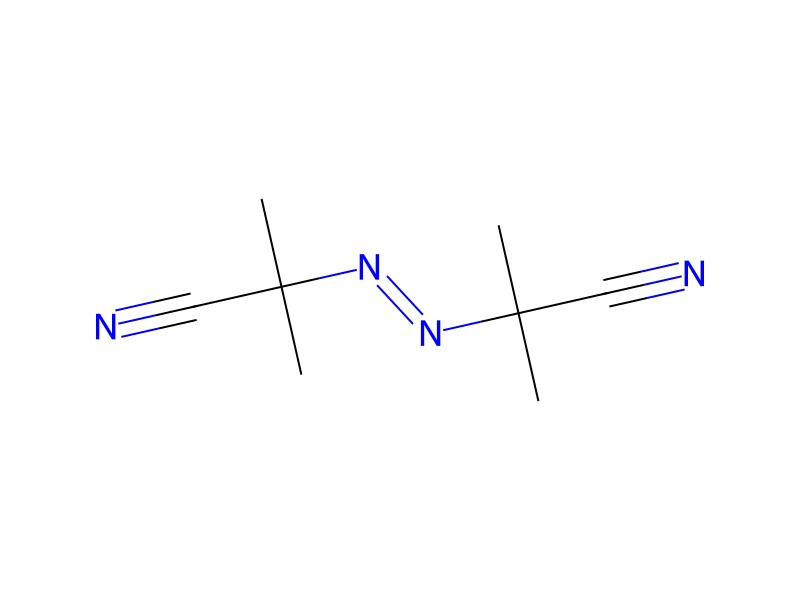
[Cl:1][C:2]1[CH:7]=[C:6]([C:8]#[N:9])[CH:5]=[C:4]([O:10][C:11]2[C:16]([Cl:17])=[CH:15][CH:14]=[C:13]([CH3:18])[C:12]=2[F:19])[N:3]=1.C1C(=O)N([Br:27])C(=O)C1>C(Cl)(Cl)(Cl)Cl.CC(N=NC(C#N)(C)C)(C#N)C>[Br:27][CH2:18][C:13]1[C:12]([F:19])=[C:11]([O:10][C:4]2[CH:5]=[C:6]([C:8]#[N:9])[CH:7]=[C:2]([Cl:1])[N:3]=2)[C:16]([Cl:17])=[CH:15][CH:14]=12-chloro-6-[(6-chloro-2-fluoro-3-methylphenyl)oxy]-4-pyridinecarbonitrile (3.65 g, 12.28 mmol) and NBS (2.187 g, 12.28 mmol) were combined in carbon tetrachloride (100 mL) with a catalytic amount of AIBN (0.101 g, 0.614 mmol) and stirred at reflux for 16 h. The reaction mixture was washed with water, dried over MgSO4, filtered and concentrated to dryness. The residue was purified by chromatography on 120 g silica gel eluted with 0% to 10% Et2O in hexanes to give the desired product, 2-{[3-(bromomethyl)-6-chloro-2-fluorophenyl]oxy}-6-chloro-4-pyridinecarbonitrile (2.64 g, 7.02 mmol, 57.2% yield), as a white solid. 1H NMR (400 MHz, DMSO-d6) δ ppm (8.01 (s, 1H), 7.96 (s, 1H), 7.50-7.62 (m, 2H), 4.75 (s, 2H). LC-MS (ES+) m/z 374.98, 377.01, 379.03 [M+H].