Diphosgene → 2-Methyl-5-phenylbenzylisocyanate
Reaction equation

O=C(Cl)[O:3][C:4](Cl)(Cl)Cl.[CH3:9][C:10]1[CH:17]=[CH:16][C:15]([C:18]2[CH:23]=[CH:22][CH:21]=[CH:20][CH:19]=2)=[CH:14][C:11]=1[CH2:12][NH2:13]>C1(C)C=CC=CC=1>[CH3:9][C:10]1[CH:17]=[CH:16][C:15]([C:18]2[CH:23]=[CH:22][CH:21]=[CH:20][CH:19]=2)=[CH:14][C:11]=1[CH2:12][N:13]=[C:4]=[O:3]Participants
4
Reactant 2
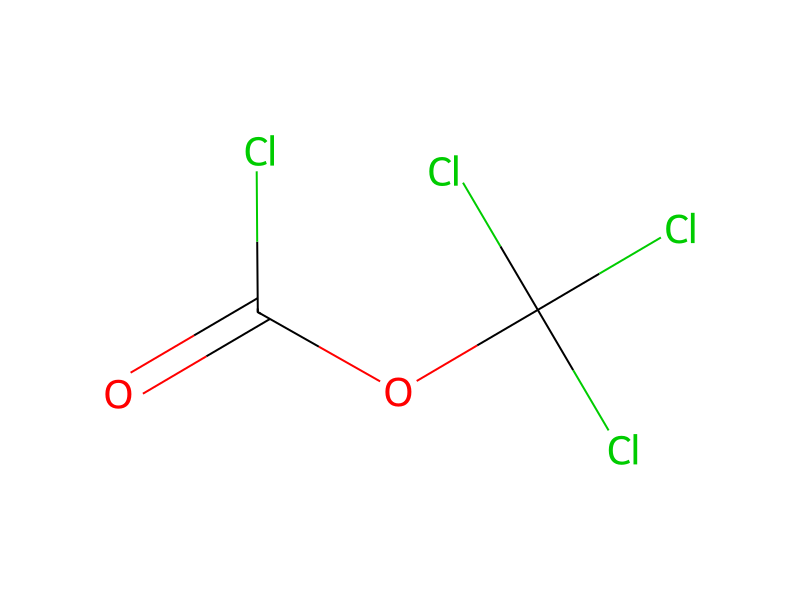

Product 1

Reagents, catalysts & solvents 1

Procedure
2.5 g (12.6 mmol) of diphosgene, 0.40 g of activated carbon and 30 ml of toluene were mixed, and allowed to left overnight, and to this solution was slowly dropped at room temperature a solution prepared by dissolving 1.00 g (5.07 mmol) of 2-methyl-5-phenylbenzylamine (produced in the same manner as in Intermediate Production Example 6) in 5 ml of toluene. The reaction mixture turned to white suspension directly after the dropping. The white suspension was stirred at room temperature for 1 hour, further stirred for 5 hours under reflux with heating, then, concentrated under reduced pressure to obtain 1.13 g of 2-methyl-5-phenybenzyl isocyanate.