Reaction equation
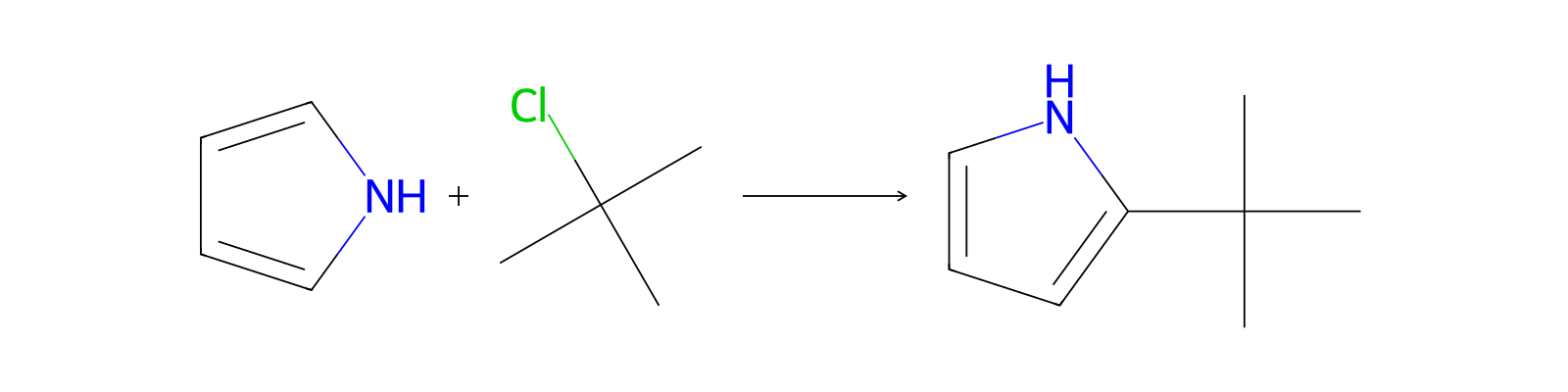
[NH:1]1[CH:5]=[CH:4][CH:3]=[CH:2]1.[C:6](Cl)([CH3:9])([CH3:8])[CH3:7]>>[C:6]([C:2]1[NH:1][CH:5]=[CH:4][CH:3]=1)([CH3:9])([CH3:8])[CH3:7]Participants
3


Procedure
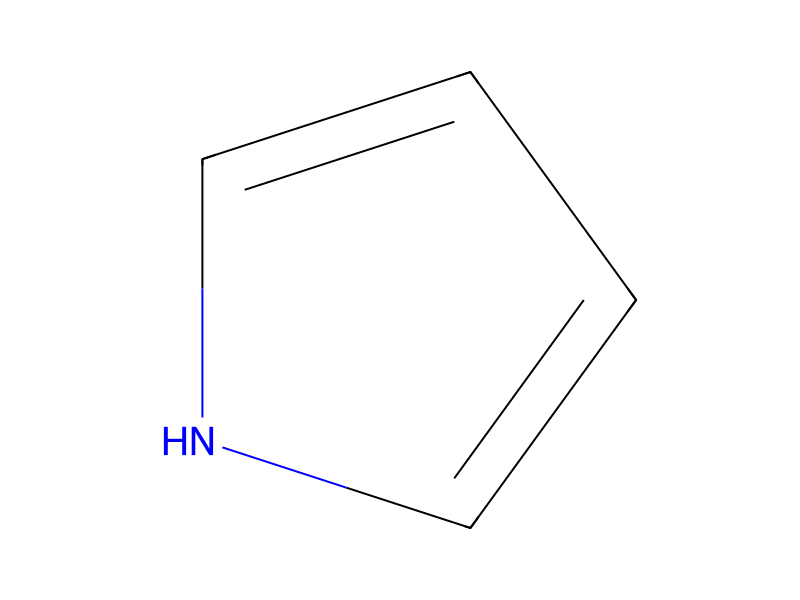
wherein X1, X2, Z, and R1 are as defined above. The pyrrole can reacted with t-butylchloride under Friedel-Craft alkylation condition to give the tert-butylpyrrole 2, which can then be nitrated. The ester is then hydrolyzed, e.g., with LiOH, and coupled to give amide 4. Compound 4 is then reduced to give the amine which is reacted with isocyanate to give compound 5, which is an exemplary compound of Formula I.
Sources & evidence
- ORD record
- ord-d186af39bc454bfbb254c01971098a77
- Source dataset
- uspto-grants-2010_06
- Patent number
- US07741479B2
Linked notes
Loading…