Reaction equation
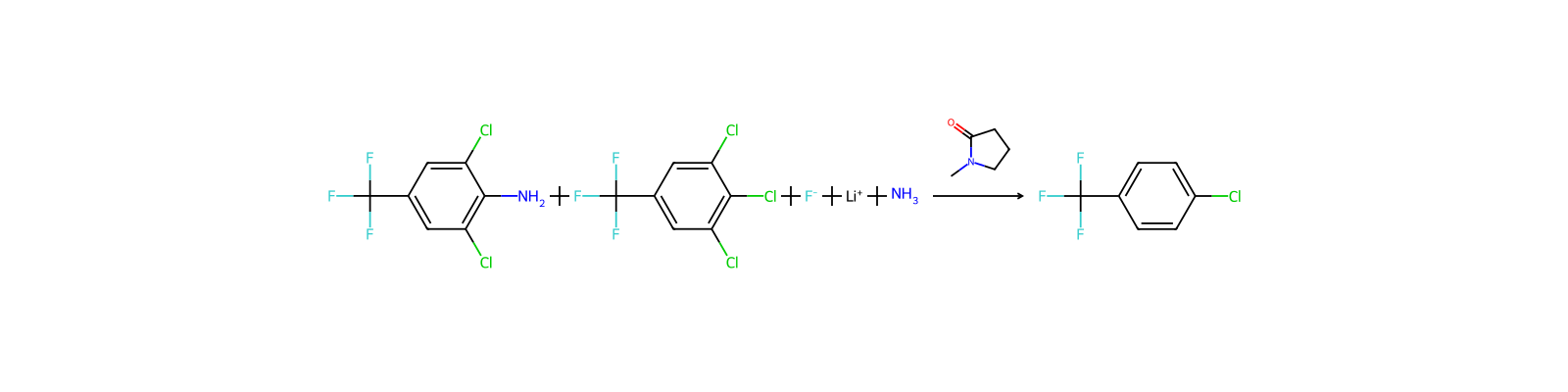
ClC1C=C(C(F)(F)F)C=C(Cl)C=1N.Cl[C:15]1[CH:16]=[C:17]([C:23]([F:26])([F:25])[F:24])[CH:18]=[C:19](Cl)[C:20]=1[Cl:21].[F-].[Li+].N>CN1CCCC1=O>[Cl:21][C:20]1[CH:15]=[CH:16][C:17]([C:23]([F:24])([F:25])[F:26])=[CH:18][CH:19]=1Participants




Procedure
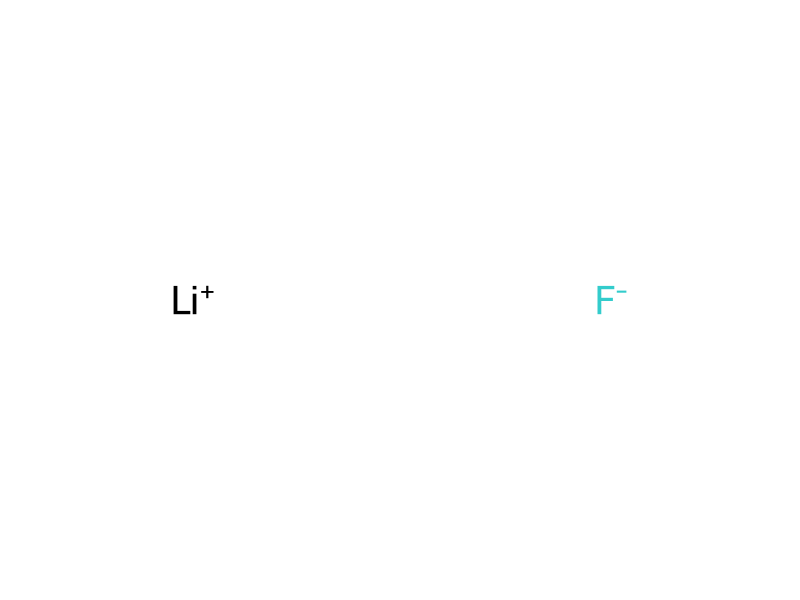
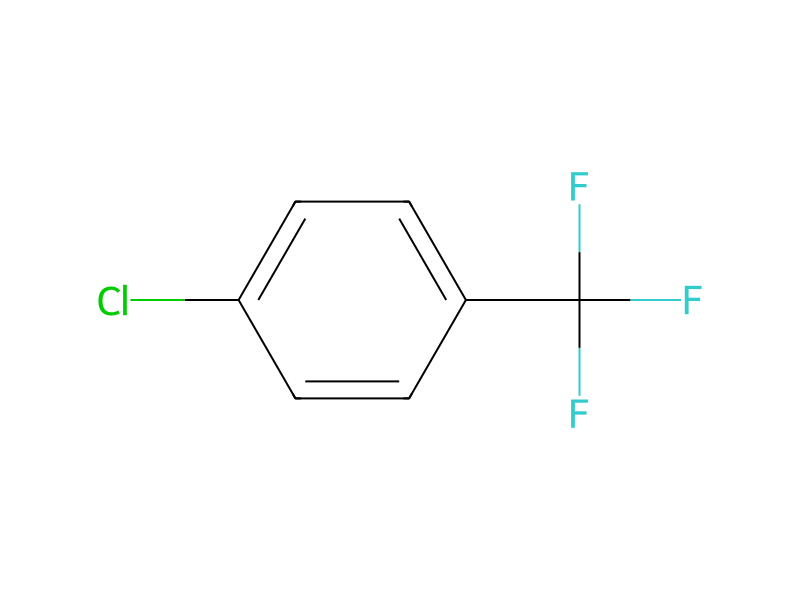
WO00/35851/2000 talks about synthesis of 2,6-Dichloro-4-trifluoromethylaniline starting from 3,4,5-trichloro-benzotrifluoride in the presence of alkaline fluorides like lithium fluoride and ammonia in the presence of N-methylpyrrolidone at 250° C. to give 97% conversion and 87% selectivity. The main drawback of the above process is the synthesis of 3,4,5-trichlorobenzotrifluoride in high yield and purity. Chlorination of p-chlorobenzotrifluoride gives a mixture of 3,4,5-trichlorobenzotrifluoride in 72% GLC conversions, 3,4-dichloro and tetrachlorobenzotrifluoride. The process to get pure 3,4,5-isomer from this mixture by fractionation followed by crystallization is very tedious. Moreover in-spite of using very pure intermediates, substantial amount of an undesired isomer (3-amino-4,5-dichlorobenzotrifluoride) is also obtained.
Workup
- customto give 97% conversion and 87% selectivity
- customin high yield
Sources & evidence
- ORD record
- ord-884e7aea6aaa4078ac2a59a4f2ac92c4
- Source dataset
- uspto-grants-2013_08
- Patent number
- US08507693B2
Linked notes
Loading…