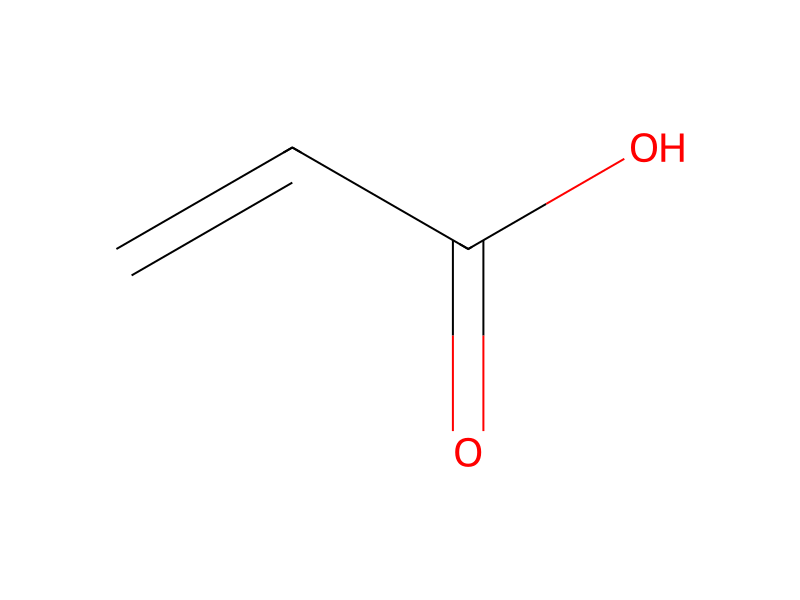
1.91 grams of 3-quinuclidinol was added to a 100 mL round bottom flask containing a stir bar. 50 mL of dichloromethane was added to the flask and the mixture stirred to dissolve the quinuclidinol. 1.08 grams of acrylic acid was dissolved in 8 mL of dichloromethane in a test tube and then added dropwise to the solution of 3-quinuclidinol with stirring. The mixture was allowed to stir for 48 hours at room temperature during which time about half of the dichloromethane evaporated leaving a white slurry which was diluted with ethyl acetate and the solid collected in a medium porosity glass fritted funnel. The solid was washed with 30 mL of ethyl acetate and the resulting solid dried in a 85° C. drying oven to give 2.37 grams of a white solid. The structure was confirmed by positive mode electrospray mass spectrometry (M+H)=199.3 m/z and 1H NMR.