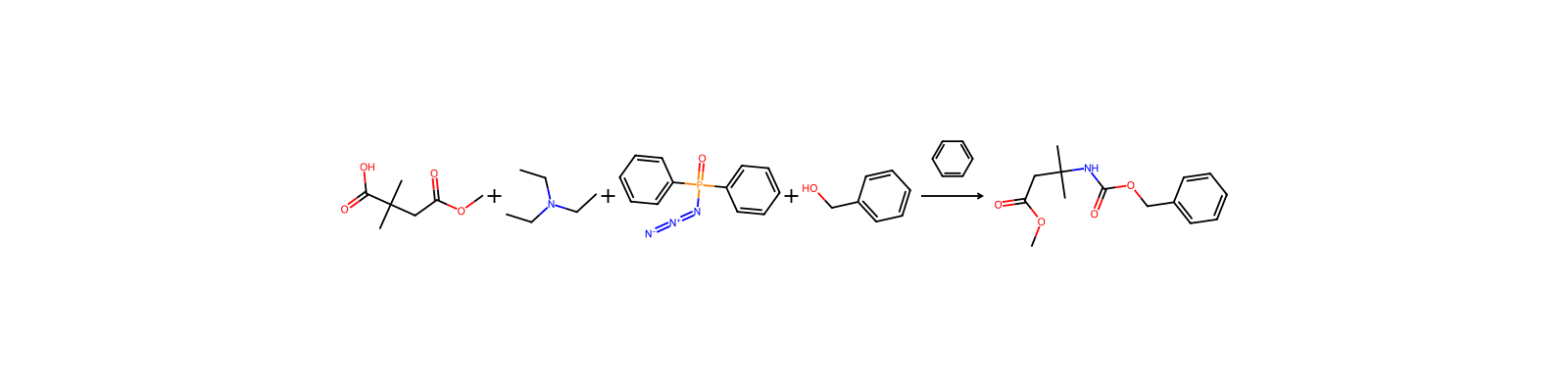
[CH3:1][O:2][C:3](=[O:11])[CH2:4][C:5]([CH3:10])([CH3:9])C(O)=O.C([N:14]([CH2:17]C)CC)C.C1(P(N=[N+]=[N-])(C2C=CC=CC=2)=[O:26])C=CC=CC=1.[CH2:36]([OH:43])[C:37]1[CH:42]=[CH:41][CH:40]=[CH:39][CH:38]=1>C1C=CC=CC=1>[CH2:36]([O:43][C:17]([NH:14][C:5]([CH3:9])([CH3:10])[CH2:4][C:3]([O:2][CH3:1])=[O:11])=[O:26])[C:37]1[CH:42]=[CH:41][CH:40]=[CH:39][CH:38]=1To 14.7 g (91.8 mmol) of 2,2-dimethylbutanedioic acid-4-methyl ester in 150 mL of benzene was added 13 mL of triethylamine (9.4 g, 93 mmol) followed by 21.8 mL of diphenylphosphoryl azide (27.8 g, 101 mmol). The mixture was heated under nitrogen at reflux for 45 minutes then 19 mL (19.9 g, 184 mmol) of benzyl alcohol was added and refluxing continued for 16 hours. The mixture was cooled, filtered and the filtrate concentrated to a minimum volume under vacuum. The residue was redissolved in 250 mL of ethyl acetate, washed with water, saturated aqueous sodium bicarbonate (2×) and brine. The organic layer was removed, dried over magnesium sulfate, filtered and the filtrate concentrated to a minimum volume under vacuum. The crude product was purified by medium pressure liquid chromatography on silica, eluting with hexane/ethyl acetate (4:1), to afford 18.27 g (68.9 mmol, 75%) of the product.
Loading…