HomeMCPSkillsWorkbenchOpenChem
HomeWorkbenchNotificationsMe
llms.txt · skill.md · MCP GuidePrivacy Policy · Terms of Service · Supportv1.8.5
  1. Home
  2. /Reaction

Ammonium Chloride → Tris(2-(2-hydroxyphenylmethyl)-6-pyridyl)-fluoromethane

HRID 1916008
Print

Reaction equation

[CH3:1][C:2]1[CH:7]=[CH:6][CH:5]=[C:4]([C:8]([C:17]2[N:22]=[C:21]([CH3:23])[CH:20]=[CH:19][CH:18]=2)([C:10]2[N:15]=[C:14]([CH3:16])[CH:13]=[CH:12][CH:11]=2)[F:9])[N:3]=1.Br[C:25]1[CH:37]=[CH:36][CH:35]=[CH:34][C:26]=1[O:27]C1CCCCO1.C(P([C:47]([CH3:50])([CH3:49])C)C(C)(C)C)(C)(C)C.[Cl-].[NH4+]>C1(C)C=CC=CC=1.CC1(C)[N-]C(C)(C)CCC1.CC1(C)[N-]C(C)(C)CCC1.[Zn+2].C1C=CC(/C=C/C(/C=C/C2C=CC=CC=2)=O)=CC=1.C1C=CC(/C=C/C(/C=C/C2C=CC=CC=2)=O)=CC=1.C1C=CC(/C=C/C(/C=C/C2C=CC=CC=2)=O)=CC=1.[Pd].[Pd]>[OH:27][C:26]1[CH:34]=[CH:35][CH:36]=[CH:37][C:25]=1[CH2:23][C:21]1[CH:20]=[CH:19][CH:18]=[C:17]([C:8]([C:10]2[N:15]=[C:14]([CH2:16][C:34]3[CH:35]=[CH:36][CH:37]=[CH:25][C:26]=3[OH:27])[CH:13]=[CH:12][CH:11]=2)([C:4]2[N:3]=[C:2]([CH2:1][C:49]3[CH:47]=[CH:50][CH:37]=[CH:25][C:26]=3[OH:27])[CH:7]=[CH:6][CH:5]=2)[F:9])[N:22]=1
ParticipantsConditionsProcedureWorkupSources & evidenceReaction notes

Participants

8

Reactant 4

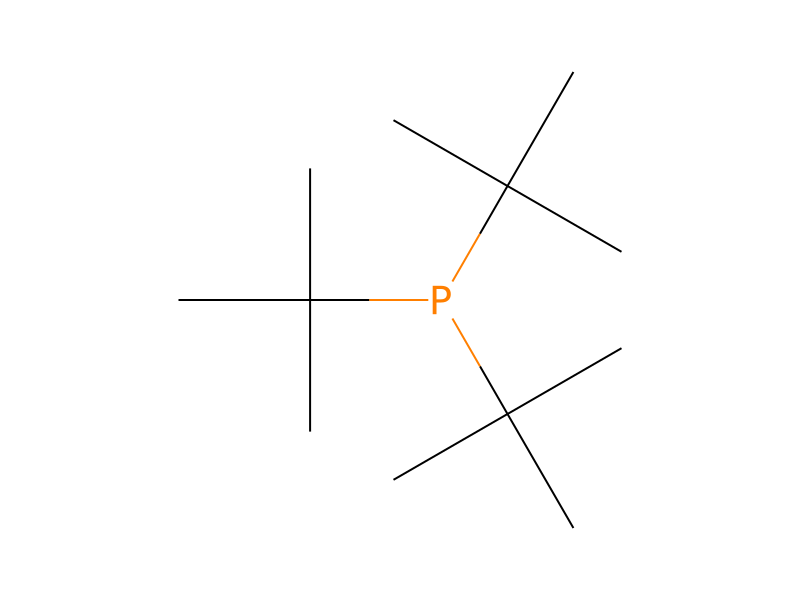
HCID 25517Ammonium ChlorideHCID 83681Tris(1,1-dimethylethyl)phosphineHCID 36801692-(2-bromophenoxy)tetrahydro-2H-pyranHCID 58106865Tris(2-methyl-6-pyridyl)fluoromethane

Product 1

HCID 58106644Tris(2-(2-hydroxyphenylmethyl)-6-pyridyl)-fluoromethane

Reagents, catalysts & solvents 3

HCID 9811564
Bis(dibenzylideneacetone)palladium
Catalyst
HCID 15392687Zn(tmp)2Catalyst
HCID 1140TolueneSolvent2×

Conditions

Temperature
50 °C

Procedure

The synthesis is carried out analogously to Organometallics 2007, 26(17), 4105-4108. 5.88 g (17 mmol) of Zn(tmp)2 are added to a solution of 3.07 g (10 mmol) of tris(2-methyl-6-pyridyl)fluoromethane in 100 ml of toluene, and the mixture is subsequently stirred at 50° C. for 20 h. 9.00 g (35 mmol) of 2-(2-bromophenoxy)tetrahydropyran and a catalyst solution, prepared separately in advance from 121 mg (0.6 mmol) of tri-tert-butylphosphine and 275 mg (0.3 mmol) of Pd2(dba)3 in 5 ml of toluene, are added to this solution. The mixture is subsequently stirred at room temperature for a further 24 h, 100 ml of saturated ammonium chloride solution are then added, and the organic phase is separated off, washed twice with 100 ml of water each time, dried over magnesium sulfate and then evaporated to dryness. The residue is taken up in 100 ml of THF, 10 ml of water and 1 ml of conc. HCl are added, and the mixture is stirred at 50° C. for 6 h and, after cooling, adjusted to pH=10-11 using saturated potassium carbonate solution. After the aqueous phase has been separated off and the organic phase has been dried using saturated sodium chloride solution, the THF is removed in vacuo. The residue is recrystallised from ethyl acetate/methanol (1:2). Yield: 3.88 g, 66.5%; purity: about 98.0% according to NMR.

Workup

  1. additionare added to this solution
  2. stirringThe mixture is subsequently stirred at room temperature for a further 24 h
  3. customthe organic phase is separated off
  4. washwashed twice with 100 ml of water each time
  5. dry with materialdried over magnesium sulfate
  6. customevaporated to dryness
  7. addition10 ml of water and 1 ml of conc. HCl are added
  8. stirringthe mixture is stirred at 50° C. for 6 h
  9. temperatureafter cooling, adjusted to pH=10-11
  10. customAfter the aqueous phase has been separated off
  11. customthe organic phase has been dried
  12. customthe THF is removed in vacuo
  13. customThe residue is recrystallised from ethyl acetate/methanol (1:2)

Sources & evidence

ORD record
ord-3018432b8074410085f6c1f72bf17073
Source dataset
uspto-grants-2013_12
DOI
10.6084/m9.figshare.5104873.v1
Patent number
US08617723B2

Reaction notes

On this pageParticipantsConditionsProcedureWorkupSources & evidenceReaction notes